
DIY vs. Licensed Contractor: Knowing Which Jobs Are Safe to Do Yourself
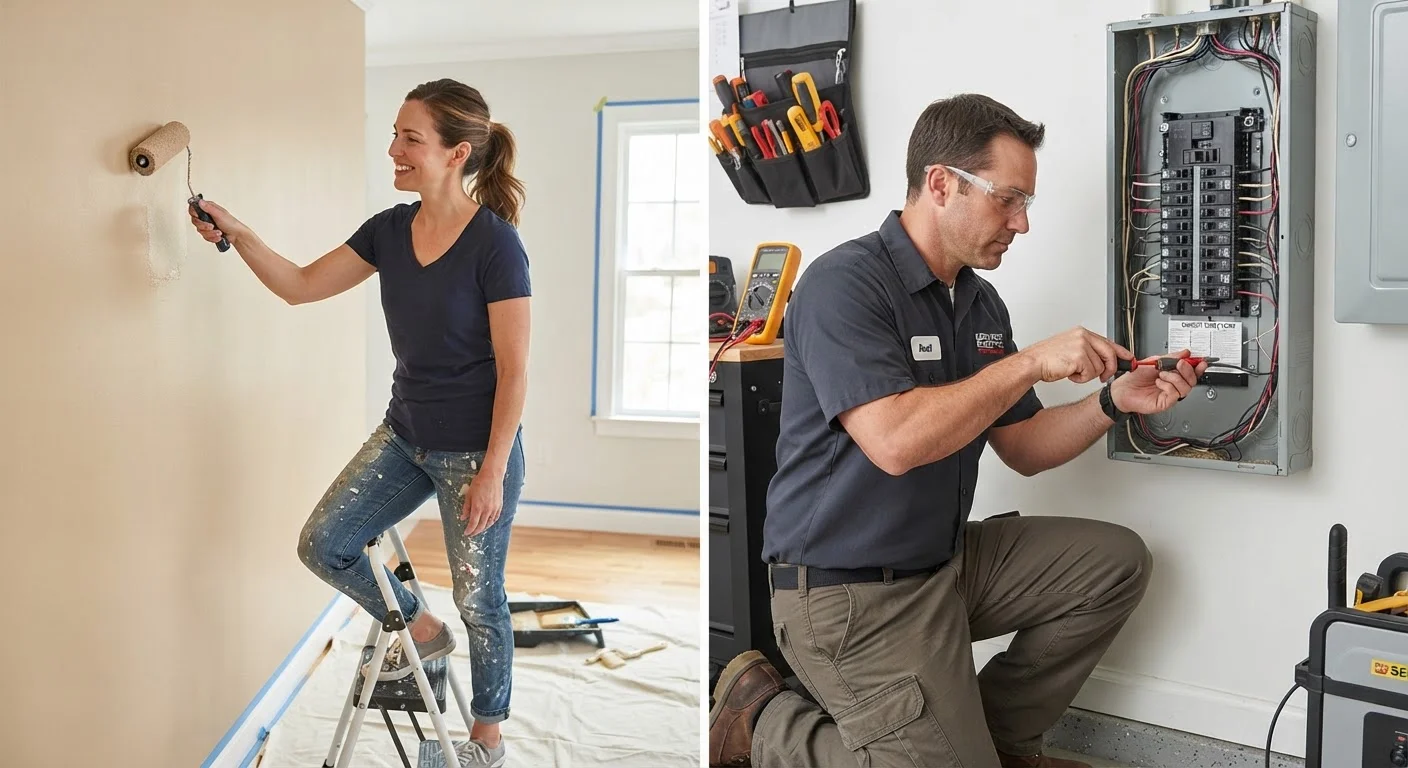
Photo credit: Glowwwatch.com
In this article
Some repairs are straightforward DIY projects; others require permits and licensed trades. Learn how to tell the difference before you start.
Key Takeaways
- Cosmetic and simple maintenance tasks are generally safe for capable homeowners to handle themselves.
- Electrical, gas, structural, and plumbing-into-mains work typically requires permits and licensed professionals.
- Unpermitted work can affect your home insurance coverage and resale value.
- The complexity of a task, not just your confidence level, should guide whether you DIY or hire out.
- Always verify local permit requirements before starting any project, no matter how small it seems.
How to Think About the DIY vs. Contractor Decision
The urge to handle home repairs yourself is understandable — it saves money, teaches useful skills, and gives you real ownership of your space. But the decision shouldn't be driven by confidence alone. The better question is: what are the consequences if something goes wrong?
A poorly painted wall is easy to repaint. A poorly wired outlet can cause a fire. That asymmetry is the core of the DIY vs. contractor decision, and it cuts across every type of home project. The home improvement space covers everything from repainting a room to rewiring a kitchen — and those two tasks carry very different risk profiles.
Three questions will guide most decisions:
- Does this work require a permit? If yes, it almost certainly needs a licensed trade.
- Could a mistake cause injury, fire, flooding, or structural failure? If yes, hire out.
- Will DIY work void your insurance or complicate your home sale? If yes, get a professional.
For a detailed pre-project checklist that covers permits, safety, and contractor vetting, see this homeowner's pre-project checklist before any renovation begins.
Tasks That Are Generally Safe for DIY
Most cosmetic and routine maintenance projects fall squarely in DIY territory, provided you follow manufacturer instructions and basic safety precautions. These include:
- Painting interior and exterior surfaces — prep work matters most; the painting itself is low-risk
- Installing or replacing light fixtures — replacing a fixture on an existing, properly wired circuit is manageable, though always turn off the breaker first
- Caulking and weatherstripping — straightforward sealing tasks that improve energy efficiency
- Patching drywall — small holes and dings, not large sections near electrical or plumbing
- Replacing faucet hardware — swapping out a faucet head or handle on an existing shutoff
- Landscaping, mulching, and garden bed maintenance — almost always permit-free and low-risk
- Installing flooring over an existing subfloor — laminate, vinyl plank, and tile can be DIY-friendly
The common thread: these tasks are reversible, don't touch major systems, and have forgiving margins for error. Skills matter, but a mistake is rarely dangerous.
Start Small to Build Real Skill
If you're newer to home maintenance, start with genuinely low-stakes tasks — patching a small drywall hole, replacing a worn faucet washer, or caulking a window frame. Mastering fundamentals builds the judgment to recognize when a project is escalating beyond your skill level. That judgment is worth more than any single completed project.
Work That Requires a Licensed Professional
Certain categories of work are regulated for good reason — they directly affect the safety of everyone in and around your home. Treating these as DIY projects can lead to failed inspections, voided insurance policies, or serious injury.
- Electrical panel work and new circuit installation — this is not just legally regulated in most jurisdictions; it's genuinely dangerous. Our separate guide on DIY electrical work at home explains exactly what homeowners can and cannot legally handle.
- Gas line connections and repairs — always requires a licensed plumber or gas fitter, full stop
- Structural alterations — removing or modifying walls, especially load-bearing walls, requires engineering assessment and permits
- Roofing beyond minor patching — full replacements involve structural risk and typically require permits
- HVAC system installation or major repairs — refrigerant handling is federally regulated
- Main plumbing line work — connecting to municipal supply or sewer lines requires licensed plumbers in most states
For a plain-language breakdown of when permits are required, visit our guide on permits, inspections, and codes.
Confidence Is Not the Same as Competence
Online tutorials make complex repairs look straightforward. Electrical, gas, and structural work can appear manageable right up until they aren't. If you find yourself mid-project discovering complications — unexpected wiring configurations, corroded pipes, or walls that don't behave as expected — stop and consult a licensed professional rather than improvising. The cost of a professional call is almost always less than the cost of fixing a dangerous mistake.
Comparing DIY vs. Licensed Contractor Side by Side
Use this comparison to quickly assess where a given project lands:
| DIY | Licensed Contractor | |
|---|---|---|
| Typical cost | Materials only | Materials + labor + markup |
| Permit required | Rarely for cosmetic work | Usually for regulated systems |
| Insurance implications | Risk if work causes damage | Contractor carries liability insurance |
| Skill requirement | Low to moderate for safe tasks | Trade certification required |
| Risk if done incorrectly | Low for cosmetic tasks | High for electrical, gas, structural |
| Resale / inspection impact | Low risk if permitted work avoided | Licensed work easier to document |
| Time investment | Higher (learning curve included) | Lower for homeowner |
Keep in mind that "licensed contractor" doesn't always mean a general contractor — electrical, plumbing, and HVAC work each has its own licensed trade. When hiring, verify license status through your state's contractor licensing board, ask for proof of insurance, and get a written scope of work. Our guide on hiring a general contractor walks you through the right questions to ask.
The Hidden Costs of Getting It Wrong
Unpermitted or improperly performed work carries real downstream consequences that many homeowners underestimate:
- Insurance claims can be denied if damage is traced to unlicensed work
- Home sales can fall through when inspectors flag unpermitted additions or alterations
- You may be required to demolish and redo unpermitted structural or electrical work before selling
- Liability shifts to you if a DIY repair causes injury to someone in your home
The permit and code compliance guide for homeowners explains how these issues surface in real estate transactions and how to protect yourself. Similarly, if you're planning a larger project like a deck addition, understanding structural and permit factors for decks beforehand can save significant trouble later.
The bottom line: the permit process exists to protect homeowners, not to slow them down. Working within it is part of protecting your investment.

Author
Home & Garden Editorial Team
Home & Garden Editorial Team is the collective byline for our editorial team and contributor network. Articles published under this byline or an editorial pen name are researched, written, and reviewed according to our editorial standards for clarity, consistency, and independence before publication.
View all articles →