
Dietary Fiber: Soluble vs. Insoluble and Why the Difference Matters
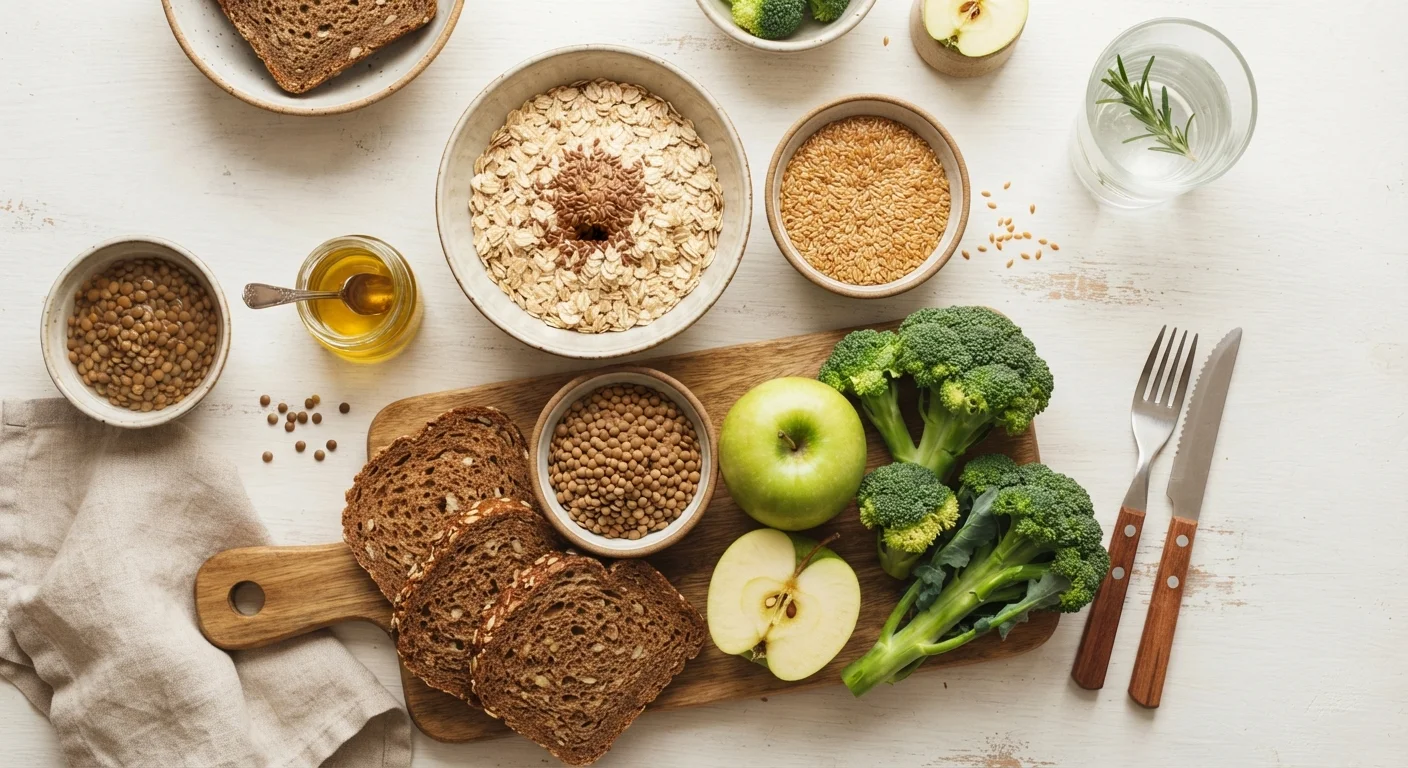
Photo credit: Glowwwatch.com
In this article
Soluble and insoluble fiber work differently in your body. Here's what each type does and which foods deliver them.
Key Takeaways
- Soluble fiber dissolves in water to form a gel, slowing digestion and helping manage blood sugar and cholesterol.
- Insoluble fiber does not dissolve in water; it adds bulk to stool and speeds movement through the digestive tract.
- Most whole plant foods contain both types of fiber, but in different ratios.
- The Dietary Guidelines for Americans recommend 25–38 grams of total fiber daily for adults, depending on age and sex.
- Most Americans consume roughly half the recommended daily fiber intake.
- Increasing fiber intake gradually, alongside adequate water, helps avoid digestive discomfort.
What Is Dietary Fiber, Really?
Dietary fiber is a type of carbohydrate found in plant foods that the human body cannot fully digest. Unlike starches and sugars, fiber passes largely intact through the stomach and small intestine, doing its work in the large intestine and beyond. For a broader picture of how carbohydrates fit into your overall diet, see our article on macronutrients and micronutrients.
Fiber is not one uniform substance. It is a family of plant compounds that differ significantly in structure and behavior. The two most important categories — soluble and insoluble — work through entirely different mechanisms, which is why eating a variety of plant foods matters more than focusing on a single source.
Fiber Is Classified as a Carbohydrate
It may seem counterintuitive, but fiber is technically a complex carbohydrate. However, because it is not broken down into glucose the way starch is, it does not raise blood sugar in the same way and contributes minimal usable calories. On nutrition labels, fiber is listed under total carbohydrates, and many labels break it down further into dietary fiber and added sugars as separate line items.
Soluble vs. Insoluble: How Each Type Works
The distinction comes down to what happens when fiber meets water in your digestive tract.
Soluble fiber dissolves in water to form a thick, viscous gel. This gel coats the intestinal walls, slowing the rate at which food moves from the stomach into the small intestine. That slower transit means glucose enters the bloodstream more gradually — a process that helps moderate blood sugar swings after meals. The gel also binds to bile acids (compounds made from cholesterol) in the intestine, which prompts the liver to pull LDL cholesterol from the blood to make more bile. Over time, this mechanism is associated with modest reductions in LDL cholesterol levels.
Insoluble fiber does not dissolve in water. Instead, it absorbs water and adds physical bulk to stool. This bulk stimulates the muscular walls of the colon to contract, pushing waste through more efficiently. The result is shorter transit time and more regular, comfortable bowel movements. Insoluble fiber is also associated with a reduced risk of diverticular disease — a condition where small pouches form in the colon wall — though the evidence is still developing.
| Criterion | Soluble Fiber | Insoluble Fiber |
|---|---|---|
| Behavior in water | Dissolves, forms a gel | Does not dissolve, absorbs water |
| Primary digestive effect | Slows digestion and nutrient absorption | Adds bulk, speeds bowel transit |
| Blood sugar impact | Moderates post-meal glucose spikes | Minimal direct effect |
| Cholesterol impact | May help lower LDL cholesterol | Minimal direct effect |
| Gut microbiome support | Feeds beneficial gut bacteria (prebiotic) | Less directly prebiotic |
| Bowel regularity | Indirect benefit via softer stool | Direct benefit; reduces constipation |
| Key food sources | Oats, legumes, apples, psyllium | Wheat bran, vegetables, whole grains, nuts |
Where to Find Each Type of Fiber
Good news: you do not need to track soluble and insoluble fiber separately on a food label. Most whole plant foods naturally contain both types, just in varying proportions.
- High in soluble fiber: oats and oat bran, barley, legumes (lentils, black beans, chickpeas), apples, pears, citrus fruits, psyllium husk, and flaxseeds.
- High in insoluble fiber: whole wheat flour and wheat bran, brown rice, most vegetables (especially leafy greens and cauliflower), nuts, and the skins of fruits.
A single food like an apple delivers both: soluble pectin in the flesh and insoluble fiber in the skin. Eating the whole food — rather than juiced or highly processed versions — generally preserves more of its fiber content. Fiber is one of the nutrients explored in our guide to nutrients most Americans don't get enough of.
How Much Do You Need, and How to Get There?
The Dietary Guidelines for Americans recommend approximately 25 grams of fiber per day for adult women and 38 grams for adult men, with needs generally declining slightly after age 50. Despite this, research consistently shows that average American adults consume only about 15 grams daily — well below the target.
~15g
Average daily fiber intake for US adults
The Dietary Guidelines for Americans estimate that most adults consume roughly 15 grams of fiber daily — about half the recommended amount.
25–38g
Recommended daily fiber intake for adults
The Dietary Guidelines for Americans recommend 25 grams per day for women and 38 grams per day for men, with slightly lower targets after age 50.
90%+
Americans not meeting fiber recommendations
Fiber is consistently identified as a shortfall nutrient in national dietary surveys, with the vast majority of Americans falling below recommended intake levels.
Closing that gap is achievable through straightforward food choices rather than supplements. Swapping refined grains for whole grains, adding a serving of legumes to meals a few times per week, and including fruit or vegetables with every meal are practical starting points.
One important caution: increasing fiber intake too quickly can cause bloating, gas, and cramping. Ramping up gradually over several weeks — and drinking plenty of water alongside fiber-rich foods — gives your digestive system time to adjust. Hydration plays a meaningful supporting role; our overview of hydration and nutrition explains why water intake matters for digestion.
This article is for general informational and educational purposes only and is not a substitute for professional medical or dietary advice. If you have a specific health condition or concern, consult a qualified healthcare provider before making significant changes to your diet.

Author
Food & Drinks Editorial Team
Food & Drinks Editorial Team is the collective byline for our editorial team and contributor network. Articles published under this byline or an editorial pen name are researched, written, and reviewed according to our editorial standards for clarity, consistency, and independence before publication.
View all articles →