
Caulk vs. Weather Stripping: Choosing the Right Seal for Each Gap
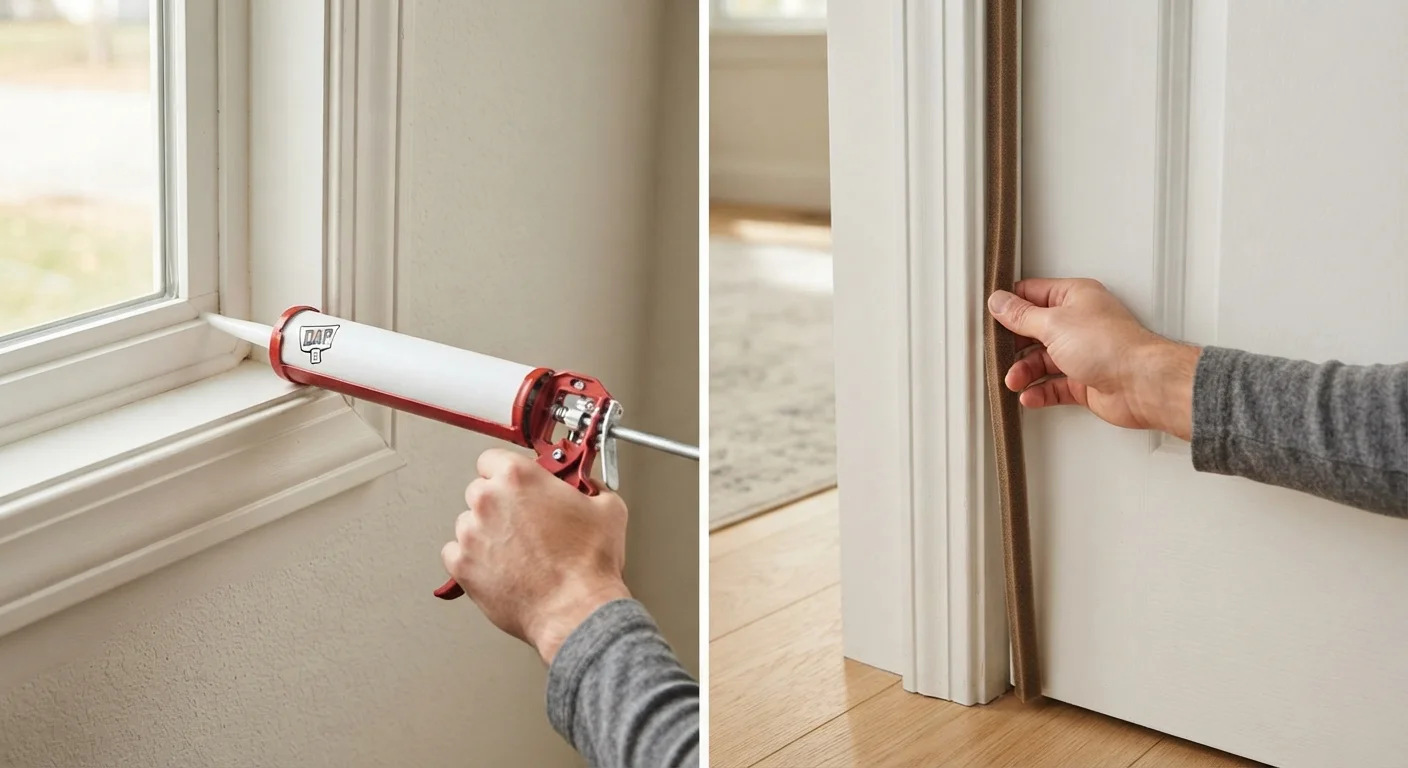
Photo credit: Glowwwatch.com
In this article
Not every draft or gap needs the same fix. Understand when caulk works, when weather stripping is the right call, and why it matters.
Key Takeaways
- Caulk is designed for stationary gaps; weather stripping handles gaps around moving parts.
- Using the wrong sealing material leads to premature failure and wasted effort.
- Many homes need both products — the key is applying each one in the right location.
- Air leaks around windows and doors can meaningfully increase household energy costs.
- Both materials are beginner-friendly and require no special tools or permits.
Why the Right Sealing Material Matters
A drafty window or door isn't just uncomfortable — it quietly inflates your energy bills and invites moisture damage. The impulse to grab whatever sealant is on hand is understandable, but using caulk where weather stripping belongs (or vice versa) often means redoing the job within a season.
The core distinction is simple: caulk is for stationary gaps, weather stripping is for moving ones. Every gap in your home falls into one of these two categories, and identifying which type you're dealing with is the first — and most important — step. Think of it as choosing the right tool before you start, not halfway through.
Air leaks around windows and doors are among the most common sources of energy loss in American homes, according to the U.S. Department of Energy. Sealing them properly is one of the more cost-effective maintenance tasks a homeowner can do. As part of a broader routine, it fits naturally into a quarterly home maintenance plan — ideally inspected each fall before temperatures drop.
| Criterion | Caulk | Weather Stripping |
|---|---|---|
| Best for | Stationary gaps and cracks | Gaps around moving surfaces |
| Typical locations | Window frames, baseboards, exterior joints | Door edges, operable windows, door bottoms |
| Flexibility after curing | Rigid; not designed for movement | Compressible; springs back repeatedly |
| Typical lifespan | 5–10 years if properly applied | 2–5 years depending on material and traffic |
| Installation difficulty | Low; requires prep and steady hand | Low; most types are self-adhesive |
| Water resistance | High (silicone and siliconized types) | Moderate; varies by material |
| Fails when | Applied to surfaces that flex or move | Compressed too flat or adhesive fails |
Where Caulk Belongs — and Where It Fails
Caulk is a flexible-when-wet, rigid-when-cured compound that bonds two adjacent stationary surfaces together. Once dried, it forms a solid bead that resists air, water, and in some formulations, mold. Common locations include:
- Around the perimeter of window and door frames where they meet the interior wall
- Along baseboards and crown molding where trim meets drywall
- Exterior joints between siding, trim, and masonry
- Around pipes and conduit entering the home through walls or floors
The critical rule: never apply caulk to a surface that moves. The seam between a door and its frame, for example, flexes constantly. Caulk applied there will crack within weeks. Similarly, applying it to the bottom of a door or along an operable window sash prevents the surface from functioning at all.
For wet areas like bathrooms and kitchens, a silicone or siliconized latex caulk is appropriate because of its water resistance. If your bathroom caulk keeps peeling or cracking, the problem is often surface prep or using the wrong formula — a deeper issue covered in why bathroom caulk fails and how to fix it.
Up to 30%
Energy lost through air leaks in typical homes
The U.S. Department of Energy estimates that drafts through gaps, cracks, and openings can account for up to 30% of a home's heating and cooling costs.
$0–$50
Typical material cost for a full door seal
Weather stripping and caulk are among the lowest-cost home maintenance materials available, making proper air sealing accessible to most homeowners.
Where Weather Stripping Belongs — and How to Choose a Type
Weather stripping creates a compressible seal along surfaces that move — closing against the strip each time the door or window shuts. Unlike caulk, it's designed to be compressed, released, and compressed again thousands of times over its lifespan.
Common locations include:
- The top and sides of exterior door frames (the doorstop area)
- The bottom of exterior doors, typically using a door sweep
- Around operable window sashes — double-hung, casement, and sliding types
- Attic access hatches and pull-down stair panels
Weather stripping comes in several materials, each with trade-offs:
- Foam tape
- Self-adhesive and easy to install; works well for irregular gaps but compresses over time and may need replacing every few years.
- V-strip (tension seal)
- A folded strip of plastic or metal that springs open to fill gaps; durable and effective along door sides and window channels.
- Door sweeps
- Attached to the bottom of the door, these drag across the threshold to seal the gap; available in brush and rubber styles.
- Felt or rubber bulb strips
- Stapled or tacked into door stops; bulb-style rubber offers better compression and longevity than basic felt.
Choosing the right type comes down to gap size, surface shape, and how often the door or window is used. High-traffic doors benefit from more durable materials like rubber or V-strip over basic foam.
Neglecting these small sealing tasks is a pattern worth breaking early. The same logic that applies to deferred car repairs — where small issues grow into expensive ones — applies here. Skipping small repairs often leads to bigger problems, and home air sealing is no exception.
A Practical Inspection Approach
Before buying anything, walk your home and categorize each gap you find. Ask one question: does this surface move? If yes, it needs weather stripping. If no, it likely needs caulk — or possibly both at different points along the same frame.
A door frame is a good example of using both: the fixed joint where the frame meets the interior drywall gets caulk, while the door stop area where the door panel contacts the frame gets weather stripping. They work in different zones and do not compete.
To find hidden leaks, hold a lit incense stick or a thin piece of tissue near suspected gaps on a windy day. Movement indicates airflow. Check the tops and bottoms of window and door frames, electrical outlets on exterior walls, and anywhere pipes enter from outside.
Replacing existing sealant: Always remove old, cracked caulk completely before applying new material — layering over failed caulk traps moisture and leads to mold. For weather stripping, peel back the old strip, clean the surface with rubbing alcohol, and let it dry fully before applying the replacement.
Keeping exterior caulk joints in good condition also complements other exterior maintenance tasks, like keeping your gutters clear. Water that can't drain properly finds its way into every available gap — a problem explored in detail in our guide on how gutters fail and how to maintain them.
When to Inspect Your Seals
The best times to check caulk and weather stripping are early fall and late spring — before extreme temperatures arrive. Look for visible gaps, cracking, compression loss, or daylight visible around closed doors. Even a small gap at the bottom of an exterior door can allow significant conditioned air to escape, especially in older homes where settling has shifted frames over time.

Author
Home & Garden Editorial Team
Home & Garden Editorial Team is the collective byline for our editorial team and contributor network. Articles published under this byline or an editorial pen name are researched, written, and reviewed according to our editorial standards for clarity, consistency, and independence before publication.
View all articles →