
Brake Maintenance: Understanding Pads, Rotors, and When Each Needs Attention
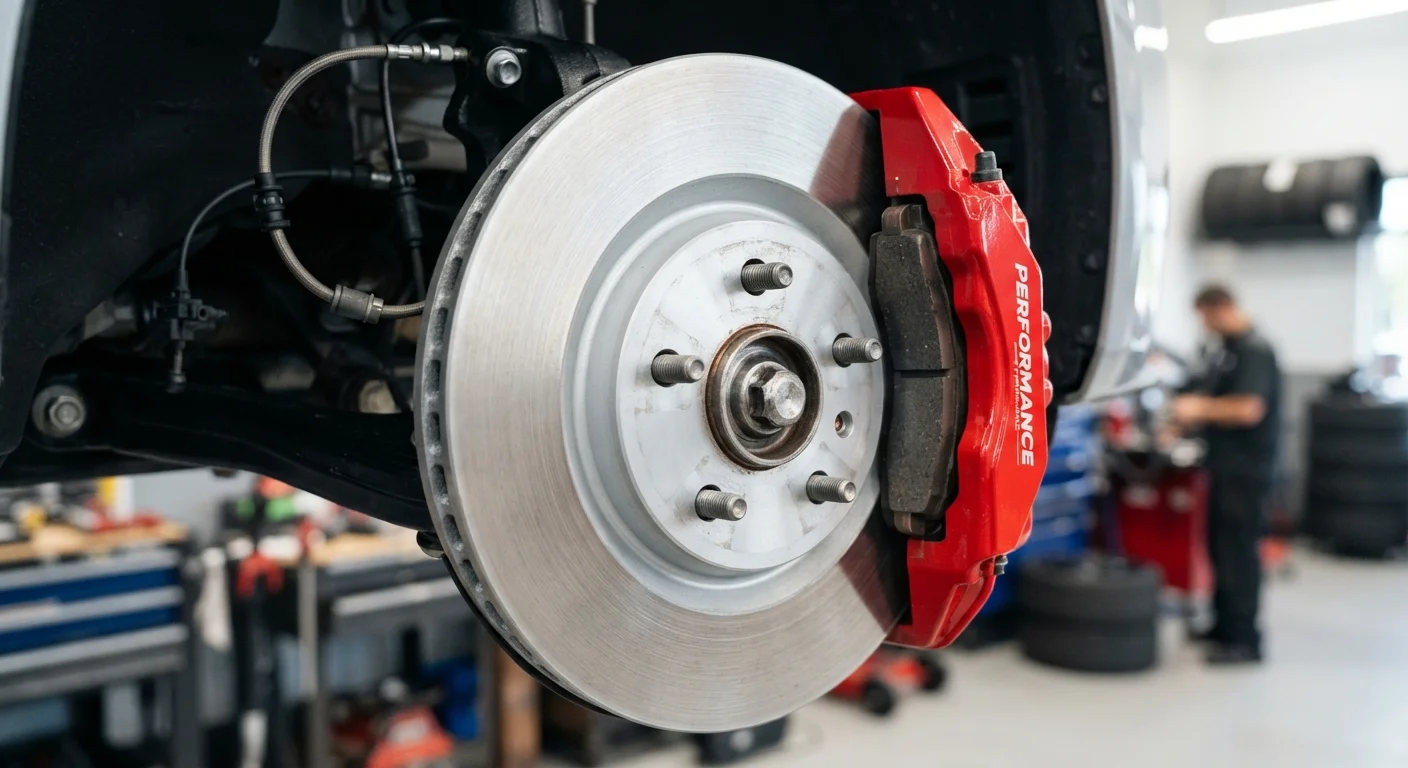
Photo credit: Glowwwatch.com
In this article
Brakes are your car's most critical safety system. Learn what pads and rotors do, how they wear, and what warning signs to watch for.
Key Takeaways
- Brake pads typically wear faster than rotors and usually need replacement every 25,000–65,000 miles.
- Squealing or grinding noises are early warning signs that your brakes need attention.
- Rotors can warp or develop grooves, which causes vibration when braking — not just noise.
- Brake fluid is part of the system too; low or degraded fluid affects braking performance.
- A qualified mechanic should inspect brakes at least once a year or anytime you notice changes in stopping feel.
What Brake Pads and Rotors Actually Do
Every time you press the brake pedal, a chain of events happens in milliseconds. Hydraulic pressure from your brake fluid pushes the brake caliper — a clamp-like device — to squeeze the brake pads against the rotor, a flat metal disc spinning with your wheel. That friction converts your vehicle's kinetic energy into heat, slowing you down.
Brake pads are made of friction material bonded to a metal backing plate. Rotors are typically cast iron and need to be thick enough to absorb and dissipate that heat safely. When either part wears past its service limit, your ability to stop is compromised. That's why understanding both components matters — they work as a system, not independently.
For a broader look at how brakes fit into your vehicle's overall upkeep, see the complete car maintenance guide.
How Pads and Rotors Wear Over Time
Brake pads are intentionally designed to be the sacrificial part — they wear so your rotors don't have to as quickly. New pads typically start with 10–12 millimeters of friction material. Mechanics consider 2–3 mm the replacement threshold. Most vehicles have a small metal tab built into the pad that contacts the rotor and causes a squealing noise when pads reach this low point — that sound is a built-in warning system, not a malfunction.
Rotors wear differently. Rather than simply getting thinner at a steady rate, they can also warp from repeated heat cycles, develop grooves where worn pads have dug in, or rust on the surface if a vehicle sits unused for extended periods. Light surface rust usually clears after a few brake applications, but deeper grooves or warping require attention.
25,000–65,000 mi
Typical brake pad lifespan range
Industry estimates vary widely based on driving conditions, vehicle type, and pad material; city driving falls toward the lower end.
~2–3 mm
Brake pad replacement threshold
Most mechanics recommend replacing pads when friction material wears to approximately 2–3 millimeters — about the thickness of two pennies stacked.
1 in 5
Vehicles with unsafe brake condition
According to the Car Care Council, roughly one in five vehicles inspected during car care events shows brake-related issues needing attention.
Your driving habits have a big influence on wear rate. Stop-and-go city driving, towing heavy loads, and mountain driving all generate more heat and friction than steady highway cruising — meaning pads and rotors wear faster in those conditions.
Warning Signs You Should Not Ignore
Your brakes communicate pretty clearly when something is wrong. Here's what to watch — and listen — for:
- Squealing or squeaking during braking: usually the wear indicator telling you pads are low.
- Grinding or metal-on-metal sound: pads are likely gone and the backing plate is contacting the rotor directly — get this checked immediately.
- Vibration or pulsing in the pedal or steering wheel when braking: often points to warped rotors.
- Longer stopping distances: if your car takes noticeably more distance to stop, don't dismiss it.
- Pulling to one side during braking: can indicate uneven pad wear or a stuck caliper.
- Soft or spongy brake pedal: often a brake fluid issue rather than a pad or rotor problem, but still requires prompt attention.
If your dashboard shows a brake warning light, treat it seriously. Our dashboard warning light reference can help you understand what different symbols mean.
Schedule a Brake Check With Tire Rotations
Most shops will visually inspect your brake pads and rotors while your wheels are off for a tire rotation — often at no extra charge. Building this habit into every other rotation means your brakes get looked at roughly every 10,000–15,000 miles without any extra appointments. Ask your mechanic to note remaining pad thickness so you can track wear over time.
When to Get Your Brakes Inspected
As a general rule, have your brakes visually inspected at least once a year — many shops do a quick check during tire rotations. Beyond that, pay attention to mileage: brake pads on average last anywhere from 25,000 to 65,000 miles, but that range is wide for a reason. Driving style, vehicle weight, terrain, and pad material all factor in.
Don't rely solely on mileage intervals. Your ears, your foot, and your sense of how the car feels are often more reliable early indicators than the odometer. If something feels or sounds different, have it checked. Brake work is not a good candidate for a wait-and-see approach.
Brake inspections are typically part of a broader service visit. You can learn more about building a consistent service routine in our article on understanding your car's maintenance schedule. For a full breakdown of what routine service visits cover, see what routine car maintenance includes.
Frequently Asked Questions

Author
Autos Editorial Team
Autos Editorial Team is the collective byline for our editorial team and contributor network. Articles published under this byline or an editorial pen name are researched, written, and reviewed according to our editorial standards for clarity, consistency, and independence before publication.
View all articles →