
Building a Balanced Plate: Practical Principles That Hold Up Across Diets
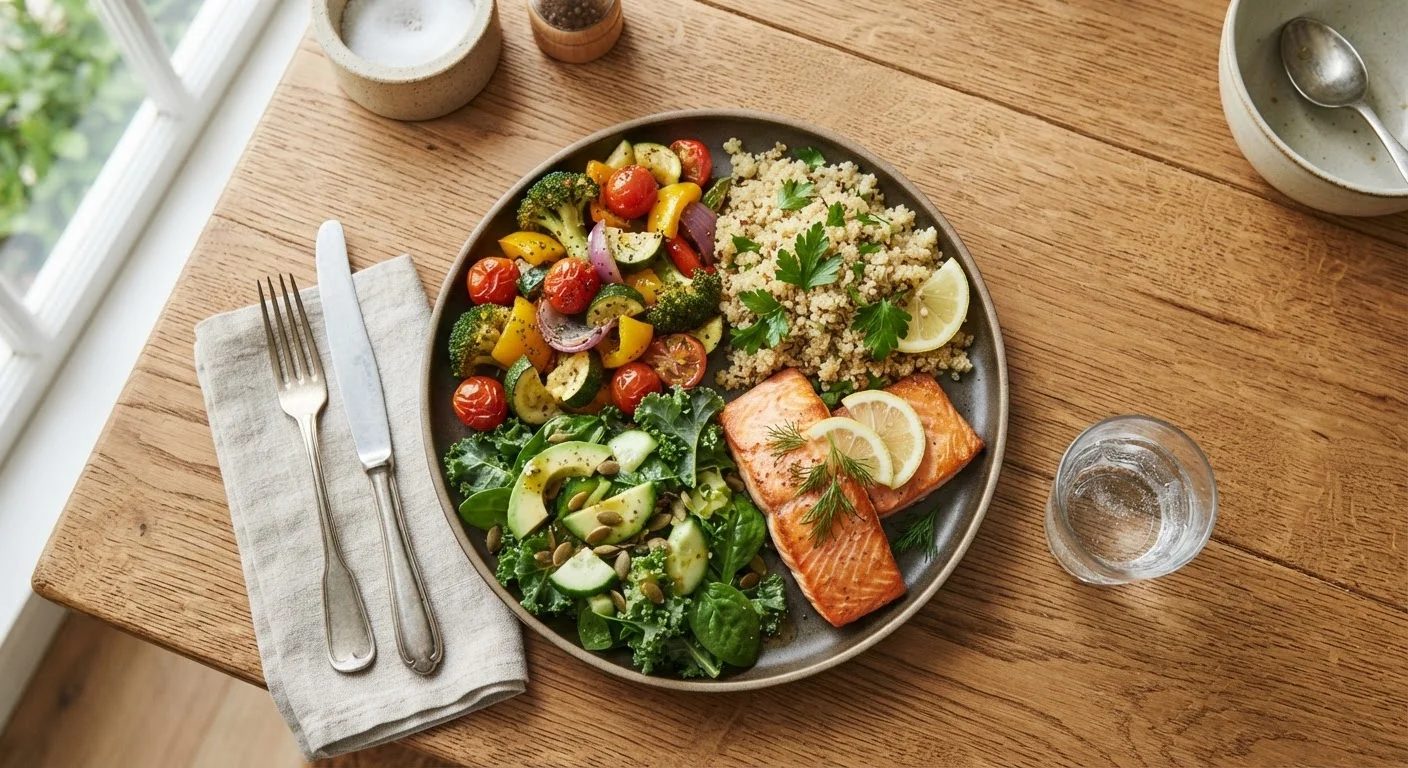
Photo credit: Glowwwatch.com
In this article
No single eating pattern works for everyone, but some core principles apply broadly. Here's how to put together meals that cover your nutritional bases.
Key Takeaways
- Half your plate filled with vegetables and fruit is a widely supported starting point for most adults.
- Protein, fiber, and healthy fats work together to keep you satisfied and support basic body functions.
- No single diet is right for everyone, but certain structural principles hold up across eating patterns.
- Small, consistent changes to meal composition tend to produce more lasting results than strict overhauls.
- Consulting a registered dietitian is valuable for anyone managing a health condition or specific nutrition goal.
Why "Balanced" Isn't Just a Buzzword
The word "balanced" gets thrown around so often in nutrition conversations that it can start to feel meaningless. But behind the cliché is a genuinely useful idea: meals that deliver a range of nutrients in reasonable proportions tend to support energy, satiety, and long-term health better than meals built around a single food type or macronutrient.
What a balanced plate looks like in practice can vary widely depending on your age, activity level, health status, and cultural food traditions. If you're just getting started thinking about nutrition, our nutrition fundamentals guide covers the baseline concepts — calories, macronutrients, food groups — that make the principles below easier to apply.
The goal here isn't to prescribe a specific diet. It's to outline the structural habits that hold up across Mediterranean, plant-based, omnivore, and other well-studied eating patterns.
9 in 10
Americans under-eat vegetables and fruit
According to CDC dietary surveillance data, the vast majority of US adults do not meet federal recommendations for fruit and vegetable intake.
~25g
Daily fiber intake recommended for most adults
The Dietary Guidelines for Americans recommends approximately 25–38 grams of fiber per day depending on age and sex, yet average US intake falls well short of this range.
Core Principles for Building a Balanced Plate
These practices are grounded in broadly accepted nutrition guidance. They're designed to work within whatever dietary framework you already follow — or are starting to build.
Fill at least half your plate with vegetables and fruit at most meals.
Vegetables and fruit supply fiber, vitamins, minerals, and beneficial plant compounds (phytonutrients) that are consistently associated with positive health outcomes in large-scale dietary research. Prioritizing them by volume naturally crowds out less nutrient-dense options without requiring strict calorie tracking.
Include a quality protein source at every meal.
Protein supports muscle maintenance, immune function, and satiety. Spreading protein intake across meals — rather than concentrating it in one sitting — appears to be more effective for muscle protein synthesis, according to general nutritional science consensus. Both plant and animal proteins can meet daily needs; the key is adequacy and variety.
Choose whole or minimally processed grains most of the time.
Whole grains retain their fiber and nutrient-rich outer layers, which refined grains lose during processing. Higher fiber intake is linked to better digestive health, steadier blood sugar response, and greater satiety. "Most of the time" is intentional — rigid rules often backfire; aiming for a majority is more sustainable.
Include healthy fats rather than eliminating fat altogether.
Dietary fat supports absorption of fat-soluble vitamins (A, D, E, and K) and contributes to satiety. Unsaturated fats — found in foods like avocado, nuts, seeds, and olive oil — are generally associated with better cardiovascular outcomes compared to high intakes of saturated or industrially produced trans fats.
Pay attention to portion proportion, not just food choice.
A meal composed of nutritious foods can still be nutritionally skewed if proportions are far off — for example, a plate that's 80% pasta and 10% vegetables. Thinking about relative proportions rather than absolute quantities gives you a flexible framework that works at restaurants, gatherings, and home meals alike.
Putting It Into Practice Without Overhauling Everything
Knowing the principles is one thing; applying them on a busy Tuesday night is another. The good news is that building a more balanced plate rarely requires starting from scratch. Most people already eat some vegetables, some protein, some grains — the shift is usually about proportion and variety rather than total dietary reinvention.
For a visual reference on what proportions actually look like on a real plate, see what a balanced plate actually looks like — it goes deeper on food group ratios. And if you're looking for ways to make changes that stick, small dietary shifts that support long-term wellbeing outlines incremental, evidence-informed adjustments that fit into everyday life.
This article is for general informational purposes only and is not a substitute for personalized medical or nutritional advice. If you have a health condition or specific dietary needs, consult a registered dietitian or qualified healthcare provider.

Author
Food & Drinks Editorial Team
Food & Drinks Editorial Team is the collective byline for our editorial team and contributor network. Articles published under this byline or an editorial pen name are researched, written, and reviewed according to our editorial standards for clarity, consistency, and independence before publication.
View all articles →