
Car Fluids Every Driver Should Know About
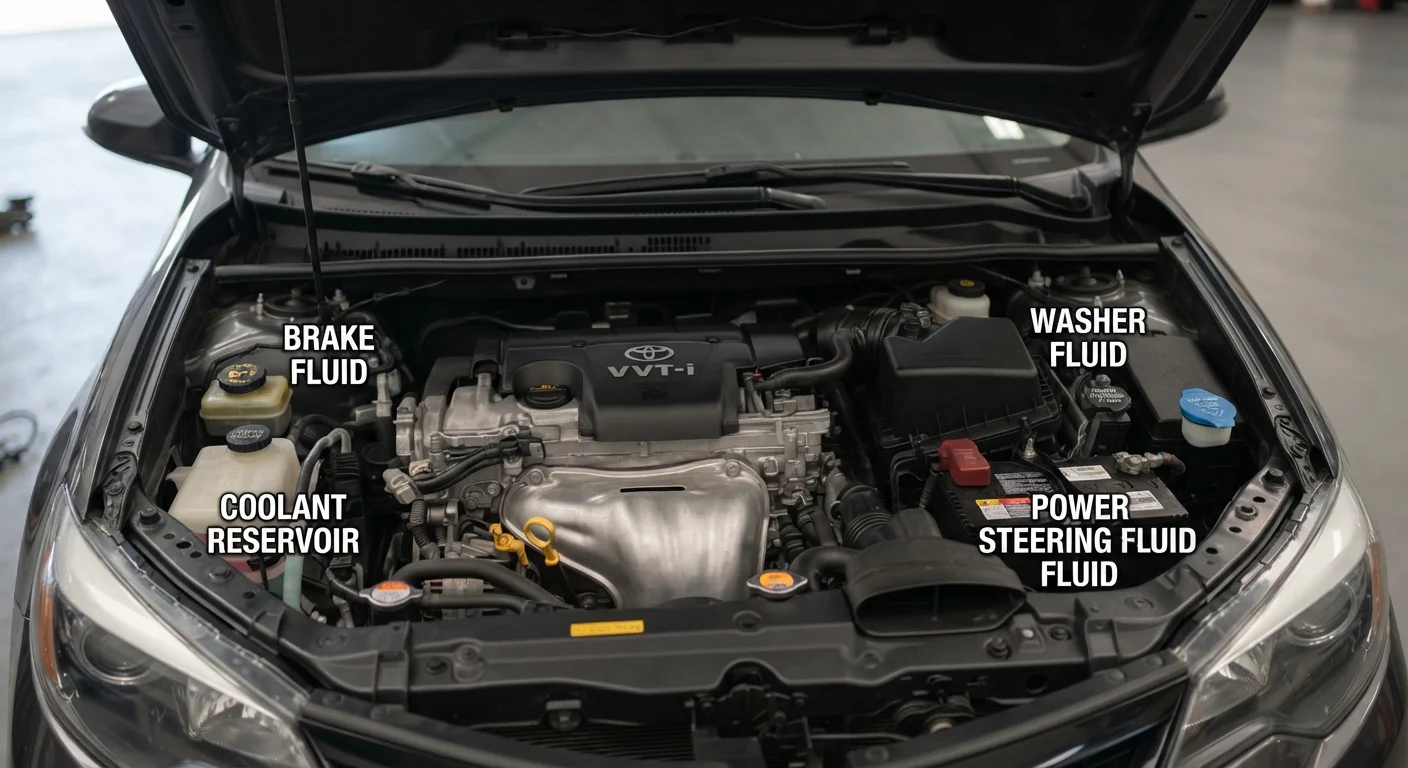
Photo credit: Glowwwatch.com
In this article
From coolant to brake fluid, here's what each fluid in your car does, where to find it, and what low levels might signal.
Why Car Fluids Matter More Than Most Drivers Realize
Your car is essentially a collection of systems — each one kept alive by a specific fluid. Run one low for too long, and you're looking at anything from a rough ride to a seized engine. The good news: checking most fluids takes less than five minutes and no special tools. This guide covers the six fluids every driver should understand, where to find them, and what warning signs to watch for.
For a broader look at what keeps your car running reliably, see our article on routine car maintenance.
| Fluids to monitor regularly | 6 main fluids |
| How often to check engine oil | Monthly or before long trips |
| Coolant check — engine state | Cold engine only (Opening a hot radiator cap is dangerous) |
| Brake fluid color when fresh | Clear to light yellow (Dark or murky fluid may need replacing) |
| Washer fluid — cold climate tip | Use freeze-rated formula (Plain water can freeze in reservoir and lines) |
| Where to find fluid specs | Your vehicle owner's manual (Always the authoritative source for your specific car) |
The Six Fluids You Need to Know
1. Engine Oil
Engine oil lubricates the dozens of moving metal parts inside your engine, reduces friction, and carries heat away from critical components. You'll find the dipstick — usually a brightly colored loop or handle — near the center of the engine bay. Pull it out, wipe it clean, reinsert, and pull again to read the level. Low or dark, gritty oil signals it's time for a change. For a deeper look at oil types, see synthetic vs. conventional motor oil.
2. Coolant (Antifreeze)
Coolant circulates through the engine and radiator to prevent overheating in summer and freezing in winter. The reservoir is a translucent plastic tank, usually near the radiator, with MIN and MAX lines visible from the outside. Never open the radiator cap when the engine is hot — pressurized coolant can cause serious burns. Check it only when the engine is cold.
3. Brake Fluid
Brake fluid transmits the force from your foot on the pedal to the brake components at each wheel. It lives in a small reservoir near the firewall, typically on the driver's side. A falling brake fluid level often means worn brake pads — not necessarily a leak. Either way, investigate promptly. Learn more about how brakes wear in our guide to brake pads and rotors.
4. Power Steering Fluid
This fluid makes turning the steering wheel feel effortless. Many newer vehicles use electric power steering and don't have this reservoir at all — check your owner's manual. If your car does use it and steering feels stiff or you hear a whining noise when turning, the fluid level is worth checking.
5. Transmission Fluid
Transmission fluid lubricates the gears that control how power gets to your wheels. On automatic-transmission vehicles, there's often a dipstick similar to the oil dipstick — though some sealed transmissions require a shop visit to check. Slipping gears, delayed shifts, or a burning smell can all point to a transmission fluid issue.
6. Windshield Washer Fluid
The least glamorous on the list, but it matters for visibility. Use a washer fluid rated for your climate — plain water can freeze in the lines. The reservoir is usually clearly marked with a windshield icon.
Coolant
A liquid — typically a mix of antifreeze and water — that circulates through the engine and radiator to regulate temperature. It prevents overheating in hot weather and freezing in cold weather.
Brake Fluid
A hydraulic fluid that transfers the pressure from your brake pedal to the brake components at each wheel. It absorbs moisture over time, which can reduce its effectiveness.
Transmission Fluid
A lubricating fluid that keeps the gears in your transmission operating smoothly. In automatic transmissions, it also acts as a hydraulic fluid to help with gear shifts.
Dipstick
A long metal rod inserted into a fluid reservoir — most commonly for engine oil or transmission fluid — used to check the fluid level without opening a sealed system.
Power Steering Fluid
A hydraulic fluid used in vehicles with traditional power steering systems to assist the driver in turning the wheel with less effort.
Firewall
The metal panel separating the engine compartment from the passenger cabin. Several fluid reservoirs, including the brake fluid reservoir, are typically mounted near or against it.
Low Fluid Levels and What They Can Signal
Fluids don't typically disappear on their own. A sudden drop in level almost always means something worth investigating — a leak, worn components, or a system problem. Here's a quick reference:
- Oil level dropping fast: Possible oil leak or the engine is burning oil — both need a mechanic's attention.
- Coolant consistently low: Could indicate a leak in hoses, the radiator, or a failing head gasket. Don't ignore a sweet smell near your car after driving.
- Brake fluid dropping: Usually means worn pads, but could signal a brake line leak — a safety concern requiring prompt attention.
- Transmission fluid dark or smells burnt: A sign the fluid is overdue for a change or the transmission is under stress.
Dashboard warning lights often correlate with fluid problems. If a light comes on, our reference on dashboard warning lights can help you understand what your car is trying to tell you.
When in doubt about any fluid issue, have a qualified mechanic inspect the vehicle. Catching problems early is almost always less expensive than waiting.

Author
Autos Editorial Team
Autos Editorial Team is the collective byline for our editorial team and contributor network. Articles published under this byline or an editorial pen name are researched, written, and reviewed according to our editorial standards for clarity, consistency, and independence before publication.
View all articles →