
The Trade-Off Between Paying Down Debt and Building Savings
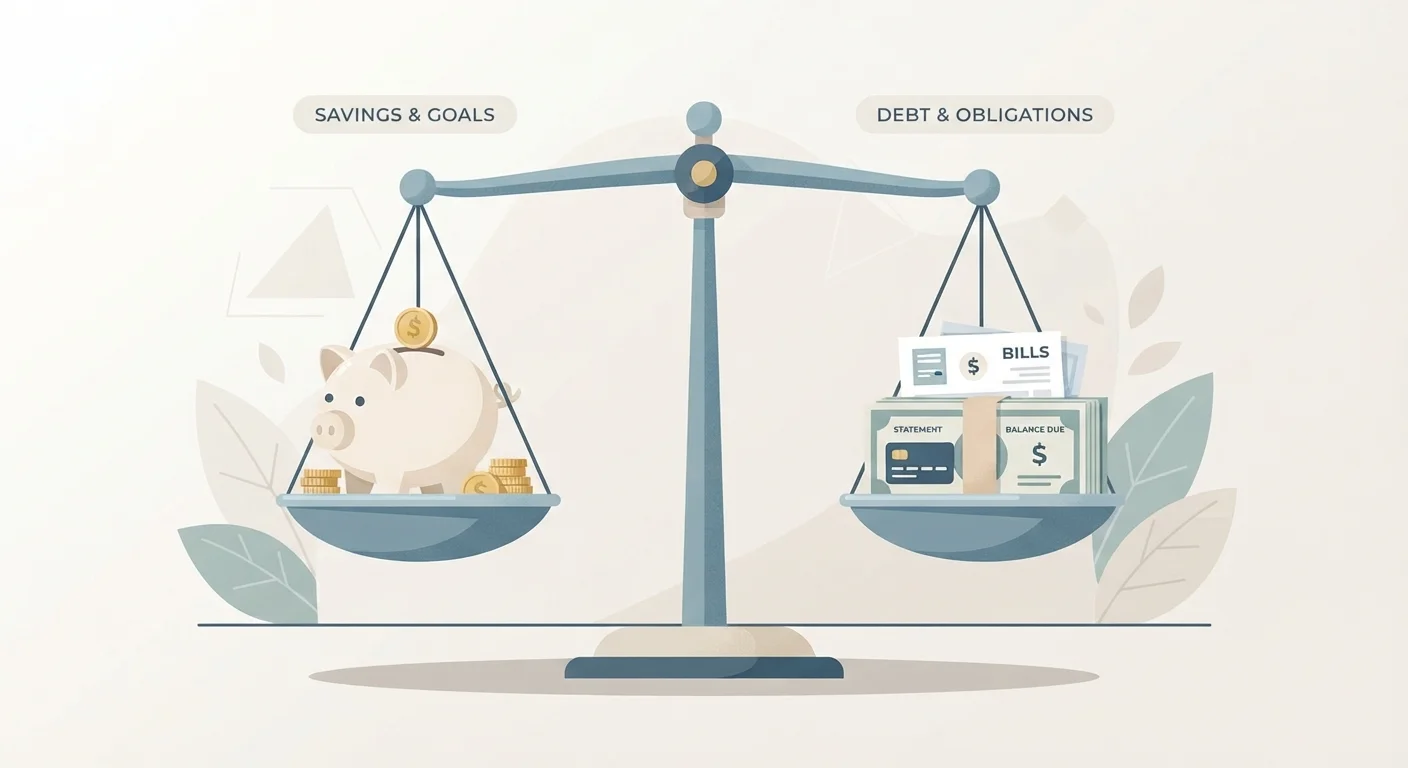
Photo credit: Glowwwatch.com
In this article
Should extra money go toward debt or savings first? Understand the key factors that shape this common personal finance decision.
Key Takeaways
- High-interest debt almost always costs more than savings accounts earn, making repayment a priority in most cases.
- A small emergency fund should typically be in place before aggressively paying down debt.
- Employer 401(k) matching is essentially free money — contributing enough to capture it usually makes sense even while carrying debt.
- The right balance depends on your interest rates, job stability, and personal risk tolerance.
- Many financial educators recommend doing both simultaneously at modest levels rather than choosing one exclusively.
Why This Decision Is Harder Than It Looks
When you have a little extra money at the end of the month, the question of where it goes feels simple — until you start thinking it through. Should you knock down the credit card balance? Top up your savings account? The answer genuinely depends on your situation, and there is rarely one universally correct path.
To understand the trade-off, start with a foundational concept: the cost of debt versus the return on savings. If your debt carries a 20% annual interest rate and your savings account earns 4%, every dollar sitting in savings while that balance grows is effectively costing you 16 cents a year. On the other hand, having no savings at all means any unexpected expense goes straight back onto a credit card — potentially undoing months of repayment progress.
For a broader grounding in how these two forces interact, see our personal finance foundation guide.
The Case for Paying Down Debt First
From a pure math standpoint, eliminating high-interest debt delivers a guaranteed "return" equal to the interest rate you stop paying. No savings product — savings account, CD, or money market fund — reliably beats the cost of carrying credit card debt, which can range from 18% to 29% annually for many borrowers.
Carrying debt also affects your debt-to-income ratio (the share of your gross monthly income that goes toward debt payments), which lenders watch closely when you apply for mortgages, car loans, or other credit. Reducing balances can improve that ratio over time. Learn more in our article on what a debt-to-income ratio is and why it matters.
It's also worth noting what happens when you only pay the minimum. Interest compounds monthly, meaning the true cost of carrying a balance grows significantly over time. Our explainer on why minimum payments cost more than you think breaks down how quickly balances can balloon.
| Paying Down Debt First | Building Savings First | Doing Both Simultaneously | |
|---|---|---|---|
| Best interest rate scenario | High-rate debt (above 7–8%) | Low-rate debt or no debt | Mixed debt types |
| Emergency fund requirement | Still keep a small starter fund | Priority — build this first | Small fund maintained throughout |
| Impact on net worth | Faster reduction in liabilities | Assets grow; liabilities remain | Gradual improvement on both sides |
| Risk if income disrupted | Higher — no savings buffer | Lower — fund absorbs shocks | Moderate — partial buffer exists |
| Psychological benefit | Debt-free feeling motivates many | Security of a growing cushion | Progress on both fronts |
| Employer match consideration | May miss free retirement money | May miss free retirement money | Captures match before extra payments |
The Case for Building Savings First
Even with debt on the books, having no savings is its own form of financial risk. Financial educators widely recommend maintaining an emergency fund — commonly suggested as three to six months of essential expenses — before aggressively paying down debt. Without that cushion, a job loss, medical bill, or car repair forces you to borrow again, often at high rates.
Starting small is fine. Even a modest buffer of $500–$1,000 can prevent many common financial emergencies from spiraling into new debt. If saving feels impossible given your current income, our article on building a savings habit when money feels tight offers realistic starting points.
Capture Your Employer Match Before Anything Else
If your employer offers a 401(k) match, contribute at least enough to receive the full match before directing extra dollars toward debt or savings. A 50% or 100% match on contributions is an immediate return that effectively no debt payoff strategy can beat. Once you've secured the match, then weigh where remaining dollars will do the most good.
Low-interest debt — such as certain student loans or a mortgage — changes the calculus. When the interest rate is below what a savings or investment account might reasonably earn over time, the urgency to pay it off early is lower. Not all debt is equally costly; understanding good debt vs. bad debt can help you distinguish which obligations deserve priority.
A Middle Path: Doing Both at Once
For many people, the most practical approach is not choosing one exclusively. A common framework used by financial educators suggests:
- Build a starter emergency fund (often $500–$1,000) before anything else.
- Contribute to a 401(k) at least up to the employer match, if one is available. A dollar-for-dollar or 50-cent-on-the-dollar match is an immediate, guaranteed return that debt repayment cannot replicate.
- Pay off high-interest debt aggressively, using either the avalanche (highest-rate first) or snowball (smallest balance first) method. Compare both in our debt avalanche vs. debt snowball guide.
- Build savings further once high-rate debt is cleared, working toward a full emergency fund and longer-term goals.
Frameworks like the 50/30/20 rule can help you carve out room for both debt payments and savings within a single paycheck. The key is making deliberate allocations rather than letting leftover money drift.
For retirement savings specifically, tax-advantaged accounts add another layer to consider. Our guide to 401(k), IRA, HSA, and FSA accounts explains how these tools can make savings more efficient even while you carry debt.
This article is for general informational and educational purposes only and does not constitute personalized financial advice. Consult a licensed financial professional before making decisions about debt repayment or savings strategies specific to your circumstances.

Author
Personal Finance Editorial Team
Personal Finance Editorial Team is the collective byline for our editorial team and contributor network. Articles published under this byline or an editorial pen name are researched, written, and reviewed according to our editorial standards for clarity, consistency, and independence before publication.
View all articles →