
Debt Is Not Always Bad: Understanding Good Debt vs. Bad Debt
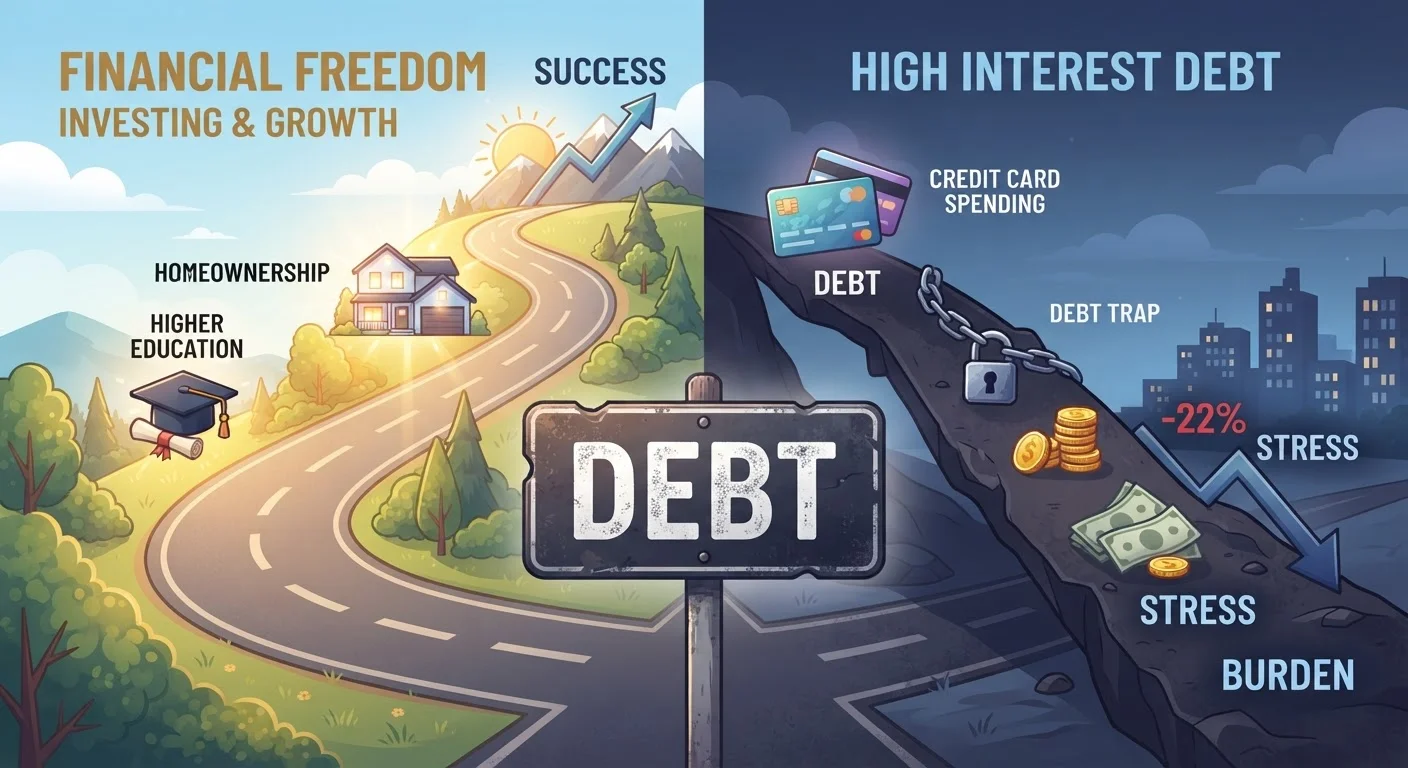
Photo credit: Glowwwatch.com
In this article
Not all borrowing works against you. Learn how financial professionals distinguish productive debt from high-cost debt that drains your finances.
Key Takeaways
- Debt used to build long-term value — like a mortgage or student loan — is generally considered productive.
- High-interest consumer debt, such as revolving credit card balances, typically costs more than it returns.
- The interest rate, purpose, and repayment terms together determine whether debt helps or hurts you.
- Understanding the distinction between debt types helps you borrow more strategically.
- Even 'good' debt carries risk and should be taken on only within your repayment means.
Why the Blanket Fear of Debt Misleads People
Many Americans grow up hearing that debt is dangerous — something to avoid at all costs. While caution around borrowing is sensible, treating all debt as equally harmful can actually work against you. It can push people away from mortgages that build equity, or discourage investing in education that raises long-term earning potential.
Financial educators draw an important distinction: debt is a tool. Like most tools, its impact depends on how and why it's used. Borrowing to purchase something that grows in value or increases your income capacity operates differently from borrowing to fund spending on things that depreciate immediately. Understanding this difference is the foundation of stronger financial decision-making. See the full breakdown of how educators categorize debt for a deeper look at these definitions.
Myth
All debt is harmful and should be avoided entirely.
Fact
Debt used strategically — at low interest rates, for assets or opportunities that build long-term value — can be a productive financial tool.
Avoiding all debt is rarely practical or optimal. A mortgage, for instance, allows you to build equity in a property over time — something renting does not provide. Federal student loans, when matched to realistic earning outcomes, can fund credentials that increase lifetime income. The key is that the debt serves a purpose beyond immediate consumption and is taken on at terms you can sustain.
Myth
Carrying a credit card balance shows you're managing credit responsibly.
Fact
Carrying a revolving balance typically costs you more in interest than it returns, and it does not improve your credit score.
A persistent credit card myth is that keeping a balance signals active use and helps your credit. In practice, credit scoring models reward on-time payments and low credit utilization — not carrying a balance. Revolving credit card debt at rates often exceeding 20% annually is one of the costliest forms of consumer borrowing. Paying the full statement balance each cycle avoids interest entirely while still demonstrating responsible card use. See other common debt myths debunked for more corrections like this one.
Myth
Student loans are always a smart investment.
Fact
Student loans are only productive when the credential credibly leads to income that supports repayment without undue financial strain.
Student loan debt is often labeled 'good debt' because education can raise earning potential. But this framing glosses over real variation. Borrowing heavily for a degree in a field with limited job prospects, or attending a high-cost institution without comparing aid packages, can result in debt that takes decades to repay. The debt-to-income relationship matters: a smaller loan matched to a higher-earning career is more manageable than a large loan in a lower-paying field.
Myth
If you can make the monthly minimum, your debt is under control.
Fact
Minimum payments on high-interest debt are often designed to extend repayment and maximize interest paid — not to help you pay down the balance efficiently.
Credit card minimum payments are typically set as a small percentage of your balance — sometimes as low as 1–2% plus interest. At common interest rates, paying only the minimum on a substantial balance can mean years of repayment and significant interest costs beyond the original amount borrowed. The monthly payment being affordable does not mean the debt is structured in your favor. Calculating total repayment cost — not just the monthly figure — gives a more accurate picture of what borrowing is actually costing you.
Myth
Debt always hurts your financial situation.
Fact
Debt used within your means and at low interest rates can improve your financial position by enabling access to assets or opportunities unavailable with cash alone.
For most households, major purchases like a home or higher education are only accessible through borrowing. A fixed-rate mortgage at a historically moderate interest rate, combined with property appreciation over time, has helped many Americans build net worth they could not have assembled through savings alone. This does not mean borrowing is risk-free — it means that the risk has to be weighed against the realistic long-term benefit. Strategic use of credit is a foundational concept in financial literacy, not a loophole.
What Makes Debt 'Good' or 'Bad'?
The terms good debt and bad debt are shorthand — not moral judgments. They describe the financial relationship between what you borrow and what you gain or lose over time. Three factors typically shape which category a debt falls into:
- Interest rate: Lower rates mean less total cost over time. Federal student loans and mortgages typically carry lower rates than credit cards or payday loans.
- Purpose: Does the debt fund something that retains or grows in value (a home, education, a business asset)? Or does it finance consumption that's already been used up?
- Repayment terms: Longer, structured repayment timelines give your cash flow breathing room. Open-ended revolving balances, especially at high rates, can compound quickly against you.
It's worth noting that even well-intentioned borrowing carries risk. A mortgage is only productive if you can sustain the payments; a student loan only pays off if the credential genuinely improves your income. Context always matters. For a clear explanation of how interest compounds on both sides of the ledger, see how compound interest works for and against you.
20%+
Typical credit card APR in the U.S.
According to Federal Reserve data, average credit card interest rates have risen substantially in recent years, making revolving balances among the most expensive common forms of consumer debt.
~43%
Share of Americans holding student loan debt
Federal data suggests tens of millions of U.S. borrowers carry student loan balances, underscoring why understanding productive versus costly debt distinctions matters at scale.
Knowing When Your Debt Mix Needs Attention
Even with a solid grasp of good versus bad debt, it's possible to accumulate too much of either kind. Your debt-to-income ratio — the share of your gross monthly income that goes toward debt payments — is one of the clearest signals lenders and financial planners use to gauge financial health. Learn more about why lenders watch your debt-to-income ratio closely and how to calculate yours.
When debt starts to feel difficult to manage — missed minimums, growing balances despite payments, or anxiety around monthly bills — that's a signal worth taking seriously. Our guide on signs your debt load may be becoming unmanageable can help you identify those early markers before they escalate.
If you're weighing what to do with extra money each month, the question of whether to pay down debt or save is a genuinely nuanced one. Explore the trade-off between paying down debt and building savings to understand the key factors. And if you're already managing multiple debts, principles that guide sustainable debt repayment offers a grounded framework for staying consistent.
Good Debt Still Requires Repayment Discipline
Labeling debt as 'good' does not eliminate its risk. If you borrow more than your income can comfortably support — regardless of the purpose — it can strain your budget, damage your credit, and limit your financial flexibility. Always evaluate your realistic ability to repay before taking on any new debt, and consider speaking with a licensed financial counselor if you're uncertain.
This article is for general informational and educational purposes only and does not constitute personalized financial advice. Consult a qualified financial professional before making decisions about borrowing or debt management.

Author
Personal Finance Editorial Team
Personal Finance Editorial Team is the collective byline for our editorial team and contributor network. Articles published under this byline or an editorial pen name are researched, written, and reviewed according to our editorial standards for clarity, consistency, and independence before publication.
View all articles →