
The 50/30/20 Rule: A Simple Framework for Splitting Your Paycheck
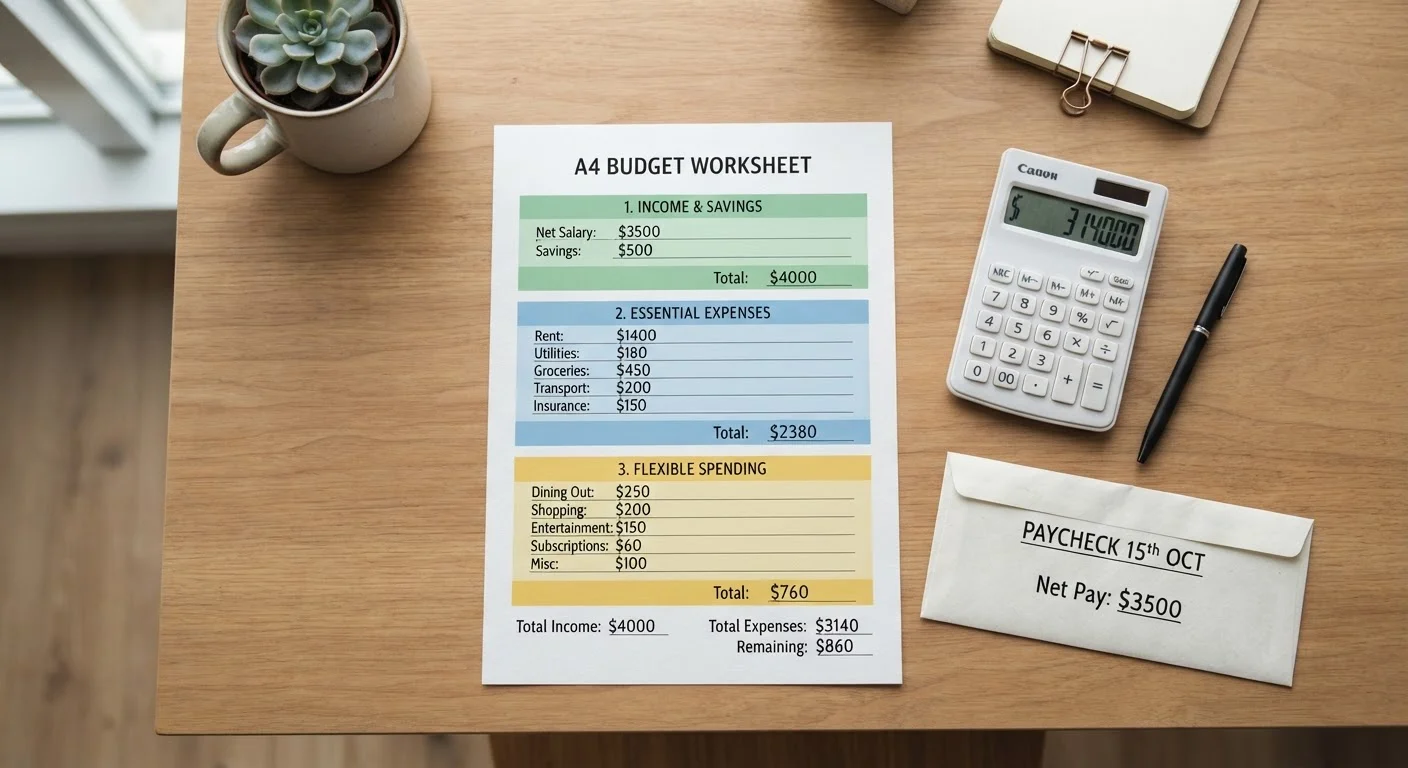
Photo credit: Glowwwatch.com
In this article
Learn how the 50/30/20 rule divides income into needs, wants, and savings — and whether this popular framework suits your financial situation.
Key Takeaways
- The 50/30/20 rule splits after-tax income into needs (50%), wants (30%), and savings or debt payoff (20%).
- "Needs" are non-negotiable expenses like rent, utilities, groceries, and minimum debt payments.
- "Wants" cover lifestyle spending you could technically live without, such as dining out or streaming services.
- The 20% savings bucket can include an emergency fund, retirement contributions, or extra debt payments.
- The rule is a flexible guide, not a rigid law — your percentages may need adjustment for your income level.
- Consulting a financial professional can help you tailor any budgeting approach to your specific situation.
Where the 50/30/20 Rule Comes From
The 50/30/20 framework was popularized by U.S. Senator Elizabeth Warren and her daughter Amelia Warren Tyagi in their 2005 book All Your Worth: The Ultimate Lifetime Money Plan. Their research argued that financial stress often results from a structural imbalance in spending — not simply a lack of discipline. The rule was designed to give ordinary households a clear, memorable structure for dividing their paychecks without requiring a finance degree.
The concept builds on a broader principle found throughout personal finance: that conscious allocation — deciding in advance where money goes — is more effective than tracking spending after the fact. For a deeper look at how this fits within the larger picture, see the core concepts of personal finance.
57%
Americans who don't follow a written budget
According to a survey by the National Foundation for Credit Counseling, a majority of U.S. adults manage money without a formal plan, increasing financial vulnerability.
3–6 months
Recommended emergency fund coverage
Consumer finance organizations broadly recommend that households maintain enough liquid savings to cover three to six months of essential expenses — a goal the 20% savings bucket directly supports.
30%+
Income spent on housing by many renters
The U.S. Department of Housing and Urban Development considers households spending more than 30% of gross income on housing to be cost-burdened, a threshold that challenges the 50/30/20 rule's needs category.
Breaking Down the Three Categories
50% — Needs
Needs are your non-negotiable expenses: the bills and costs you must pay to maintain a basic standard of living. These include:
- Rent or mortgage payments
- Utilities (electricity, gas, water)
- Groceries and basic household supplies
- Health insurance premiums
- Minimum payments on any debts
- Essential transportation (car payment, insurance, or transit costs)
If you earn $4,000 per month after taxes, your needs budget is $2,000. If your fixed costs exceed that threshold, you may need to look at reducing housing costs, refinancing debt, or adjusting other categories — not simply expanding the needs bucket.
30% — Wants
Wants are spending choices that improve your quality of life but aren't strictly necessary. Think of dining out, streaming subscriptions, gym memberships, hobbies, and vacations. On a $4,000 monthly take-home, that's $1,200 for discretionary spending. The key distinction: a want is something you choose, while a need is something you can't reasonably eliminate.
20% — Savings and Debt Repayment
This bucket funds your financial future. It covers emergency fund contributions, retirement account deposits (such as a 401(k) or IRA), and any extra payments beyond the minimum on high-interest debt. On $4,000 monthly income, that's $800 directed toward building financial security. Deciding how to split this bucket between savings and debt reduction is a common question — our article on paying down debt vs. building savings walks through the key trade-offs.
Start With What You Actually Spend
Before assigning percentages to future paychecks, look back at two or three months of actual spending. This gives you a realistic baseline — and often reveals surprising patterns, like wants that were quietly being treated as needs. Honest assessment first, target-setting second.
When the Rule Works Well — and When It Doesn't
The 50/30/20 rule works best for people with stable, moderate-to-higher incomes in areas where housing costs don't dominate the budget. Its simplicity is its main strength: three categories are easy to remember, and you don't need spreadsheets or apps to get started.
However, the rule has real limitations. In high cost-of-living cities, rent alone can consume more than 50% of take-home pay, leaving the math broken from the start. Lower-income households may find that needs realistically command 70% or more of income, making a 20% savings target unrealistic in the short term.
The rule also treats all "wants" as equally expendable, which may not reflect the reality of your household. A gym membership could be a medical necessity for one person and pure leisure for another. Adapt the framework to fit your life, not the other way around. If you're looking for an alternative that offers more precision, zero-based budgeting may be worth exploring.
How to Apply It Starting This Month
Getting started with the 50/30/20 rule takes four steps:
- Calculate your monthly after-tax income. If you're salaried, check your pay stub for the net amount. If you're self-employed or have irregular income, use a conservative monthly estimate.
- List your current monthly expenses by category. Separate fixed needs from discretionary wants using one to two months of bank or credit card statements.
- Compare your actuals to the 50/30/20 targets. Note which categories are over or under the guideline.
- Make one small adjustment. Rather than overhauling everything at once, identify one area — typically wants — where you can trim spending and redirect it to savings.
To keep yourself accountable after the first month, a structured review process helps. Our monthly budget review checklist provides a step-by-step process for catching problems early and refining your plan over time.
If your financial situation is more complex — significant debt, variable income, or major life changes — consider working with a certified financial planner or nonprofit credit counselor. General frameworks like this one provide direction, but a qualified professional can tailor a plan to your specific circumstances.
This article is for general informational and educational purposes only and does not constitute personalized financial advice. Please consult a qualified financial professional before making decisions about your own financial situation.
Frequently Asked Questions

Author
Personal Finance Editorial Team
Personal Finance Editorial Team is the collective byline for our editorial team and contributor network. Articles published under this byline or an editorial pen name are researched, written, and reviewed according to our editorial standards for clarity, consistency, and independence before publication.
View all articles →