
Why Paying Only the Minimum Balance Costs You More Than You Think
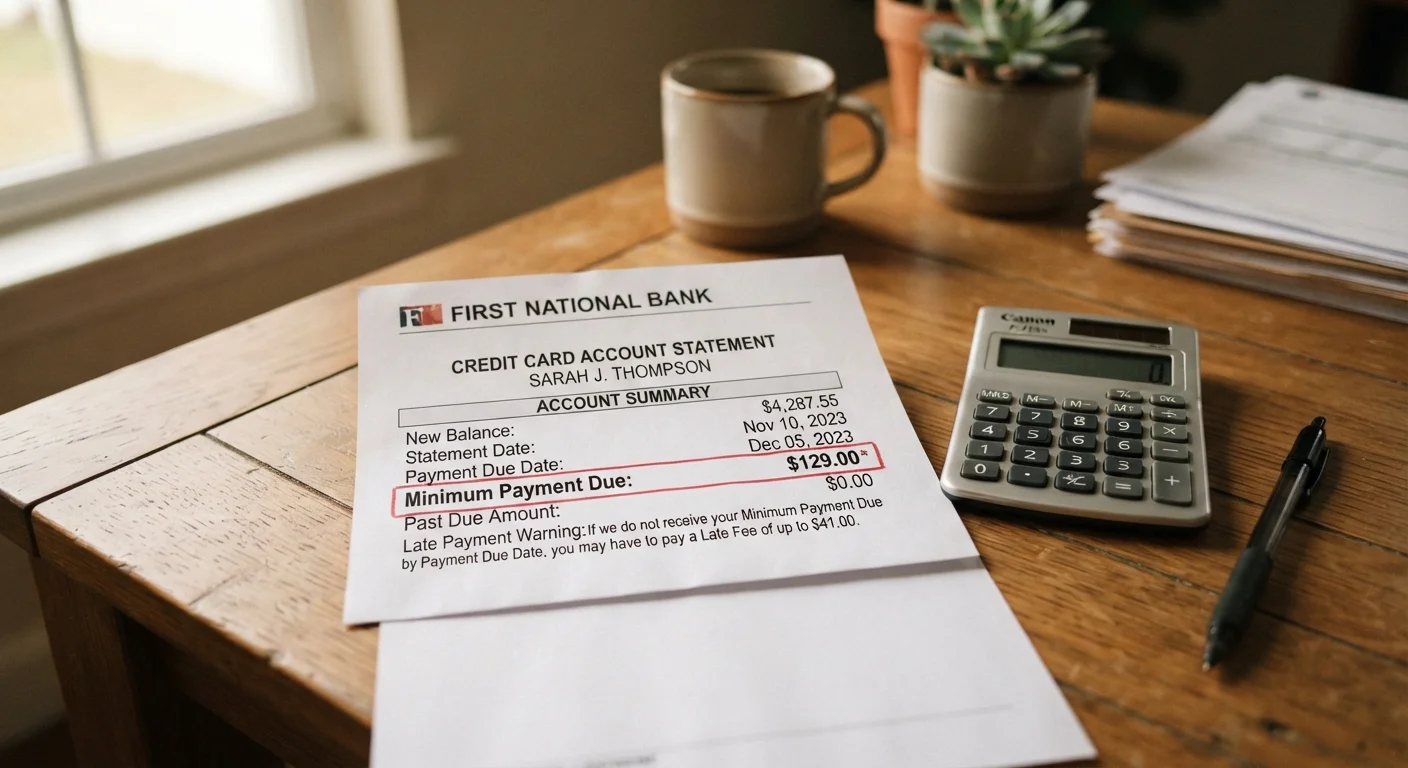
Photo credit: Glowwwatch.com
In this article
Minimum payments keep accounts current but extend debt for years. Here's how interest compounds over time and what it actually adds to your balance.
Key Takeaways
- Minimum payments typically cover little more than interest, leaving your principal balance nearly unchanged.
- Credit card interest compounds daily on most accounts, causing balances to grow faster than many people realize.
- Paying even a modest amount above the minimum can shorten repayment time by years and save significant money.
- Understanding how minimum payments are calculated helps you make smarter decisions about how much to pay each month.
What Minimum Payments Are Actually Designed to Do
Every credit card statement shows a minimum payment due — typically a small percentage of your balance (often 1%–3%) or a flat dollar amount, whichever is greater. Paying this amount keeps your account current and avoids late fees, but it is not designed to help you get out of debt quickly. It is designed to keep your account in good standing while maximizing the interest the lender collects over time.
To see why, consider a simplified example. If you carry a $3,000 balance at an 20% annual percentage rate (APR) and make only minimum payments, a substantial portion of each payment goes toward interest charges rather than reducing the original amount you borrowed — known as the principal. As a result, the balance decreases very slowly, and you remain in debt for much longer than most people expect.
This is not an accident. Minimum payment formulas are set by card issuers within guidelines from federal regulators, but the amounts are generally structured to keep balances active. Understanding this dynamic is the first step toward taking control. For a deeper look at how interest accumulates on both debt and savings, see how compound interest works for and against you.
Common Mistakes That Keep You Trapped in the Minimum-Payment Cycle
Most people who rely on minimum payments aren't being careless — they're responding to real budget pressure or operating on incomplete information. The mistakes below are extremely common, and recognizing them is the first step toward breaking the cycle.
Treating the minimum payment as the 'normal' or 'recommended' amount to pay.
Why it happens: Card statements prominently display the minimum due, and many people interpret that figure as a reasonable monthly target rather than a floor set to protect the lender.
Ignoring how daily compounding causes balances to grow between payments.
Why it happens: Most people think of interest as a monthly charge. In reality, most credit cards calculate interest daily based on your average daily balance, meaning the balance grows continuously, not just once a month.
Making new purchases on a card while trying to pay down the existing balance.
Why it happens: Carrying a card for convenience while intending to pay it down seems reasonable, but new purchases add to the principal and restart the compounding cycle on a larger amount.
Applying extra money inconsistently rather than as a regular habit.
Why it happens: People often plan to pay more 'when they have extra cash,' but irregular windfalls are unpredictable and easy to spend on other needs before they reach the credit card.
Focusing only on the monthly payment without tracking the total interest cost over time.
Why it happens: Low monthly minimums feel manageable in isolation, making it easy to lose sight of how much interest accumulates over months or years of slow repayment.
1%–3%
Typical minimum payment as % of balance
Most major card issuers set minimum payments at roughly 1%–3% of the outstanding balance or a flat minimum, whichever is greater, per standard industry practice.
20%+
Average credit card APR in recent years
The Federal Reserve has reported average credit card interest rates above 20% in recent periods, meaning high-rate debt compounds quickly on unpaid balances.
How to Pay More Without Upending Your Budget
Breaking free from the minimum-payment trap doesn't require a dramatic financial overhaul. Even small, consistent increases above the minimum can dramatically change your repayment timeline. A useful framework is to identify your discretionary spending — money not committed to fixed bills — and redirect a defined portion of it toward your highest-interest balance each month.
Two widely referenced repayment strategies can help. The avalanche method directs extra payments to the highest-APR balance first, minimizing total interest paid. The snowball method targets the smallest balance first, building momentum through quick wins. Neither is universally superior; the right approach depends on your specific balances and what keeps you motivated to stay consistent. Principles that guide sustainable debt repayment over time walks through these approaches in more detail.
Don't Confuse 'Affordable' With 'Cost-Effective'
A low minimum payment can feel affordable month to month while costing hundreds or thousands of dollars more over the life of the debt. Just because a payment fits your current budget does not mean it is the financially sound choice. Always weigh the short-term comfort of a low payment against the long-term cost of extended interest charges.
It's also worth thinking about the relationship between debt repayment and saving simultaneously. If your employer offers a retirement match, capturing that match while paying down debt often makes sense — but every situation differs. The trade-off between paying down debt and building savings can help you think through the priorities specific to your circumstances.
This article is for general informational and educational purposes only and does not constitute personalized financial or legal advice. Consult a qualified financial professional for guidance specific to your situation.

Author
Personal Finance Editorial Team
Personal Finance Editorial Team is the collective byline for our editorial team and contributor network. Articles published under this byline or an editorial pen name are researched, written, and reviewed according to our editorial standards for clarity, consistency, and independence before publication.
View all articles →