
Debt Avalanche vs. Debt Snowball: Two Repayment Strategies Compared
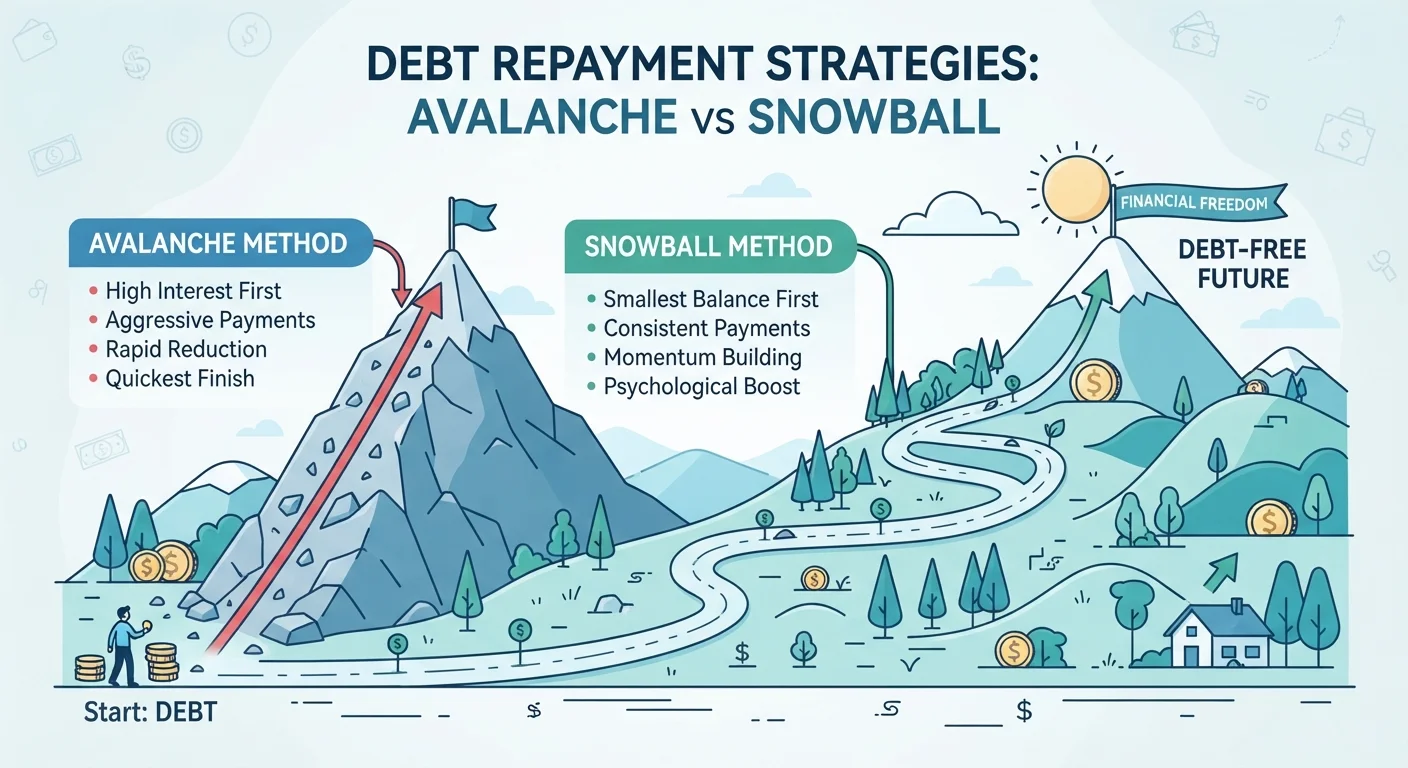
Photo credit: Glowwwatch.com
In this article
The avalanche and snowball methods both pay off debt — but differently. See how each works and which approach fits different financial personalities.
Key Takeaways
- The debt avalanche targets the highest-interest debt first, minimizing total interest paid over time.
- The debt snowball pays off the smallest balances first, delivering faster motivational wins.
- Mathematically, the avalanche typically costs less — but the snowball often leads to better follow-through.
- Both methods require paying minimums on all debts while directing extra money toward one priority account.
- The best strategy is the one you can realistically maintain until all debts are cleared.
- Consulting a nonprofit credit counselor can help you choose and stick to the right approach.
How Each Method Works
Both the debt avalanche and debt snowball are structured repayment frameworks. Each month, you pay the minimum required amount on every debt you owe, then direct any extra money toward a single priority debt. The strategies differ only in which debt gets that extra attention.
Debt Avalanche: You rank your debts from highest interest rate to lowest, regardless of balance size. Extra payments go toward the highest-rate debt first. Once it's paid off, you redirect that payment to the next-highest rate, and so on. This approach is rooted in math — high-interest debt grows fastest, so eliminating it early limits how much you ultimately pay.
Debt Snowball: You rank debts from smallest balance to largest, ignoring interest rates. Extra payments target the smallest balance first. Each time a debt is eliminated, you roll that freed-up payment into the next smallest account. The idea is that small, frequent victories fuel the discipline needed for the longer haul.
To understand whether you're dealing with productive borrowing or costly consumer debt, see our article on what financial educators mean by good and bad debt.
| Criterion | Debt Avalanche | Debt Snowball |
|---|---|---|
| Repayment order | Highest interest rate first | Smallest balance first |
| Total interest paid | Lower (typically) | Higher (typically) |
| Time to first payoff | Potentially longer | Faster |
| Motivational style | Long-term, numbers-driven | Short-term wins, momentum-driven |
| Best suited for | Analytical, patient planners | Motivation-dependent personalities |
| Complexity | Slightly more tracking needed | Simple balance-based ordering |
The Real Cost Difference
In straightforward terms, the avalanche method will usually result in less total interest paid compared to the snowball — sometimes by hundreds or even thousands of dollars, depending on your balances and rates. That gap exists because high-interest debt compounds quickly; the sooner you eliminate it, the less it grows.
However, this advantage only materializes if you stay consistent. A mathematically superior strategy that gets abandoned halfway delivers worse results than a slightly less efficient plan you actually complete. Research in behavioral economics has repeatedly found that motivation and perceived progress are strong predictors of financial follow-through.
~$1,000+
Potential interest savings with avalanche vs. snowball
The exact figure varies widely based on balances and rates, but consumer finance educators note the gap can be substantial on high-rate credit card debt.
3 in 10
US adults carrying credit card debt month to month
According to Federal Reserve survey data, a significant share of American households carry revolving credit card balances, making repayment strategy choices highly relevant.
If you're weighing whether to put extra money toward debt repayment at all, our guide on balancing debt payoff with building savings walks through the key trade-offs.
Which Strategy Fits Which Financial Personality
Choosing between these methods is less about picking the objectively correct answer and more about honest self-assessment.
Consider the avalanche if you:
- Are energized by long-term financial goals rather than short-term milestones
- Have high-interest credit card debt that is consuming a large portion of your monthly budget
- Can tolerate months — or longer — before a first account is fully paid off
Consider the snowball if you:
- Have struggled to maintain momentum with past repayment efforts
- Carry several small balances spread across multiple accounts
- Find that crossing items off a list motivates you in other areas of life
Neither choice reflects a character flaw. The goal is sustainable, consistent action. For broader principles that support long-term debt repayment, see principles that guide sustainable debt repayment.
It's also worth knowing that the signs your debt load is becoming unmanageable article can help you assess whether a structured repayment method is sufficient or whether you may benefit from professional guidance.
This article is for general informational and educational purposes only and does not constitute personalized financial advice. Consult a qualified financial professional or nonprofit credit counselor for guidance tailored to your specific situation.

Author
Personal Finance Editorial Team
Personal Finance Editorial Team is the collective byline for our editorial team and contributor network. Articles published under this byline or an editorial pen name are researched, written, and reviewed according to our editorial standards for clarity, consistency, and independence before publication.
View all articles →