
Braising, Roasting, and Steaming: Choosing the Right Cooking Method
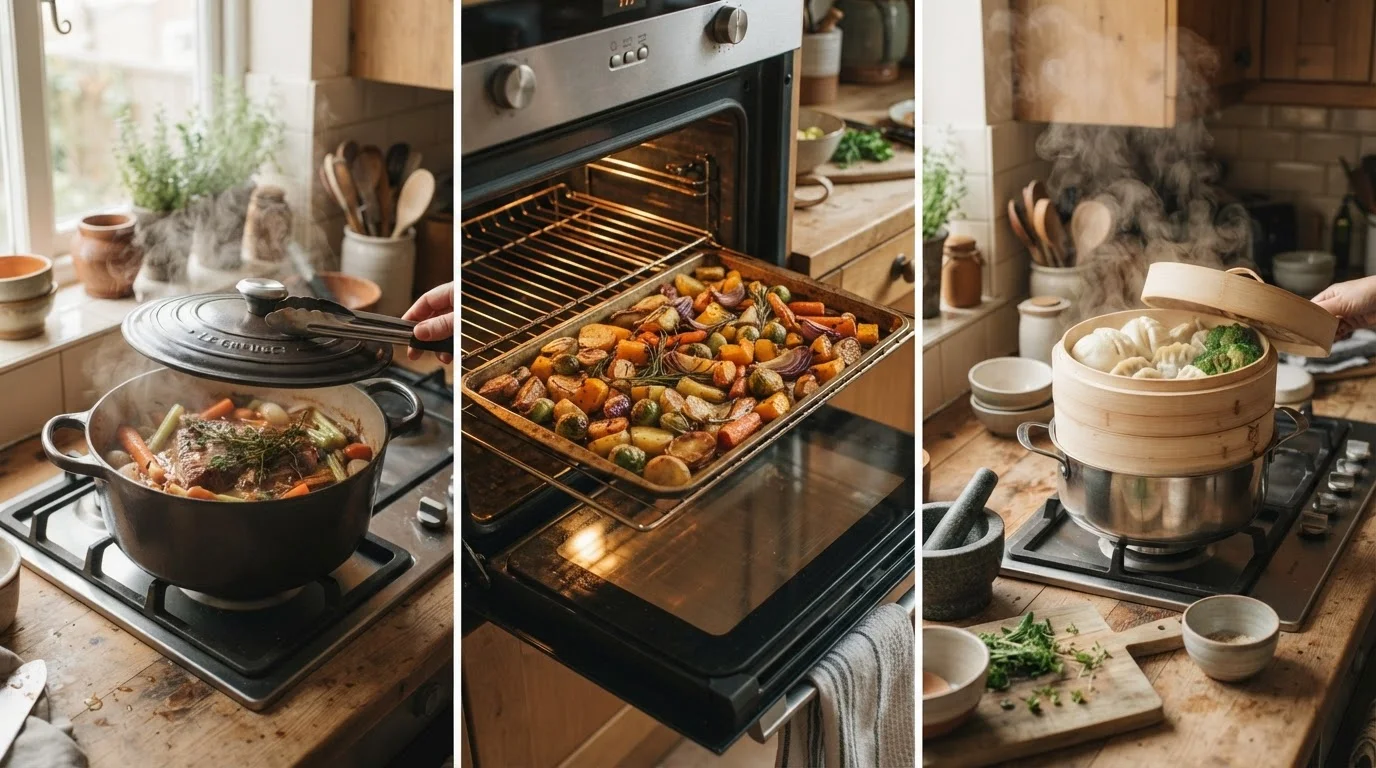
Photo credit: Glowwwatch.com
In this article
Each moist- and dry-heat method produces different results. This guide breaks down when each technique works best for common ingredients.
Key Takeaways
- Braising uses liquid and low heat to tenderize tough, collagen-rich cuts of meat over time.
- Roasting uses dry oven heat to caramelize surfaces and concentrate flavors in meat and vegetables.
- Steaming preserves nutrients and moisture in delicate proteins and vegetables without added fat.
- Choosing the right method depends on the ingredient's texture, density, and desired outcome.
- All three techniques are beginner-friendly once you understand what each one is actually doing to food.
What Separates These Three Methods
Cooking methods fall into two broad categories: moist heat (liquid or steam involved) and dry heat (hot air or a hot surface, no added liquid). Braising and steaming are moist-heat methods; roasting is dry heat. That distinction shapes everything — how the exterior of food looks, how its interior feels, and which ingredients thrive under each approach.
Understanding why a method works — not just how to do it — is what allows you to apply it confidently across recipes. For a broader foundation, see foundational techniques worth learning first.
Braising: Long, Slow, and Liquid-Assisted
Braising involves cooking food — usually meat — partially submerged in liquid inside a covered pot, at low heat, for an extended time. The liquid (stock, wine, tomatoes, or water) creates a humid environment that breaks down collagen, a tough connective tissue found in cuts like beef chuck, short ribs, pork shoulder, and chicken thighs. As collagen breaks down, it converts to gelatin, producing fall-apart tenderness and a rich, body-full sauce.
A typical braise starts on the stovetop: the meat is browned first to develop color and flavor through the Maillard reaction, then liquid is added and the pot goes into a 300–325°F oven (or stays on a low burner) for one to several hours. The lid traps moisture, maintaining a gentle simmer rather than a boil.
Best for: tough cuts with connective tissue, bone-in poultry, hearty root vegetables like fennel or turnips.
Not ideal for: lean, tender cuts (like chicken breast or fish fillets) that become dry and stringy when cooked long.
Sear Before You Braise
Braising alone won't create a browned crust — that only happens above the boiling point of water, which braising liquid never reaches. Sear meat in a hot, lightly oiled pan for 2–3 minutes per side before adding liquid. This step builds layered flavor that carries through the entire dish. Pat meat dry first so it browns rather than steams in the pan.
For more on how time and temperature interact during braising, learn what low-and-slow cooking actually means and which foods benefit most.
Roasting: Dry Heat and the Power of Browning
Roasting circulates dry oven heat around food — typically at temperatures between 375°F and 450°F — without added liquid. The result is a browned, sometimes crisp exterior created by the Maillard reaction (the same browning chemistry that makes seared meat and toasted bread taste richer) and, in the case of vegetables, caramelization of natural sugars.
Because there is no protective liquid, the surface of the food dries and concentrates flavor rather than softening. This is exactly what you want for whole chickens, root vegetables (carrots, potatoes, Brussels sprouts), dense squash, and tender cuts like pork tenderloin or beef sirloin. Spread food in a single layer on a sheet pan — crowding traps steam and prevents browning.
Best for: vegetables, whole poultry, tender-to-medium cuts of meat, anything where a golden exterior matters.
Not ideal for: very tough cuts that need hours of moist heat to become tender.
| Braising | Roasting | Steaming | |
|---|---|---|---|
| Heat type | Moist (liquid + low heat) | Dry (hot air, no liquid) | Moist (steam, no liquid contact) |
| Typical temperature range | 275–325°F | 375–450°F | 212°F (steam point) |
| Surface browning | Only if seared first | Yes — a primary goal | None |
| Ideal protein type | Tough, collagen-rich cuts | Tender to medium cuts, whole poultry | Delicate fish, shellfish, dumplings |
| Fat required | Optional (for searing) | Yes (to promote browning) | None needed |
| Time commitment | 1–4+ hours | 20 minutes–1.5 hours | 5–25 minutes |
| Nutrient retention | Moderate (nutrients in liquid) | Moderate (some lost to heat) | High (no leaching into water) |
Pan temperature and oven calibration matter significantly in roasting. Our guide on why pan temperature matters more than the recipe explains the science in plain terms.
Steaming: Gentle Heat, Maximum Moisture
Steaming cooks food by suspending it above — not in — boiling water, so that rising steam does the work. Because food never contacts the liquid directly, it retains its color, shape, and water-soluble nutrients (particularly B vitamins and vitamin C) better than boiling does. No fat is required, making steaming one of the leanest cooking methods available.
Steaming suits delicate proteins like fish fillets, shrimp, and shellfish that overcook quickly, as well as vegetables like broccoli, asparagus, and green beans that can turn mushy under dry heat. Dumplings and bao buns are classic examples of steamed foods that depend on the moist environment for their characteristic soft texture.
Equipment options include bamboo steamers (stacked over a wok), collapsible metal steamer baskets that fit inside a standard pot, or dedicated electric steamers. The key rule: keep the water simmering steadily and make sure food sits above the waterline.
Best for: fish, shellfish, dumplings, and vegetables where color and nutrient retention matter.
Not ideal for: food where browning or crust development is part of the goal.
Choosing the Right Method for Your Ingredient
The simplest framework for method selection is to ask two questions: How tough is this ingredient? and Do I want a browned exterior?
- Tough and collagen-rich → Braise. The long, moist cook time is not optional — it is necessary.
- Tender but dense (root vegetables, whole poultry, medium-grade cuts) → Roast. Dry heat builds flavor complexity you can't achieve with moisture.
- Delicate and quick-cooking (fish, shellfish, thin vegetables) → Steam. The gentle, even heat prevents overcooking and preserves texture.
Fat choice also plays a role, particularly in roasting and braising. Tossing vegetables in olive oil before roasting promotes browning; adding butter to a braise at the end adds richness. See how different cooking fats behave under heat to match your fat to your method. And if you want to complement these techniques with high-heat stovetop skills, sautéing vs. stir-frying is the natural next comparison to explore.
This article is for general educational purposes only. Results may vary depending on equipment, ingredients, and individual technique.

Author
Food & Drinks Editorial Team
Food & Drinks Editorial Team is the collective byline for our editorial team and contributor network. Articles published under this byline or an editorial pen name are researched, written, and reviewed according to our editorial standards for clarity, consistency, and independence before publication.
View all articles →