
Cooking Fats Compared: Butter, Oil, Lard, and Beyond
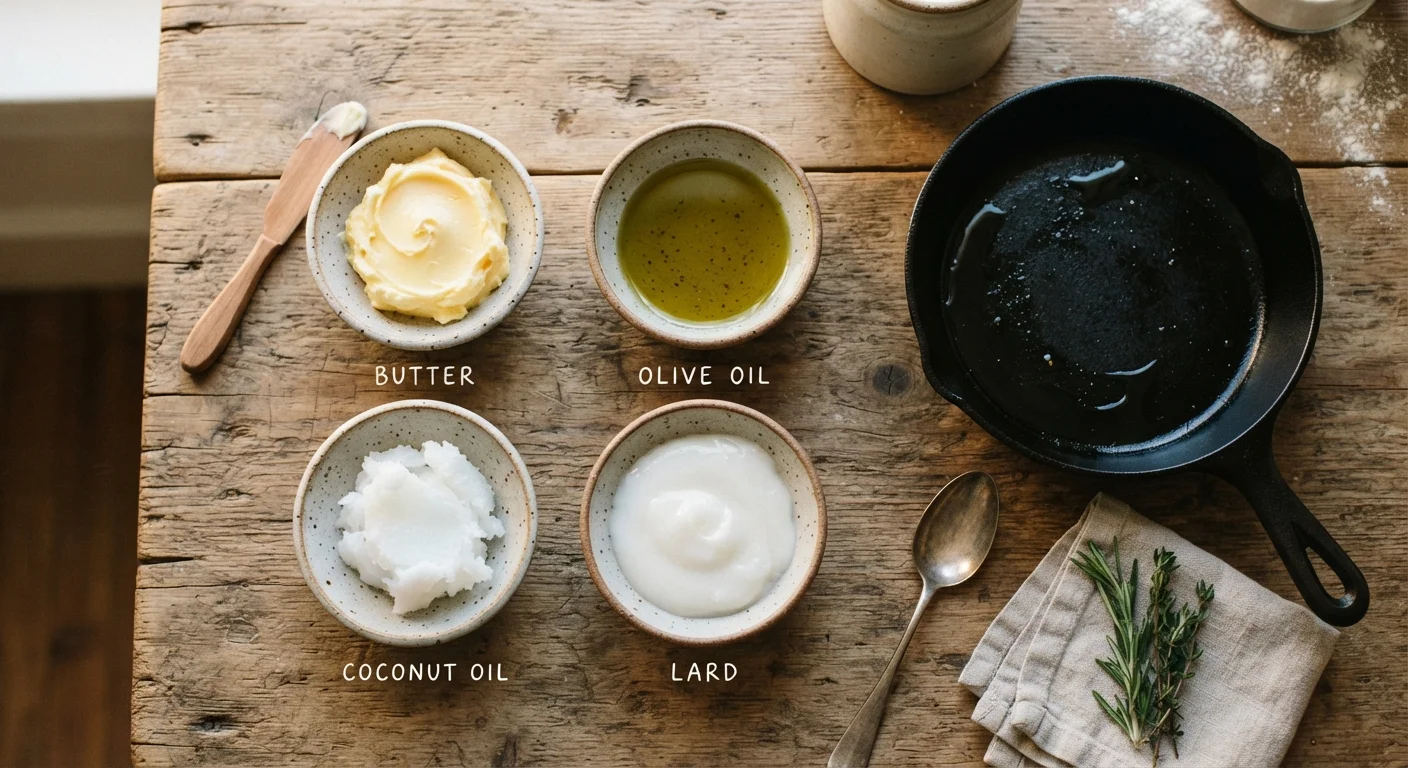
Photo credit: Glowwwatch.com
In this article
Different fats behave differently under heat and contribute distinct flavors. Here's how to choose the right fat for what you're making.
Key Takeaways
- Smoke point determines how hot a fat can get before it burns and produces off flavors.
- Butter adds rich flavor but burns quickly; clarified butter handles higher heat more safely.
- Neutral oils like vegetable or avocado oil are more versatile for high-heat cooking methods.
- Lard and schmaltz are traditional animal fats that perform well and contribute distinct savory flavor.
- No single fat is universally best — task, temperature, and flavor profile should guide your choice.
Why the Fat You Choose Actually Matters
Fat is not a passive ingredient. It carries flavor, transfers heat to food, affects browning, and changes the texture of everything from scrambled eggs to roast vegetables. When a dish turns out greasy, bitter, or oddly flat, the wrong fat — or the wrong temperature for that fat — is often the culprit.
The key concept to understand is smoke point: the temperature at which a fat begins to smoke and break down. Above that threshold, fats release compounds that taste acrid and can degrade the quality of your food. Understanding smoke points alongside flavor profiles helps you make smarter choices before you even turn on the burner. For more on how heat affects your cooking, see our guide to pan temperature.
Butter: Flavor First, Heat Second
Whole butter is roughly 80% fat, with the remainder being water and milk solids. Those milk solids are responsible for butter's characteristic golden-brown color and nutty aroma when heated — but they are also what causes it to burn at relatively modest temperatures (around 300–350°F for whole butter).
For low-heat cooking — sweating onions, finishing a pan sauce, or basting meat — whole butter is hard to beat on flavor. For higher heat, clarified butter (butter with the milk solids removed) raises the smoke point to around 450°F, making it far more suitable for searing. Ghee, a shelf-stable South Asian form of clarified butter, functions similarly.
When to Use Clarified Butter Instead
If a recipe calls for butter but requires higher heat than whole butter can handle, clarified butter is a simple upgrade. Remove the milk solids by slowly melting butter and skimming the foam, then pour off the clear fat. Ghee, available in most grocery stores, works the same way and keeps well at room temperature.
In baking, butter contributes moisture, structure, and flavor simultaneously. Substituting oils changes the texture of cakes and cookies noticeably, so use the fat the recipe specifies unless you understand the trade-off.
Oils: A Wide Spectrum of Heat Tolerance and Flavor
Not all cooking oils behave the same way, and the differences matter in practice.
- Extra-virgin olive oil (EVOO): Smoke point around 375–405°F. Best for lower-heat sautéing, dressings, and drizzling. Its distinct flavor makes it a poor choice for dishes where you want a neutral base.
- Refined olive oil: Processed to remove flavor compounds, which also raises the smoke point to roughly 465°F. More versatile than EVOO for cooking.
- Vegetable and canola oil: Neutral flavor, smoke points typically 400–450°F. Reliable workhorses for frying, roasting, and any application where fat should not compete with other flavors.
- Avocado oil: One of the highest smoke points available (refined versions reach approximately 500°F). Mild flavor. Well suited for high-heat methods like searing and stir-frying.
- Coconut oil: Moderate smoke point (350–385°F). Adds a distinct coconut flavor that works well in certain cuisines but can be intrusive in others.
For high-heat techniques like stir-frying, see our sautéing vs. stir-frying comparison for guidance on matching fat to method.
| Butter | Olive Oil (EVOO) | Vegetable/Canola Oil | Avocado Oil | Lard | |
|---|---|---|---|---|---|
| Approximate Smoke Point | 300–350°F | 375–405°F | 400–450°F | ~500°F (refined) | 370–400°F |
| Flavor Profile | Rich, creamy, nutty | Fruity, grassy, distinct | Neutral | Very mild | Subtle, savory |
| Best Heat Level | Low to medium | Low to medium | Medium to high | High | Medium to high |
| Best Uses | Sauces, baking, finishing | Dressings, sautéing | Frying, roasting, baking | Searing, stir-frying | Pastry, frying, roasting |
| Fat Type | Mostly saturated | Mostly monounsaturated | Mostly polyunsaturated | Mostly monounsaturated | Mostly saturated |
Animal Fats: Lard, Schmaltz, and Tallow
Lard (rendered pork fat), schmaltz (rendered chicken fat), and tallow (rendered beef fat) were the dominant cooking fats for most of culinary history. They largely fell out of favor in the mid-20th century but have remained staples in many professional kitchens and regional traditions.
Lard has a smoke point around 370–400°F and a subtle, savory flavor that makes it exceptional for pie crusts, tamales, and pan-fried potatoes. It produces a flakier pastry texture than most vegetable shortenings because of its fat crystal structure. Schmaltz is prized in Eastern European cooking for roasting potatoes and making matzo ball soup. Tallow, with a higher smoke point and firm texture, was historically used for deep frying.
These fats are primarily saturated, which contributes to their stability at heat. As with all dietary fats, their effects depend on overall eating patterns — consult a registered dietitian or healthcare professional if you have questions about dietary fat and your health.
When planning your roasting approach, our guide on braising, roasting, and steaming can help you choose the right technique to pair with your chosen fat.
How to Choose: A Practical Framework
When you're standing at the stove deciding which fat to use, run through three quick questions:
- How hot is this going to get? Match the fat's smoke point to your cooking temperature. High-heat methods need high-smoke-point fats.
- Do I want the fat's flavor in the dish? Butter, olive oil, lard, and schmaltz all add distinctive taste. Canola, vegetable, and refined avocado oil stay neutral.
- What texture am I aiming for? Solid fats (butter, lard) generally produce flakier, crisper results in pastry. Liquid oils create a different crumb or mouthfeel.
There is no universally correct answer. A seasoned cook might use olive oil to start aromatics, finish the same dish with butter, and roast something else in the same meal using lard — because each task calls for something different. Building that instinct starts with understanding what each fat does, not following a rigid rule.
This article is for general informational purposes only. It is not intended as medical or nutritional advice. If you have specific dietary health concerns, consult a qualified healthcare professional or registered dietitian.

Author
Food & Drinks Editorial Team
Food & Drinks Editorial Team is the collective byline for our editorial team and contributor network. Articles published under this byline or an editorial pen name are researched, written, and reviewed according to our editorial standards for clarity, consistency, and independence before publication.
View all articles →