
Techniques That Are Worth Learning Before Any Others
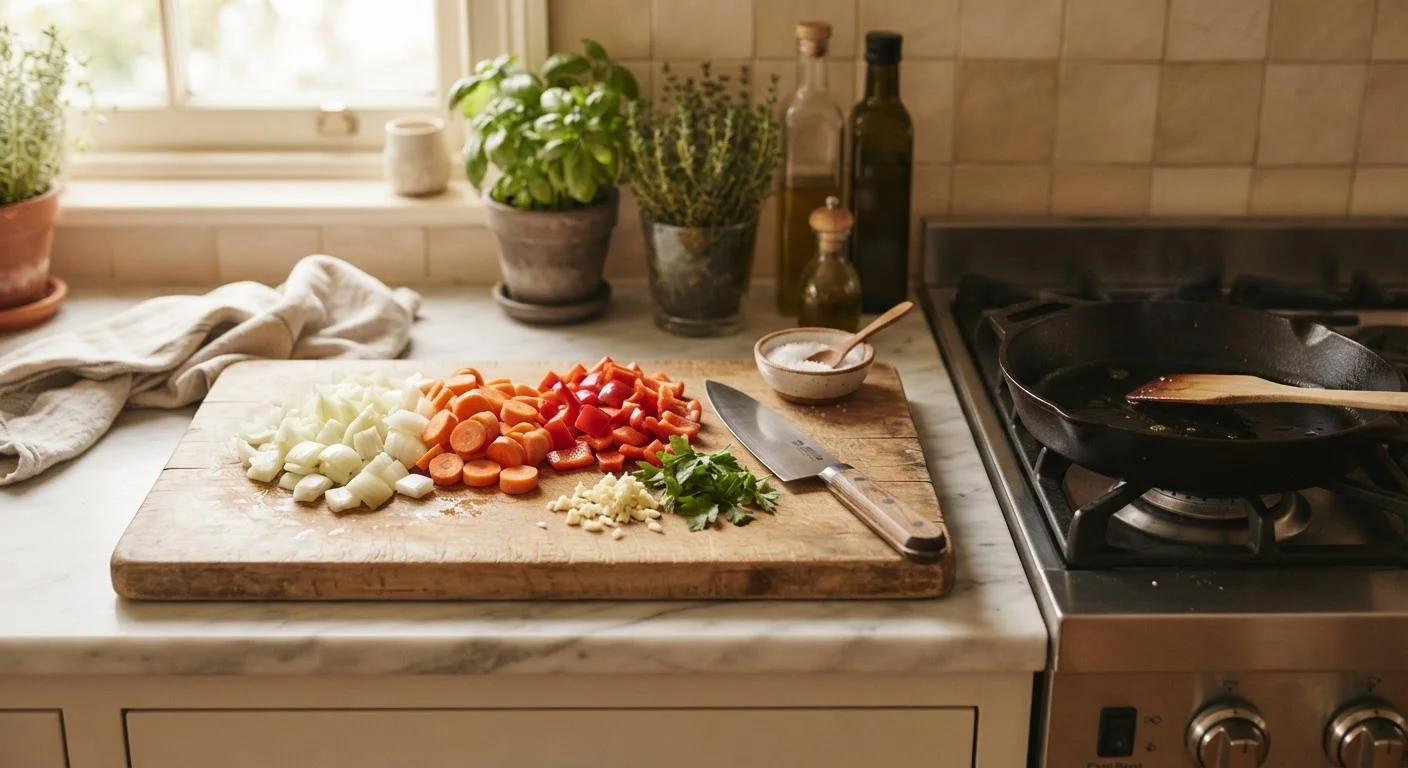
Photo credit: Glowwwatch.com
In this article
Not all cooking skills are created equal. These foundational techniques will serve you across cuisines, recipes, and skill levels.
Key Takeaways
- Knife skills are the single most transferable technique in any kitchen, regardless of cuisine.
- Controlling heat — not just following time — is what separates consistent cooks from frustrated ones.
- Seasoning in layers throughout cooking produces more balanced, flavorful results than seasoning at the end.
- Understanding how to build a pan sauce turns everyday cooking into something restaurant-worthy.
- Proper mise en place (prep before cooking) reduces errors and makes the whole process smoother.
Why Some Skills Pay Off More Than Others
Cooking has hundreds of techniques — from tempering chocolate to clarifying butter — but most home cooks don't need all of them right away. A small set of foundational skills, learned well, will serve you across thousands of recipes, every cuisine, and every skill level. Before investing time in specialty methods, it pays to build a reliable base.
Think of these techniques the way a musician thinks about scales: not glamorous on their own, but the reason everything else sounds right. Reading a recipe correctly before you start is one part of that foundation — understanding what you're about to do is just as important as knowing how to do it.
The list below covers the techniques that appear again and again, regardless of what you're cooking. Master these, and you'll find that new recipes stop feeling intimidating.
Knife Skills: The Foundation of Almost Everything
Before anything hits a pan, it usually goes through a knife. Learning how to hold a chef's knife correctly — using a pinch grip on the blade rather than gripping the handle — gives you far more control and reduces fatigue. Equally important is the rocking motion used for chopping and the "claw" hand position that keeps fingers curled safely away from the blade.
Beyond safety, consistent cuts matter for cooking: pieces of uneven size cook unevenly, leaving some parts overdone while others are underdone. Practicing a basic dice, a julienne (thin matchstick cuts), and a chiffonade (thin ribbons for leafy herbs and greens) covers the vast majority of what recipes call for.
Consistent cuts aren't just about presentation — unevenly sized pieces cook unevenly.
Heat Control: Understanding Your Stove
Most cooking failures trace back to heat. Too high, and garlic burns before the rest of the dish is ready. Too low, and chicken skin stays pale and soft instead of crisping. Learning to read visual and auditory cues — the shimmer of oil, the sizzle when food hits the pan, the color change as proteins cook — matters more than watching a timer.
A key concept here is preheating. A cold pan leads to sticking and uneven cooking. A properly preheated pan, with oil added just before the food, creates better texture and more predictable results. The same principle applies to the oven: always preheat fully before putting food in.
Reading the pan's sizzle and color tells you more than a timer ever can.
Seasoning in Layers, Not Just at the End
Salt is the most important seasoning tool in cooking, but when and how you use it changes the outcome dramatically. Adding salt only at the end of cooking seasons the surface of food. Adding it throughout — to water when boiling, to vegetables as they soften, to proteins before they cook — draws out moisture, enhances natural flavors, and creates depth that surface seasoning can't replicate.
This doesn't mean using more salt overall. It means distributing it thoughtfully across the cooking process. The same layering principle applies to other flavor builders: acid (lemon juice, vinegar), fat, and aromatics like garlic and onion all work best when added at the right stage.
Seasoning throughout the cooking process builds depth that finishing salt alone cannot achieve.
Mise en Place: Prep Before You Cook
Mise en place is a French culinary phrase meaning "everything in its place." In practice, it means measuring, chopping, and organizing all ingredients before you turn on any heat. Professional kitchens require this discipline because cooking doesn't pause — once garlic hits a hot pan, you have seconds before it burns, not minutes to find and chop the next ingredient.
For home cooks, practicing mise en place eliminates the frantic mid-cook scramble and reduces the chance of forgetting something entirely. It also forces you to read the full recipe before starting, which catches timing conflicts and missing ingredients before they become problems.
Setting up ingredients before cooking begins eliminates the scramble that causes most kitchen mistakes.
Building a Pan Sauce: Turning Fond Into Flavor
After searing meat or sautéing vegetables, the browned bits left on the bottom of the pan — called fond — are concentrated flavor. A pan sauce is the technique of dissolving that fond using liquid (wine, stock, or even water) to create a quick, deeply flavored sauce without any separate preparation.
The method is simple: remove the cooked protein, add liquid to the hot pan, and scrape the bottom with a wooden spoon or spatula as it simmers. The fond dissolves into the liquid, which can then be reduced, finished with butter, and seasoned. This technique works across proteins and flavor profiles, turning everyday meals into something noticeably more complete.
The browned bits left in a pan after searing are flavor waiting to become a sauce.
Roasting: Dry Heat as a Flavor Builder
Roasting uses dry oven heat to trigger browning reactions (called the Maillard reaction) on the surface of food, developing complex, savory flavors that boiling or steaming simply can't produce. The technique works across vegetables, proteins, and even some grains and spices.
The critical variables are temperature, spacing, and moisture. Vegetables roast better spread in a single layer with space between pieces — crowding them causes steaming rather than browning. Patting proteins dry before roasting helps the surface color rather than steam. A sheet pan and a hot oven (typically 400–425°F for most vegetables) are all you need to make roasting a reliable part of weekday cooking.
Crowded vegetables steam instead of roast — spacing them out is what creates that caramelized flavor.
Building From Here
None of these techniques require expensive equipment or culinary school training. Each one can be practiced on ordinary weeknight meals — and the more you repeat them, the more automatic they become.
Practice One Technique at a Time
Rather than trying to apply every skill at once, choose one technique to focus on for a week. Cook the same simple dish repeatedly — a sautéed vegetable, a pan-seared chicken thigh — with deliberate attention to just that skill. Repetition on a simple canvas builds real muscle memory faster than variety does.
It's also worth knowing that confidence in the kitchen comes partly from unlearning. Many common assumptions about cooking turn out to be incorrect. Our guide on kitchen myths that trip up new cooks addresses some of the most persistent ones, so you're not building habits on a faulty foundation.
Once these core techniques feel comfortable, the natural next step is developing your palate. Tasting as you go is the habit that ties everything together — it's how skilled cooks adjust in real time rather than hoping the finished dish works out.

Author
Food & Drinks Editorial Team
Food & Drinks Editorial Team is the collective byline for our editorial team and contributor network. Articles published under this byline or an editorial pen name are researched, written, and reviewed according to our editorial standards for clarity, consistency, and independence before publication.
View all articles →