
Sautéing vs. Stir-Frying: Same Pan, Very Different Results
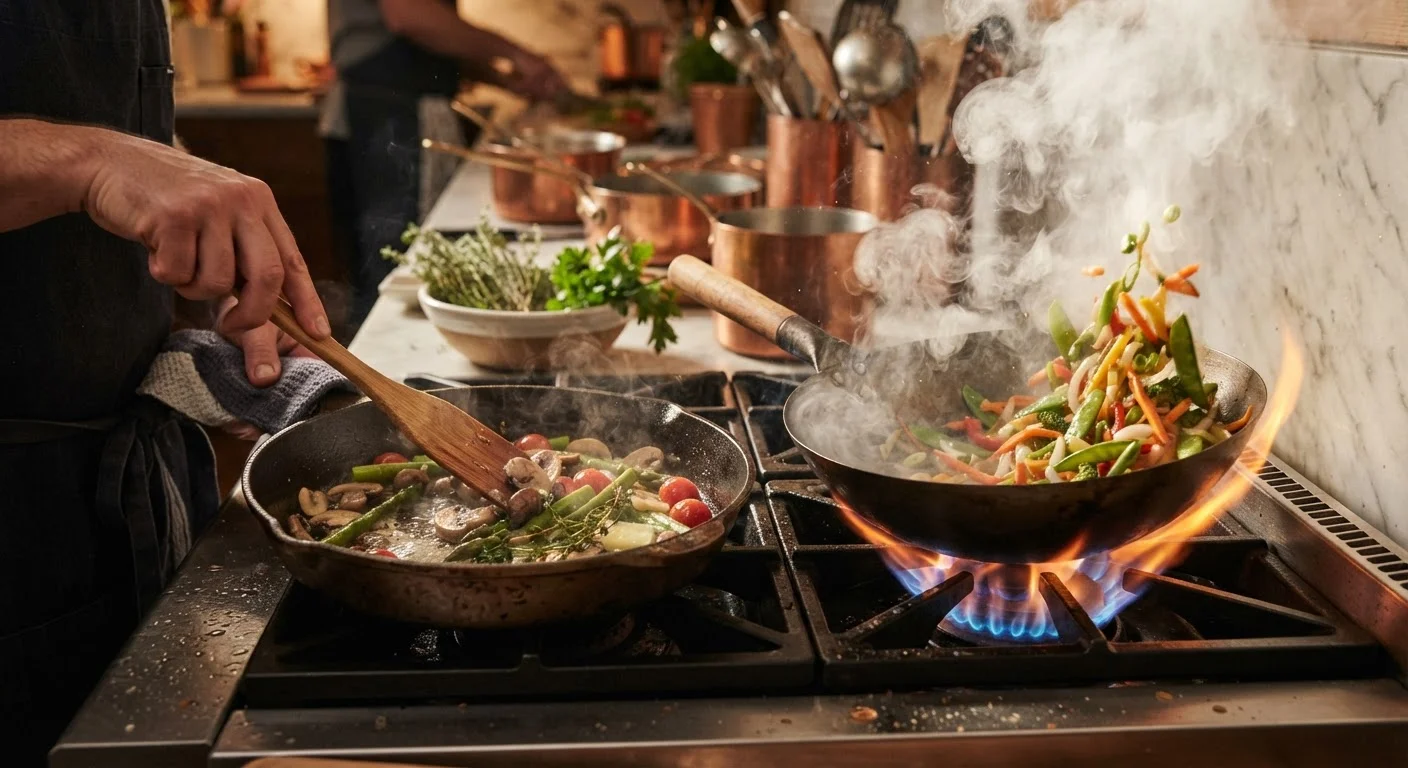
Photo credit: Glowwwatch.com
In this article
Both techniques use high heat and a pan, but the similarities end there. Understand what sets them apart and when to use each.
Key Takeaways
- Sautéing uses moderate-to-high heat with occasional stirring; stir-frying demands the highest heat possible and near-constant movement.
- Stir-frying requires ingredients to be prepped and portioned before the pan is hot — there is no time to cut mid-cook.
- Fat choice differs: butter or olive oil suits sautéing, while high smoke-point oils like peanut or avocado oil are standard for stir-frying.
- Sautéing works well in a skillet or sauté pan; stir-frying is most effective in a wok or wide, heavy skillet.
- Overcrowding the pan kills both techniques — it traps steam and prevents browning.
The Core Difference: Heat Level and Movement
At a glance, sautéing and stir-frying look nearly identical — both use a hot pan, a small amount of fat, and relatively quick cooking times. But the differences in heat intensity and how you move the food produce dramatically different results on the plate.
Sautéing (from the French sauter, meaning "to jump") uses moderate-to-high heat. Food is moved occasionally — a gentle toss or a single flip — giving each piece time to develop color and a light crust. The pace is deliberate. You are in control.
Stir-frying originates in Chinese cooking and operates at the highest heat your stovetop can deliver. Food is cut small, added in quick succession, and kept in near-constant motion. The goal is rapid cooking that preserves texture and locks in vibrant color — a quality Chinese chefs call wok hei (the "breath of the wok"), that slightly smoky, charred edge that comes from intense flame.
Understanding why pan temperature matters is essential to both methods — but especially to stir-frying, where even a modest drop in heat turns a sizzling dish into a steamed one.
| Criterion | Sautéing | Stir-Frying |
|---|---|---|
| Heat level | Moderate to high | Highest possible |
| Movement | Occasional toss or flip | Near-constant stirring |
| Best fats | Butter, olive oil | Peanut, avocado, or refined vegetable oil |
| Ideal pan | Skillet or sauté pan | Wok or wide heavy skillet |
| Ingredient size | Varied — whole filets to sliced pieces | Small, uniform pieces essential |
| Prep timing | Some flexibility mid-cook | Everything prepped before heating |
| Typical cook time | 5–15 minutes | 3–7 minutes |
| Beginner-friendliness | More forgiving pace | Requires practice and speed |
Setup, Fat, and Equipment
How you set up before you cook determines how well either technique works.
Prep Work
Sautéing is relatively forgiving about timing — you can mince garlic while onions soften. Stir-frying offers no such grace. Every ingredient must be sliced, measured, and arranged beside the stove before the pan heats up. Once stir-frying begins, there are seconds between steps, not minutes.
Choosing the Right Fat
Fat choice matters for both methods, though for different reasons. Sautéing allows for more flavorful but lower smoke-point fats — butter, olive oil, or clarified butter all work well. Stir-frying demands a fat with a high smoke point (typically above 400°F) that will not burn under extreme heat. Peanut oil, avocado oil, and refined vegetable oils are common choices. Our guide to cooking fats breaks down the full spectrum of options and their behavior under heat.
Pan Selection
A wide skillet or sauté pan works well for sautéing. Stir-frying is best done in a wok — its sloped sides allow you to push cooked pieces up the wall while new ingredients hit the hot center. A wide, heavy stainless or carbon steel skillet is a workable substitute on a flat Western burner.
400°F+
Minimum smoke point for stir-fry oils
Culinary science guidelines suggest oils used in high-heat stir-frying should have a smoke point above 400°F to avoid burning and off-flavors.
3–5 min
Typical stir-fry cooking window
Most stir-fry dishes cook in under five minutes once the pan is at temperature, making prep the most time-intensive part of the process.
50%
BTU gap vs. restaurant wok burners
Home gas burners typically produce 10,000–18,000 BTU, while commercial wok burners can reach 30,000–100,000 BTU, a significant output difference.
Common Mistakes and How to Avoid Them
Both techniques share one critical failure mode: overcrowding the pan. Too many ingredients lower the surface temperature rapidly, causing food to release steam rather than brown. Cook in batches if necessary — it is worth the extra few minutes.
For sautéing, the most common mistake is constant stirring. Resist the urge. Let food sit undisturbed long enough to develop a crust before moving it. Excessive stirring is one of those kitchen habits worth rethinking.
For stir-frying, the biggest pitfall is low heat. Most home stovetops produce significantly less BTU output than restaurant wok burners. To compensate: preheat your wok or skillet for longer than feels necessary, cook in smaller batches, and make sure ingredients are completely dry before they hit the pan — any surface moisture will instantly cool the surface and create steam. Pat proteins dry with a paper towel before adding them.
When in doubt about which method fits your recipe, consider the broader range of cooking approaches covered in our guide to braising, roasting, and steaming — sometimes neither high-heat method is the right call.
A Note on Wok Hei at Home
True wok hei — that lightly smoky, caramelized quality found in restaurant stir-fries — is difficult to replicate on most home stovetops due to lower burner output. You can get closer by using a carbon steel wok, preheating it for at least two to three minutes, and cooking in very small batches. The result won't be identical to a restaurant dish, but it will be noticeably better than a crowded, steam-cooked pan.

Author
Food & Drinks Editorial Team
Food & Drinks Editorial Team is the collective byline for our editorial team and contributor network. Articles published under this byline or an editorial pen name are researched, written, and reviewed according to our editorial standards for clarity, consistency, and independence before publication.
View all articles →