
Raised Beds vs. In-Ground Planting: Understanding the Real Differences
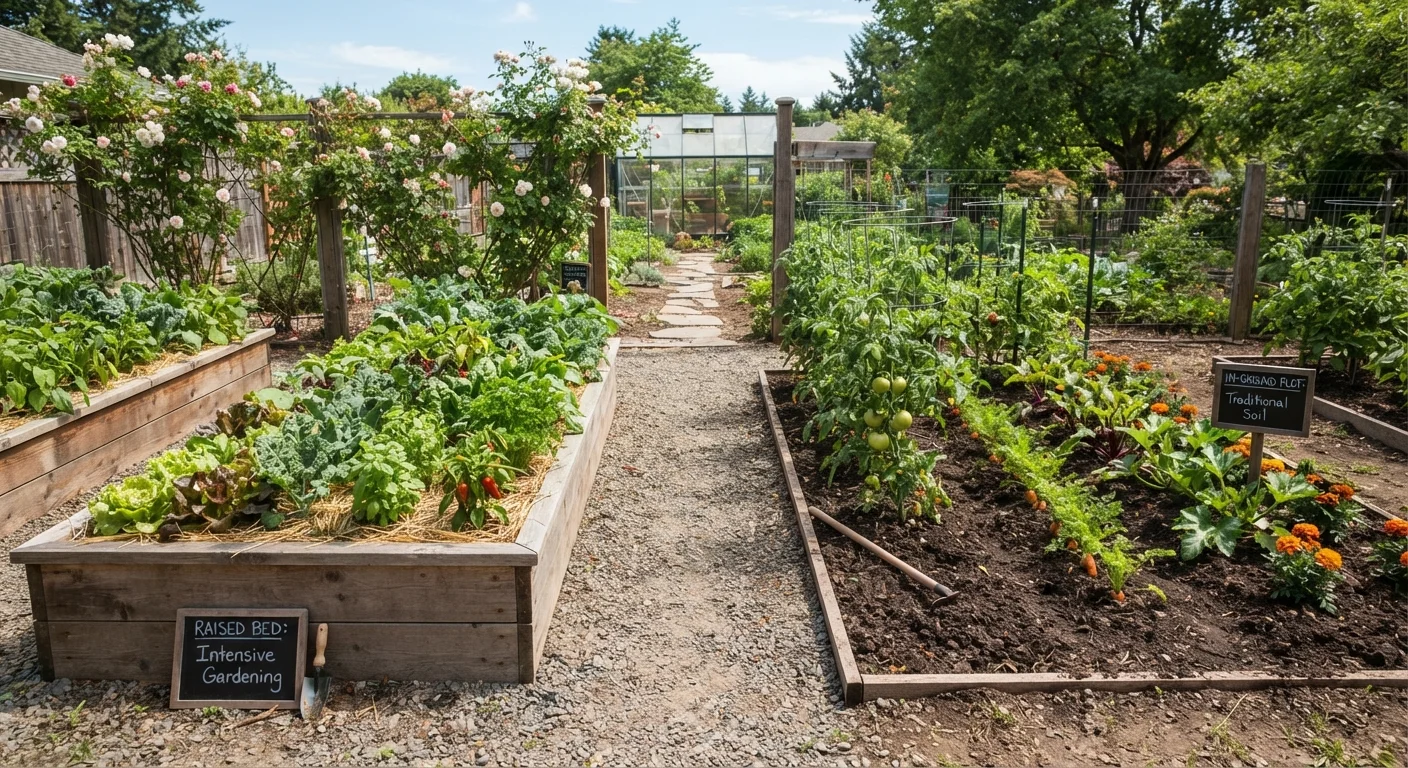
Photo credit: Glowwwatch.com
In this article
Compare raised bed and in-ground gardening across cost, drainage, soil control, and maintenance to find what suits your yard and goals.
Key Takeaways
- Raised beds give you full control over soil quality, which is especially valuable if your native soil is poor or compacted.
- In-ground planting costs less to start and suits gardeners with naturally good soil and larger growing areas.
- Raised beds warm up faster in spring but may need more frequent watering due to improved drainage.
- Either method can produce a productive garden; your site conditions and budget should guide the decision.
- Many gardeners eventually use both approaches to match different plants and sections of their yard.
Why the Choice Actually Matters
Choosing between a raised bed and planting directly in the ground is one of the first real decisions a new gardener faces — and it has downstream effects on everything from watering frequency to how much you spend before your first seed goes in. Neither method is a shortcut to a perfect garden, but understanding what each one demands (and delivers) helps you set up for success from the start.
If you're still figuring out how your yard is laid out and where sunlight falls, our garden planning guide walks through exactly that before you commit to any structure.
Upfront Cost and Setup
In-ground planting is the lower-cost entry point. If your existing soil is workable, you can amend it with compost and begin planting for very little investment. The main costs are tools, seeds or transplants, and any soil amendments you add over time.
Raised beds require building or buying a frame — wood, galvanized metal, and composite materials are common options — and then filling it with purchased or blended soil mix. For a standard 4×8-foot bed, soil alone can cost $50–$150 depending on your region and the mix you choose. That upfront expense is real, though it's typically a one-time cost.
| Raised Beds | In-Ground Planting | |
|---|---|---|
| Upfront Cost | Moderate to high (frame + soil) | Low (amendments only) |
| Soil Control | Full — you choose the mix | Limited by existing conditions |
| Weed Pressure (Year 1) | Low to moderate | Often high |
| Drainage | Excellent; may dry out fast | Varies by native soil type |
| Spring Warm-Up Speed | Faster | Slower |
| Scalability | Cost increases with size | Economical at larger scale |
| Ideal For | Poor soil, small spaces, beginners | Good soil, large plots, lower budgets |
The key trade-off: in-ground gardening stretches a smaller budget further, while raised beds front-load expenses in exchange for greater control later.
Soil Quality and Control
This is where raised beds have a meaningful advantage for many beginners. When you build a raised bed, you fill it with whatever mix you choose — typically a blend of topsoil, compost, and aeration material like perlite. You're not inheriting whatever clay, rocks, or compaction your yard came with.
In-ground gardeners work with what's already there, which sometimes means years of gradual improvement through composting, mulching, and amendment. Our soil basics guide explains what makes soil healthy and how to read what yours needs — a worthwhile read before you decide which path to take.
If your native soil tests well — good drainage, near-neutral pH, decent organic content — in-ground planting may be perfectly fine right away. If it's heavy clay or very sandy, the effort to fix it approaches the cost of just building a raised bed.
Test Before You Build or Dig
A basic soil test — available through many cooperative extension services for a modest fee — tells you your soil's pH, nutrient levels, and texture. If your native soil scores well, in-ground planting may need only minor amendments. If it's problematic, a raised bed becomes a much easier path to a productive first season.
Drainage, Watering, and Temperature
Raised beds drain more freely than most in-ground plots, which benefits plants prone to root rot — but it also means the soil dries out faster. In hot or dry climates, raised beds can require watering every day during peak summer. Drip irrigation helps significantly and is worth factoring into your planning.
On the positive side, raised bed soil warms up faster in early spring because it's exposed on multiple sides. This lets many gardeners start planting a week or two earlier than in-ground plots would allow in the same location.
In-ground beds hold moisture longer and tend to stay cooler — an advantage in summer heat, but a drawback in short growing seasons where you want soil to warm quickly.
Weed Pressure and Long-Term Maintenance
A freshly filled raised bed starts essentially weed-free, since you're not disturbing the native seed bank in the ground. Weeds do appear over time as seeds blow in, but the volume is typically lower in the early years. The defined border also makes it easier to apply mulch effectively to suppress what does germinate.
In-ground beds often carry years of weed seeds in the existing soil. First-season weed pressure can be significant, especially if you're converting a lawn or previously uncultivated area. Consistent mulching and shallow cultivation help, but expect to invest more time in this area early on.
Over the long term, in-ground beds require ongoing soil building — adding compost each season — while raised beds may need periodic topping-off of soil mix as it settles and breaks down. Neither is maintenance-free; they just demand different kinds of attention.
Which One Should You Start With?
Start with a raised bed if your soil is poor, you have a small or awkward space, or you want clearly defined growing areas that are easy to manage. It's also a forgiving format for beginners because you control the growing medium from day one.
Start in-ground if you have a larger area to cultivate, naturally good soil, and want to keep costs down. It scales more economically for growing larger quantities of vegetables or covering more ground.
Many experienced gardeners use both: raised beds for herbs, salad greens, and plants that need precise drainage, and in-ground rows for sprawling crops like squash, corn, or potatoes that benefit from deeper root runs and more horizontal space. Once you're ready to decide what to plant, our guide to seeds vs. transplants can help you figure out how to fill your bed efficiently.

Author
Home & Garden Editorial Team
Home & Garden Editorial Team is the collective byline for our editorial team and contributor network. Articles published under this byline or an editorial pen name are researched, written, and reviewed according to our editorial standards for clarity, consistency, and independence before publication.
View all articles →