
Where Nutrition Labels Fall Short — and How to Fill the Gaps
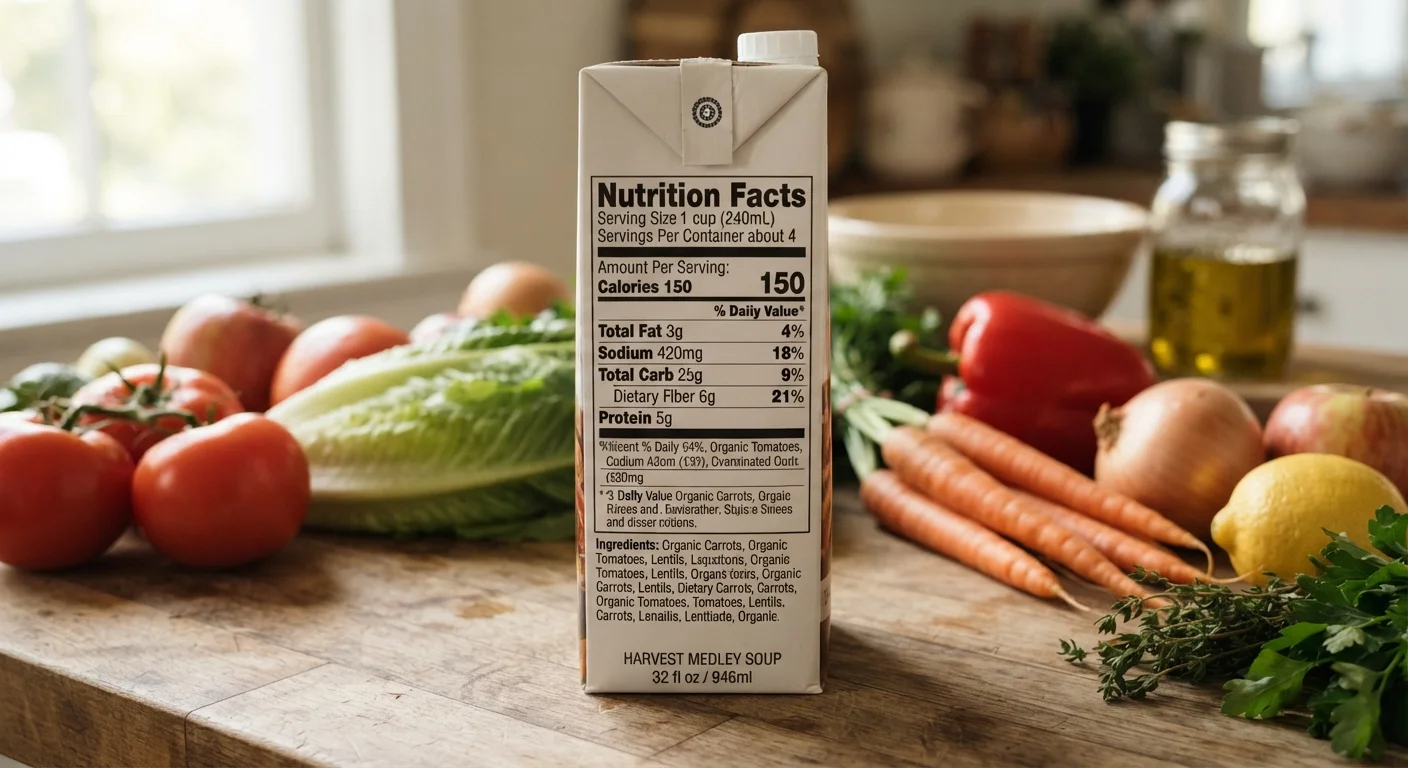
Photo credit: Glowwwatch.com
In this article
Nutrition labels are useful, but they leave out a lot. Here's what they don't tell you and how to think about food quality more broadly.
Key Takeaways
- Nutrition labels show calories and macronutrients but omit many important quality indicators.
- Serving sizes on labels are standardized, not personalized, and can be misleading in practice.
- Processing level and ingredient quality matter in ways the label doesn't directly reflect.
- Phytonutrients, antioxidants, and gut-health compounds rarely appear on any nutrition panel.
- Reading the ingredient list alongside the label gives a much fuller picture of food quality.
What the Nutrition Label Was Designed to Do
The Nutrition Facts panel, required by the FDA on most packaged foods, was designed to help consumers compare products and track intake of key nutrients — calories, fat, sodium, fiber, and a handful of vitamins and minerals. It does that job reasonably well. But it was never designed to be a complete guide to food quality, and treating it as one leads to some very common missteps.
Understanding the label's intended scope — and its structural limits — is the first step toward using it correctly. For a broader foundation, the Nutrition Basics hub covers how to connect label reading to balanced eating overall.
Treating the serving size as a personal recommendation.
Why it happens: Standardized serving sizes were set for comparison purposes, not to reflect how much a person should eat. Many people assume the listed serving is the right or typical amount.
Focusing only on calories while ignoring the source of those calories.
Why it happens: Calorie counts are prominently displayed and easy to compare, so they attract most of the attention. But 200 calories from almonds and 200 calories from a sugary snack carry very different nutrient profiles.
Assuming a food is healthy because it's low in fat or sodium.
Why it happens: Decades of public health messaging focused heavily on single nutrients, training shoppers to seek out "low-fat" or "low-sodium" as proxies for quality.
Ignoring the percent Daily Value (%DV) column entirely.
Why it happens: The %DV column can feel abstract, and many people aren't sure what it's based on or how to use it practically.
Equating "whole grain" on the label with a genuinely whole-grain product.
Why it happens: Labeling rules allow "whole grain" claims even when whole grain is not the primary ingredient by weight. The front of the package can be misleading.
What Falls Through the Cracks
Even a perfectly accurate nutrition label leaves out information that meaningfully affects how a food behaves in your body.
~20
Nutrients listed on a standard label
The FDA's Nutrition Facts panel covers roughly 20 data points — a fraction of the thousands of compounds present in food that may affect health.
68%
Americans who check nutrition labels
According to FDA consumer research, about two-thirds of US adults report looking at nutrition labels, but comprehension of key fields like %DV remains limited.
Phytonutrients and antioxidants — the plant compounds linked to reduced inflammation and chronic disease risk — have no mandatory spot on the label. A processed tomato sauce and a homemade one may share nearly identical macronutrient profiles while differing substantially in bioactive compound content.
The degree of processing is invisible on the panel. Two foods can show identical fiber counts: one from whole oats, one from isolated oat fiber added back after processing. The label treats them the same; your digestive system may not. Our piece on whole foods vs. processed foods explains why that spectrum matters.
Gut microbiome effects are another gap. Fermented foods like yogurt or kimchi may carry live cultures with meaningful health implications, yet the label won't distinguish a live-culture product from a heat-treated one unless you check the ingredient list carefully.
For a deeper look at nutrients that are chronically missing from American diets — many of which don't get prominent label placement — see The Nutrients Most Americans Don't Get Enough Of.
The Label Doesn't Reflect Food Processing Level
Two products with near-identical nutrition panels can differ dramatically in how processed they are — and emerging research suggests that ultra-processed foods may carry health implications that nutrient totals alone don't capture. Always read the ingredient list, not just the panel, to get a clearer sense of what you're actually eating.
Filling the Gaps: A Practical Approach
The label is a tool, not a verdict. Here's how to supplement it:
- Read the ingredient list first. Ingredients are listed by weight, so what appears at the top dominates the product. A long list of unfamiliar additives is a signal worth noting, regardless of what the nutrient panel says.
- Look past front-of-package claims. Terms like "natural," "multigrain," and "light" have specific — and sometimes surprising — legal definitions. Our article on front-of-package health claims breaks down what these terms actually mean.
- Apply the concept of nutrient density. A food that delivers substantial vitamins, minerals, and fiber relative to its calorie count offers more nutritional value than one that simply scores low on fat or sodium. Nutrient density is a concept worth understanding before your next grocery run.
- Use labels comparatively, not absolutely. The panel is most useful when comparing two similar products side by side, not as a standalone scorecard for a food's overall healthfulness.
Front-of-Package Claims Can Mislead
Health claims on the front of a package — "natural," "light," "made with real fruit" — are marketing language, not nutritional endorsements. The FDA regulates some of these terms, but not all, and the definitions are often narrower than they appear. Always flip to the Nutrition Facts panel and ingredient list before drawing conclusions about a food's quality.
For a practical shopping framework that incorporates all of this, Grocery Shopping with Nutrition in Mind offers a step-by-step checklist you can use in real time.
This article is for general informational and educational purposes only and is not a substitute for personalized medical or dietary advice. Consult a qualified healthcare professional or registered dietitian for guidance specific to your health needs.

Author
Food & Drinks Editorial Team
Food & Drinks Editorial Team is the collective byline for our editorial team and contributor network. Articles published under this byline or an editorial pen name are researched, written, and reviewed according to our editorial standards for clarity, consistency, and independence before publication.
View all articles →