
Whole Foods vs. Processed Foods: Navigating the Spectrum
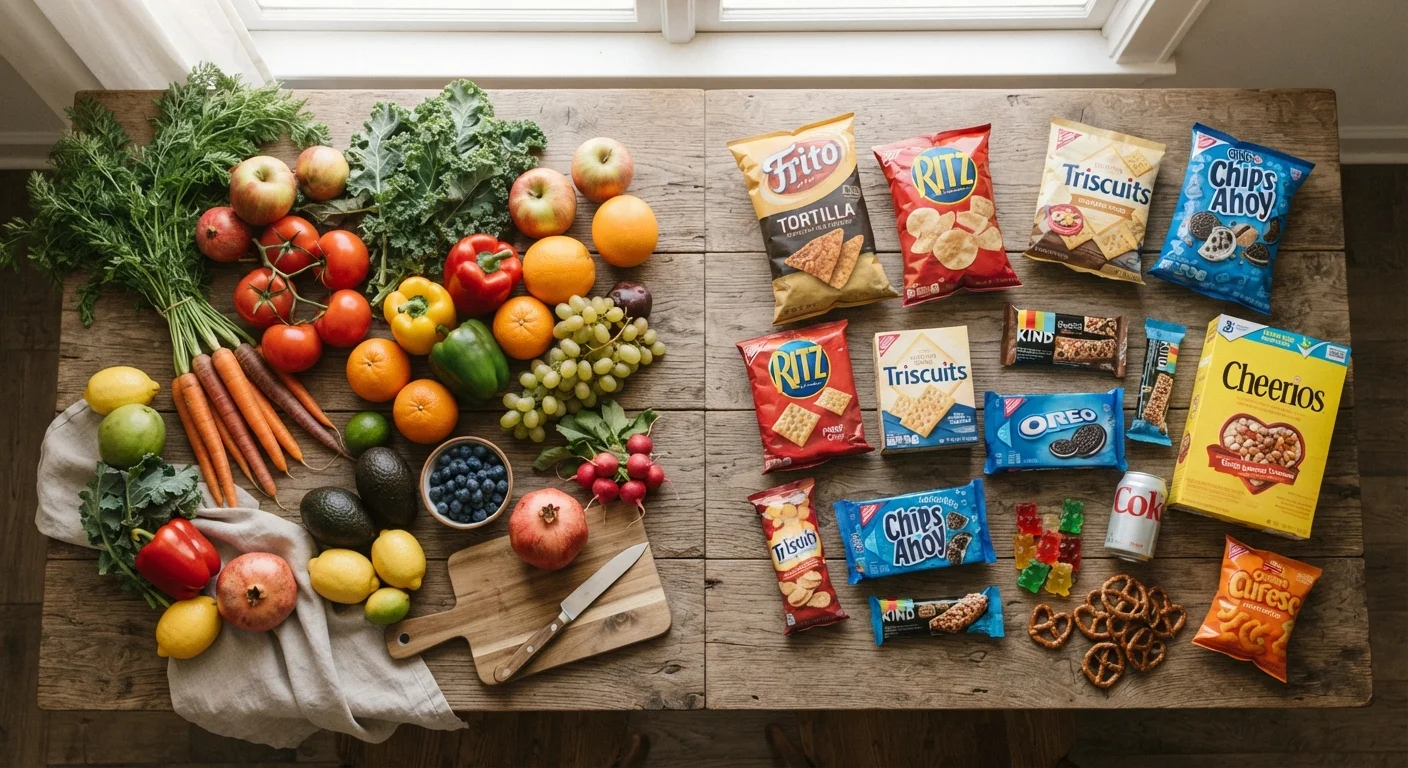
Photo credit: Glowwwatch.com
In this article
Processing exists on a spectrum, not a binary. Learn how to think about food processing levels and what the evidence suggests about health.
Key Takeaways
- Processing is a spectrum, not a simple split between 'good' and 'bad' foods.
- Ultra-processed foods — not all processed foods — are most consistently linked to health concerns in research.
- Many minimally processed foods are nutritious, convenient, and affordable staples.
- Reading ingredient lists, not just nutrition labels, gives a clearer picture of food quality.
- A balanced dietary pattern matters more than eliminating any single food category.
Why 'Processed' Doesn't Mean What You Think
Ask most people whether processed food is bad for them and you'll get a quick yes. But that answer glosses over something important: nearly every food we eat has been processed in some way. Washing, freezing, fermenting, cooking — all of these change a food from its raw state. The word processed covers an enormous range, from a bag of frozen spinach to a fluorescent-orange cheese puff. Treating them as equivalent leads to confusion, not better choices.
A more useful framework is the NOVA classification system, developed by researchers at the University of São Paulo. NOVA sorts foods into four groups based on the extent and purpose of processing — not just their nutrient content. Understanding these groups helps explain why nutrition science often reaches different conclusions about different processed foods.
The Four Processing Levels Explained
Here's how the NOVA groups break down in plain terms:
- Unprocessed or minimally processed foods — Whole fruits, vegetables, plain meats, eggs, legumes, plain nuts. These have been cleaned, dried, chilled, or frozen, but nothing significant has been added or removed.
- Processed culinary ingredients — Oils, butter, flour, salt, sugar. These are derived from whole foods and used as ingredients in cooking, not typically eaten on their own.
- Processed foods — Foods made by combining Group 1 and Group 2 items: cheese, canned fish, smoked meats, freshly baked bread, simple jarred tomatoes. Processing here mainly serves preservation or flavor development.
- Ultra-processed foods (UPFs) — Industrial formulations that go well beyond preservation. They typically contain additives rarely found in home kitchens — emulsifiers, artificial flavors, color stabilizers, modified starches — and are engineered to be hyper-palatable. Think packaged snacks, flavored chips, fast-food buns, and many breakfast cereals.
| Whole / Minimally Processed | Processed Foods | Ultra-Processed Foods | |
|---|---|---|---|
| Examples | Fresh fruit, frozen vegetables, plain meat, eggs | Cheese, canned fish, simple bread, jarred tomatoes | Packaged snacks, flavored chips, many breakfast cereals |
| Ingredient list length | Very short or single ingredient | Short, recognizable ingredients | Long, with many unfamiliar additives |
| Nutrient density | Generally high | Moderate, varies by product | Often low relative to calories |
| Fiber content | Often high (especially plants) | Variable | Typically low |
| Added sugar / sodium | Minimal to none | Sometimes present | Frequently high |
| Research-linked health concerns | Consistently associated with better outcomes | Neutral to mildly mixed | Most consistently linked to risk in large studies |
| Convenience | Variable; some prep required | High; ready-to-use | Very high; ready-to-eat |
The distinction that matters most in current nutrition research is between Groups 1–3 and Group 4. Understanding the full nutrition picture is easier once you recognize that the ingredient list — not just the nutrition facts panel — reveals which group a food falls into.
What the Research Says About Ultra-Processed Foods
Large observational studies — including cohort research from Europe and the US — have consistently found associations between high ultra-processed food consumption and elevated risks of obesity, type 2 diabetes, cardiovascular disease, and certain cancers. A notable randomized controlled trial published in Cell Metabolism (Hall et al., 2019) found that participants assigned to an ultra-processed diet consumed significantly more calories and gained more weight than those eating unprocessed diets, even when both diets were matched for sugar, fat, and fiber.
Researchers point to several possible mechanisms: ultra-processed foods tend to be calorie-dense and low in fiber, they are digested quickly (raising blood sugar faster), and they may displace more nutritious foods. Some additives are also under active study for potential effects on gut microbiome health, though this research is still developing.
57%
Share of US calories from ultra-processed foods
A nationally representative dietary analysis published in BMJ Open found that ultra-processed foods accounted for roughly 57% of Americans' daily energy intake.
500 cal/day
Extra calories consumed on ultra-processed diet
In the Hall et al. (2019) randomized controlled trial in Cell Metabolism, participants eating ultra-processed foods consumed approximately 500 more calories per day than those on an unprocessed diet.
Importantly, observational studies show association, not causation. People who eat more ultra-processed foods often have other lifestyle differences that influence health outcomes. Still, the consistency across many large studies gives researchers reason to treat UPF intake as a meaningful signal worth acting on.
Practical Ways to Navigate the Spectrum
The goal isn't perfection — it's building a dietary pattern that leans toward less-processed options without becoming unnecessarily restrictive. A few principles help:
- Use the ingredient list as your guide. A long list of unfamiliar additives is a reliable sign of ultra-processing. Nutrition labels leave gaps that the ingredient list can help fill.
- Embrace minimally processed convenience foods. Frozen vegetables, canned beans, plain oats, and unsweetened yogurt are all processed — and all genuinely nutritious. These aren't compromises; they're smart staples.
- Watch for added sugar and sodium in processed products. These are two of the most common ways processing shifts nutritional profiles. Added and naturally occurring sugars behave differently in the body and in food products.
- Think in patterns, not individual meals. One bag of chips doesn't define a diet. Consistently choosing whole or minimally processed foods most of the time gives you meaningful nutritional breathing room.
For more guidance on putting this into practice at the store, see our nutrition-focused grocery shopping guide.
This article is for general informational and educational purposes only and is not a substitute for advice from a qualified healthcare professional or registered dietitian. Individual nutritional needs vary. Please consult a professional for guidance tailored to your health situation.

Author
Food & Drinks Editorial Team
Food & Drinks Editorial Team is the collective byline for our editorial team and contributor network. Articles published under this byline or an editorial pen name are researched, written, and reviewed according to our editorial standards for clarity, consistency, and independence before publication.
View all articles →