
Kombucha, Kefir Water, and Jun Tea: Fermented Drinks Explained
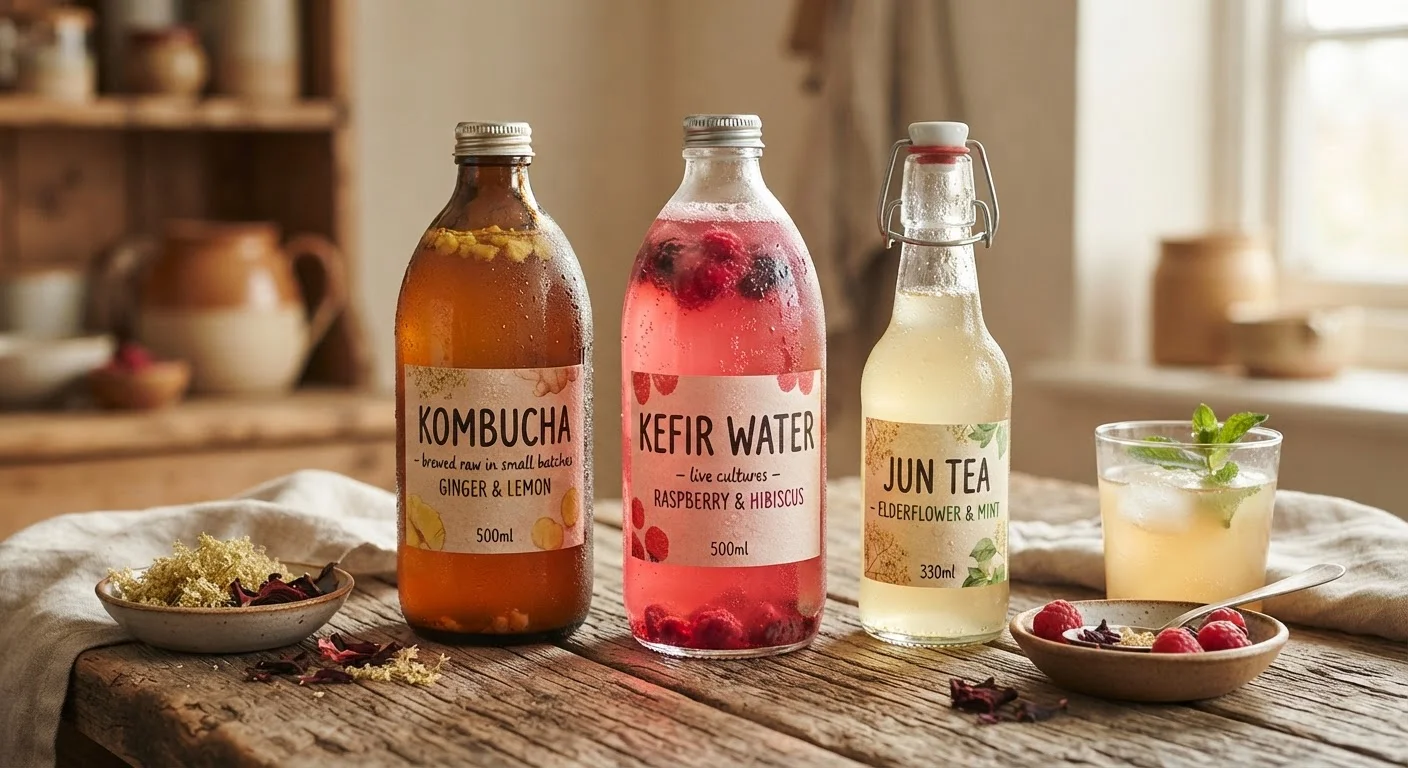
Photo credit: Glowwwatch.com
In this article
Fermented beverages are everywhere on store shelves. This guide explains what they are, how they're made, and what we actually know about them.
Key Takeaways
- All three drinks are produced through live-culture fermentation, converting sugars into acids, gases, and trace alcohol.
- Kombucha uses tea and a SCOBY; kefir water uses sugar water and kefir grains; jun tea uses green tea and honey.
- Each drink contains small but measurable amounts of alcohol — typically under 0.5% ABV in commercial versions.
- The gut-health benefits widely marketed for these drinks are supported by early research, but human clinical evidence remains limited.
- Sugar content varies significantly between brands and styles — always check the nutrition label.
- People who are pregnant, immunocompromised, or managing specific health conditions should consult a healthcare professional before adding these drinks to their routine.
What Fermented Beverages Actually Are
Fermentation is one of the oldest food preservation methods known to humans. In the context of beverages, it refers to a process in which microorganisms — bacteria, yeast, or both — consume sugars in a liquid and produce acids, carbon dioxide, and small amounts of alcohol as byproducts. The result is a drink with a tangy or effervescent character that differs markedly from the original ingredients.
Kombucha, kefir water, and jun tea are all fermented in this way, but each uses a different starter culture and base liquid. Understanding what drives fermentation in each drink is the clearest way to understand what ends up in your glass. For a broader look at how fermentation compares to distillation and brewing in alcoholic drinks, see our fermentation and brewing explainer.
Fermentation
A biological process in which microorganisms such as bacteria and yeast break down sugars, producing acids, gases, or alcohol as byproducts.
SCOBY
Short for Symbiotic Culture of Bacteria and Yeast — a rubbery, living culture used to ferment kombucha and jun tea by consuming sugar in the liquid.
Kefir grains
Clusters of bacteria and yeast held in a gel-like matrix, used to ferment both dairy milk (dairy kefir) and sugar water (kefir water). Not related to cereal grains.
Acetic acid
The organic compound responsible for the tart, vinegar-like taste in kombucha and similar fermented drinks. It is produced when bacteria metabolize alcohol during fermentation.
Probiotic
Live microorganisms that, when present in adequate amounts, may confer a health benefit on the host — though evidence varies significantly by strain and context.
ABV (Alcohol by Volume)
A standard measure of how much alcohol a beverage contains, expressed as a percentage. Most commercial fermented soft drinks are below 0.5% ABV.
Kombucha: The SCOBY-Driven Staple
Kombucha begins as sweetened tea — almost always black or green — to which a SCOBY (Symbiotic Culture of Bacteria and Yeast) is added. The SCOBY feeds on the dissolved sugar over one to four weeks, producing acetic acid, gluconic acid, and carbon dioxide. The finished drink is tart, lightly fizzy, and mildly acidic, with a flavour profile that ranges from apple-cider-vinegar-like to fruity depending on any added flavourings.
Because it starts with tea, kombucha contains caffeine — typically 10–25 mg per serving in commercial products, though this varies. It also retains small amounts of alcohol (usually under 0.5% ABV in store-bought versions) and the organic acids produced during fermentation. If you are curious about the tea base itself, our guide to tea types explains how different processing methods change the leaf's chemistry.
Check the Label Before You Buy
Kombucha sugar content varies widely between brands and flavors. A plain, unflavored kombucha will generally have less residual sugar than a fruit-flavored variety. Look at the grams of sugar per serving on the nutrition facts panel rather than relying on front-of-label claims like 'low sugar' or 'raw.'
Kefir Water: Grains, Not Dairy
Kefir water — sometimes called water kefir or tibicos — is made by adding kefir grains to sugar water, sometimes with added fruit juice or dried fruit for additional nutrients. Kefir grains are not actual grains in the agricultural sense; they are gelatinous clusters of bacteria and yeast held together in a polysaccharide matrix. They look like small translucent pebbles.
Fermentation typically takes 24–48 hours, producing a mildly sweet, slightly fizzy drink that is considerably lighter in flavour than kombucha. Because the base is plain water rather than tea, kefir water contains no caffeine and is naturally dairy-free — making it one of the more accessible fermented drinks for people with dietary restrictions. The resulting alcohol content is generally very low, often under 0.5% ABV, though home brews can vary.
Jun Tea: Kombucha's Honey-Fed Cousin
Jun tea is structurally similar to kombucha but uses two key differences: green tea as the base and raw honey as the sugar source instead of refined cane sugar. It ferments with its own specific SCOBY culture, which is adapted to consuming the fructose and glucose in honey rather than sucrose.
The result is a drink that is noticeably lighter and more delicate than standard kombucha, with floral and subtly sweet notes. Because raw honey has its own antimicrobial properties, jun tea's fermentation environment is somewhat different from kombucha's, and the microbial community in a jun SCOBY may differ in composition. Jun is less widely available commercially than kombucha, and home brewing is common among enthusiasts.
Jun Tea Is Harder to Find
Unlike kombucha, which is widely stocked in grocery and natural food stores, jun tea has a much smaller commercial footprint in the US. You are more likely to encounter it at farmers' markets, specialty retailers, or through home brewing. If you find a bottle, check that it is kept refrigerated, as live-culture drinks require cold storage to maintain quality.
What the Research Actually Says
Marketing for fermented beverages often emphasises digestive and immune benefits tied to live cultures. It is accurate that these drinks contain live bacteria at the time of production. However, the scientific picture is more nuanced than many labels suggest.
Most of the research on fermented foods and gut health has been conducted in laboratory settings or in small human trials. Large-scale randomised controlled trials specifically studying kombucha, kefir water, or jun tea in humans are limited. Current evidence does not support making definitive claims about what these drinks will do for any individual's health. They are beverages, not treatments.
It is also worth noting that sugar content varies significantly across commercial products. Some bottled kombuchas contain as much sugar per serving as a fruit juice. Checking the nutrition label is always worthwhile — and if fizzy drinks in general are part of your routine, our guide to sparkling water and seltzer provides useful context on carbonated options with no added sugar.
This article is for informational purposes only and is not medical advice. Consult a qualified healthcare professional before making changes to your diet, especially if you have a health condition.
How to Choose the Right One for You
The differences between these three drinks come down to a few practical factors worth considering before you choose one regularly.
- Caffeine sensitivity: Kombucha and jun tea both use tea as a base and contain caffeine. Kefir water is caffeine-free.
- Dietary restrictions: All three are vegan-friendly in most formulations. Kefir water contains no dairy or gluten by nature, though cross-contamination is possible in shared facilities — check labels if this matters to you.
- Flavour preference: Kombucha is the most assertive in flavour. Jun is lighter and floral. Kefir water is mild and can be quite neutral or fruit-forward depending on how it is made.
- Sugar content: Always read the nutrition label. Fermentation reduces but does not eliminate sugar, and fruit-flavoured commercial versions often have sugar added post-fermentation.
- Storage: All three are perishable and should be kept refrigerated once opened. For general tips on keeping beverages at their best, our drink storage guide covers common mistakes worth avoiding.
None of these drinks is a necessity, and all of them are optional additions to an otherwise varied diet. The best reason to try one is simply because you find it enjoyable.
Frequently Asked Questions

Author
Food & Drinks Editorial Team
Food & Drinks Editorial Team is the collective byline for our editorial team and contributor network. Articles published under this byline or an editorial pen name are researched, written, and reviewed according to our editorial standards for clarity, consistency, and independence before publication.
View all articles →