
Fermentation, Distillation, and Brewing: How Alcoholic Drinks Are Made
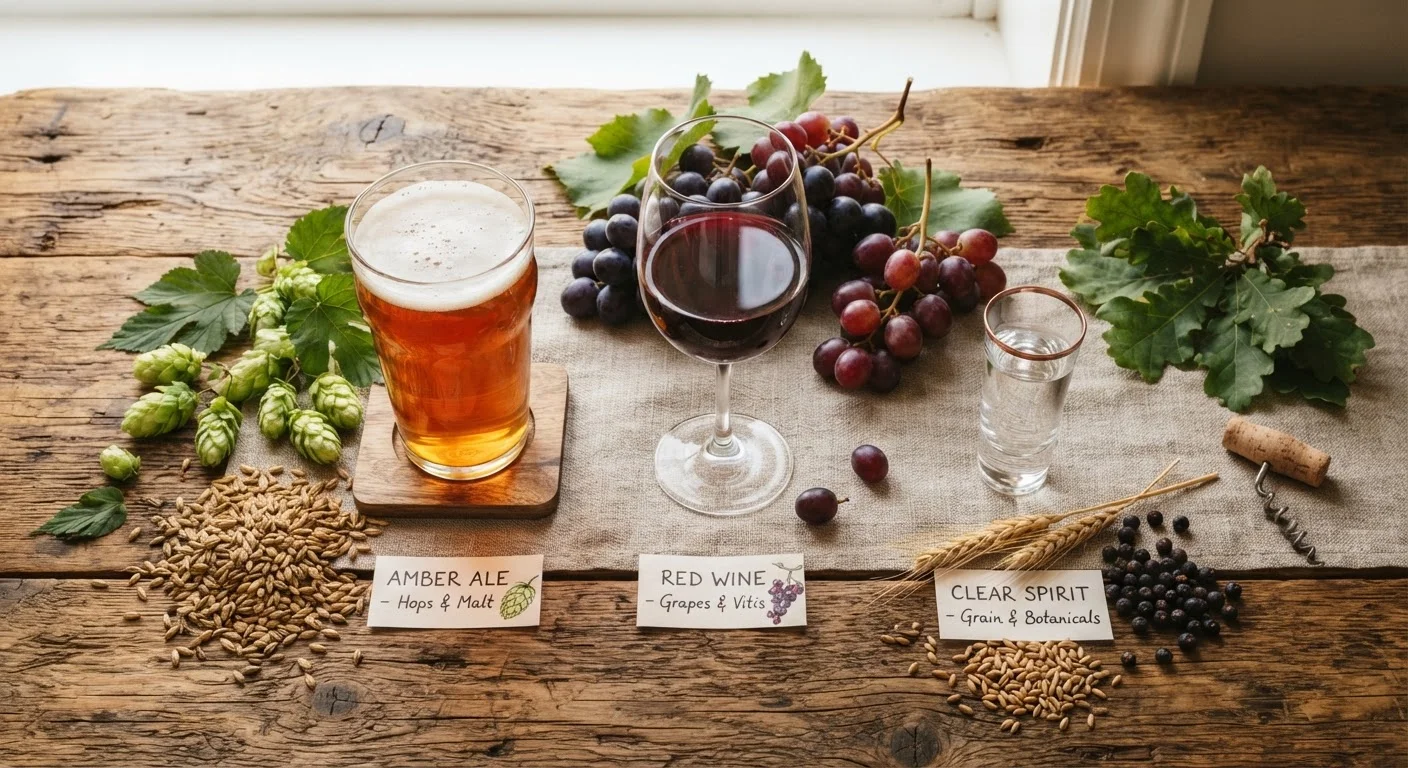
Photo credit: Glowwwatch.com
In this article
Beer, wine, and spirits each take a distinct production path. This explainer walks through the science behind each process in plain terms.
Key Takeaways
- Fermentation is the shared starting point for all alcoholic beverages — yeast converts sugar into alcohol and carbon dioxide.
- Beer requires an extra step called mashing to convert grain starches into fermentable sugars before yeast is added.
- Wine ferments naturally from the sugars already present in fruit, most commonly grapes.
- Distillation concentrates alcohol by heating a fermented liquid and collecting the vapor — this is how spirits are made.
- Alcohol by volume (ABV) tells you what percentage of a drink is pure ethanol, which varies widely by beverage type.
The Foundation: What Fermentation Actually Is
Every alcoholic drink — whether a light lager, a bold red wine, or a barrel-aged bourbon — begins with the same biological event: fermentation. Understanding this one process unlocks the logic behind everything else.
Fermentation
A natural process in which yeast breaks down sugars in the absence of oxygen, producing ethanol (alcohol) and carbon dioxide as byproducts.
Distillation
A method of separating and concentrating alcohol from a fermented liquid by heating it, collecting the alcohol-rich vapor, and cooling it back into liquid form.
Yeast
A microscopic single-celled fungus that drives fermentation. Different strains are selected for beer, wine, and spirits because each produces distinct flavor compounds.
Wort
The sweet, sugar-rich liquid extracted from malted grain during the mashing step of brewing — essentially the raw material that yeast ferments into beer.
Alcohol by Volume (ABV)
A standard measure, shown as a percentage, of how much of a drink's total liquid volume is pure ethanol.
Mashing
A brewing step in which malted grain is steeped in hot water so that natural enzymes convert the grain's starches into fermentable sugars.
Fermentation happens when yeast (a single-celled microorganism) consumes sugar and, in the absence of oxygen, converts it into two byproducts: ethanol (the alcohol we drink) and carbon dioxide (the gas that makes beverages fizzy). The chemical equation is straightforward even if the microbiology is complex — sugar in, alcohol and CO₂ out.
The type of sugar available, the yeast strain used, the temperature, and the duration of fermentation all shape the final character of a drink. This is why fermentation is as much craft as science.
How Beer Is Brewed
Beer starts with grain — most often barley — whose starches must be converted into fermentable sugar before yeast can do its work. This conversion step is what distinguishes brewing from winemaking.
- Malting: Grain is soaked, allowed to partially germinate, then dried. This activates enzymes inside the grain that can break starch down into sugar.
- Mashing: The malted grain is steeped in hot water. The enzymes released during malting convert the starches into a sugar-rich liquid called wort.
- Boiling and hopping: The wort is boiled and hops are added. Hops contribute bitterness, aroma, and act as a natural preservative that balances the sweetness of the malt.
- Fermentation: The cooled wort is transferred to a fermentation vessel and yeast is added. Over days to weeks, yeast converts the sugars into alcohol and CO₂.
- Conditioning and packaging: The beer is clarified, carbonated (naturally or artificially), and packaged into kegs, cans, or bottles.
The style of beer — lager, ale, stout, wheat beer — is largely determined by yeast strain, grain bill, hop variety, and fermentation temperature. Ales ferment warm with top-fermenting yeast; lagers ferment cold with bottom-fermenting yeast, producing a crisper, cleaner profile.
How Wine Is Made
Wine has fewer processing steps than beer because grapes arrive with their own fermentable sugar already in place — no mashing required. The winemaker's job is to guide fermentation and then shape what comes after it.
Red wine is made by fermenting crushed grapes with their skins intact. The skins contribute color, tannins, and flavor compounds during a process called maceration. White wine is typically made by removing the skins before fermentation, producing a lighter, less tannic result.
Temperature Matters in Winemaking
Fermentation temperature has a large influence on wine flavor. Cooler fermentations (around 50–60°F) tend to preserve delicate fruit aromas, which is why many white wines are fermented cold. Warmer fermentations can produce fuller, more complex red wines. Winemakers adjust temperature deliberately to achieve a target style.
After primary fermentation, many wines undergo a second transformation called malolactic fermentation (MLF). In MLF, bacteria convert sharp malic acid into softer lactic acid, giving wines like Chardonnay their characteristic buttery or creamy texture.
Winemakers then decide whether to age the wine in oak barrels (which add vanilla, spice, and toast notes), stainless steel tanks (which preserve fresh fruit character), or bottle it young. Sparkling wines like Champagne undergo a secondary fermentation inside the bottle, trapping CO₂ and creating bubbles — a process distinct from the carbonation used in most commercial beers. For a deeper look at how carbonation works across different drinks, see our explainer on fizzy beverages.
How Distilled Spirits Are Produced
Spirits — whiskey, vodka, rum, gin, tequila, and others — begin exactly where beer and wine do: with fermentation. The critical difference is what happens next. Distillation concentrates the alcohol by exploiting the fact that ethanol boils at a lower temperature than water.
Here is the basic sequence:
- Fermentation of a base: Different spirits start with different sugar sources. Whiskey uses fermented grain mash; rum uses fermented sugarcane juice or molasses; brandy uses fermented grape wine; tequila uses fermented agave.
- Distillation: The fermented liquid is heated in a still. Alcohol vapors rise before water does, travel through a pipe, and are cooled back into liquid. The collected liquid — called distillate or new make spirit — has a far higher alcohol concentration than the original fermented liquid.
- Cutting: Distillers separate the distillate into three fractions — heads, hearts, and tails. Only the hearts are typically kept; the heads and tails contain undesirable or harmful compounds and are usually re-distilled or discarded.
- Maturation: Many spirits, particularly whiskeys and brandies, are aged in wooden barrels. Over months or years, the spirit extracts color and flavor from the wood while gradually mellowing in character.
- Bottling: The spirit is diluted to the target ABV with water before being sealed and labeled.
ABV, Proof, and What the Numbers Mean
Alcohol by volume (ABV) expresses what percentage of a drink's total volume is pure ethanol. It is the standard measure used on labels worldwide. A typical breakdown looks like this:
| Beverage Type | Typical ABV Range |
|---|---|
| Light beer | 3–4% |
| Standard beer / ale | 4–7% |
| Table wine | 11–14% |
| Fortified wine (e.g., port) | 17–22% |
| Distilled spirits | 35–50%+ |
In the United States, proof is simply twice the ABV — so an 80-proof vodka is 40% ABV. This doubling convention dates to older measurement methods used before precise hydrometers were available.
Because production method determines alcohol concentration so directly, understanding fermentation and distillation gives you a reliable framework for reading any label. For context on how those numbers translate into your body's response, our article on why alcohol affects people so differently covers the biology in plain terms.
This article is intended for general educational purposes only and does not constitute medical or health advice. If you have questions about alcohol consumption and your health, please consult a qualified healthcare professional.
Frequently Asked Questions

Author
Food & Drinks Editorial Team
Food & Drinks Editorial Team is the collective byline for our editorial team and contributor network. Articles published under this byline or an editorial pen name are researched, written, and reviewed according to our editorial standards for clarity, consistency, and independence before publication.
View all articles →