
A Field Guide to Tea Types: Green, Black, White, Oolong, and Pu-erh
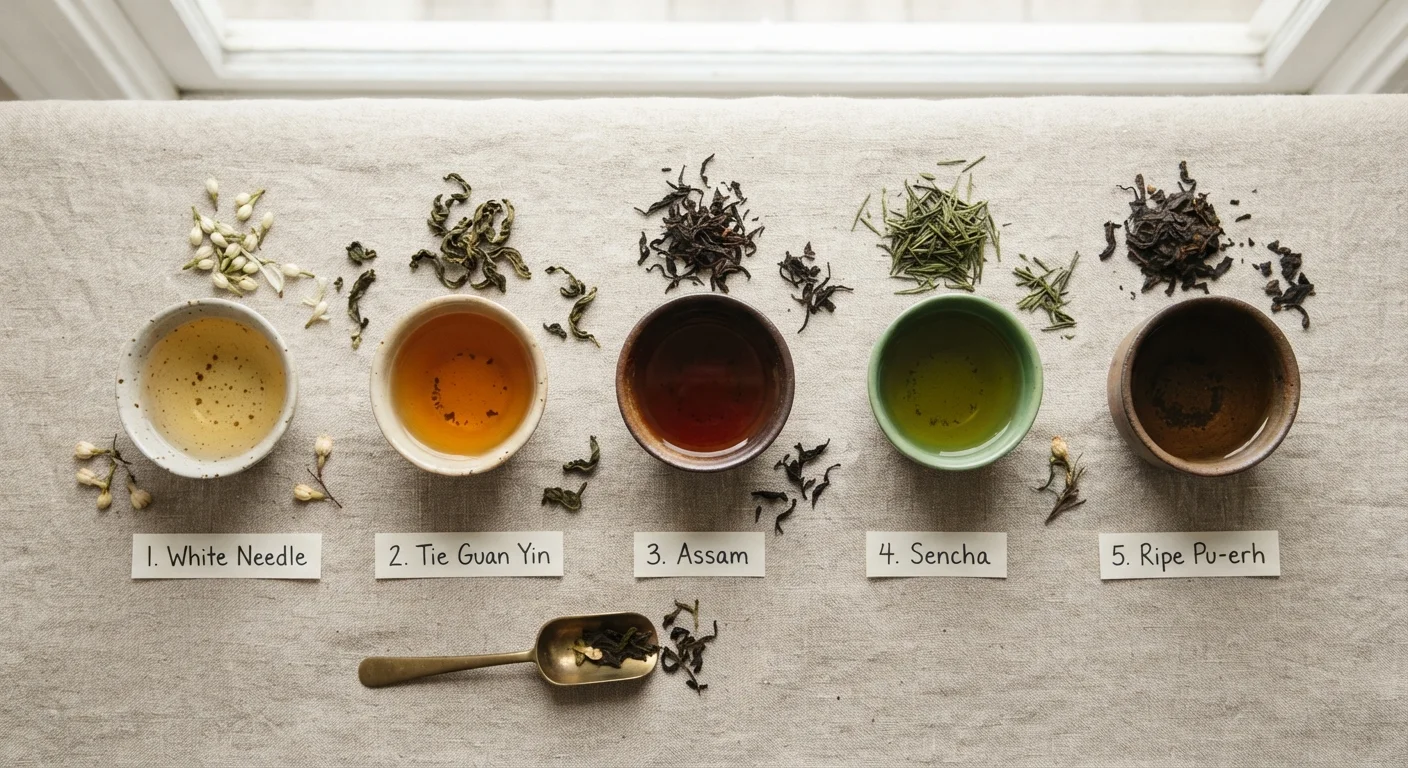
Photo credit: Glowwwatch.com
In this article
All true teas come from one plant, yet taste worlds apart. This guide explains how processing creates each type and what sets them apart.
One Plant, Five Very Different Teas
Every true tea — whether it's a grassy Japanese green or a rich, earthy pu-erh — comes from the same botanical source: Camellia sinensis, an evergreen shrub native to East Asia. What separates a delicate white tea from a bold black tea isn't the plant itself; it's what happens to the leaf after it's harvested. Oxidation, heat application, drying methods, and in some cases microbial fermentation are the real forces shaping flavor, color, and aroma.
Understanding these steps makes you a more confident tea drinker — and helps you choose what's actually in your cup rather than guessing by color alone.
| Plant source | Camellia sinensis |
| Most oxidized type | Black tea (fully oxidized) |
| Least processed type | White tea |
| Only fermented type | Pu-erh |
| Oolong oxidation range | Approximately 15%–85% |
| Primary pu-erh origin | Yunnan Province, China |
The Five Major Tea Types, Explained
Green Tea
Green tea undergoes the least oxidation of any processed tea. After harvesting, the leaves are quickly heated — either pan-fired (common in Chinese production) or steamed (standard in Japan) — to halt the enzymes that cause oxidation. The result is a tea that retains a high level of naturally occurring plant compounds called catechins, which contribute to its characteristic grassy, vegetal, or lightly sweet flavor. Brew temperature matters: water that's too hot (above roughly 175°F) can make green tea taste bitter.
White Tea
White tea is the least processed of all five types. Young buds and early leaves are simply picked and allowed to wither and dry, with minimal human intervention. Because there's no deliberate oxidation step and no heat treatment immediately after harvest, white tea produces a pale, mellow brew with subtle floral and honey-like notes. Its light flavor often surprises drinkers who expect something more assertive.
Oolong Tea
Oolong occupies the middle ground between green and black tea. Producers intentionally allow the leaves to oxidize — but only partially, typically anywhere from 15% to 85%. The degree of oxidation determines whether a given oolong tastes closer to a fresh, floral green tea or a richer, more roasted black tea. This wide range makes oolong one of the most diverse categories to explore.
Black Tea
Black tea is fully oxidized. After harvest, leaves are withered, rolled or cut to break their cell walls, and then exposed to air until oxidation is complete. This process converts the leaf's catechins into different compounds — theaflavins and thearubigins — which produce black tea's characteristic deep amber color and robust, sometimes malty flavor. Black tea generally contains more caffeine per cup than the other types, though actual levels vary by leaf grade and steep time.
Pu-erh Tea
Pu-erh (pronounced poo-air) is in a category of its own. Unlike the other types, it undergoes microbial fermentation — a process involving bacteria, fungi, and yeasts that continue to transform the leaf over time. Pu-erh is produced primarily in China's Yunnan province and comes in two main styles: sheng (raw), which ages slowly and naturally, and shou (ripe), which uses an accelerated fermentation process. The resulting brew is earthy, sometimes musty, and deeply complex. If you're curious about fermentation's broader role in beverages, see our guide to fermented drinks for context.
Oxidation
A chemical process in which enzymes in the tea leaf react with oxygen after the leaf is damaged or cut. The degree of oxidation is the primary driver of color, flavor, and aroma differences between tea types.
Catechins
A group of naturally occurring plant compounds (polyphenols) found in tea leaves. They are most abundant in green tea and contribute to its astringency and characteristic flavor profile.
Theaflavins
Compounds formed when catechins oxidize during black tea processing. They contribute to black tea's bright amber color and brisk, sometimes astringent taste.
Sheng and Shou
The two main styles of pu-erh tea. Sheng (raw) pu-erh ages naturally over years or decades, while shou (ripe) pu-erh uses a controlled, accelerated fermentation process to achieve a similar aged character more quickly.
Withering
An early processing step in which freshly harvested tea leaves are allowed to lose moisture, making them pliable for rolling or shaping. It is common to nearly all tea types.
How to Choose and Brew Each Type
Matching the right water temperature and steep time to each tea type is one of the simplest ways to improve what ends up in your cup — much like how pre-brew choices shape coffee flavor (see what changes coffee flavor before you even brew for a parallel look at that topic).
- Green tea: 160–180°F water, 1–3 minutes. Lower temperatures protect delicate flavors.
- White tea: 170–185°F water, 2–4 minutes. Gentle heat suits its subtle character.
- Oolong: 185–205°F water, 2–5 minutes. Lightly oxidized styles lean cooler; darker styles tolerate hotter water.
- Black tea: 200–212°F water, 3–5 minutes. Full-boil water works well here.
- Pu-erh: 200–212°F water, 2–4 minutes. A short rinse of the leaves before the first real steep is traditional and can mellow the earthy notes.
These are starting points, not rules. Loose-leaf tea gives you more control over steep time and quantity than most tea bags, and adjusting one variable at a time will help you dial in what works for your palate.

Author
Food & Drinks Editorial Team
Food & Drinks Editorial Team is the collective byline for our editorial team and contributor network. Articles published under this byline or an editorial pen name are researched, written, and reviewed according to our editorial standards for clarity, consistency, and independence before publication.
View all articles →