
Drink Storage Details That Are Easy to Overlook
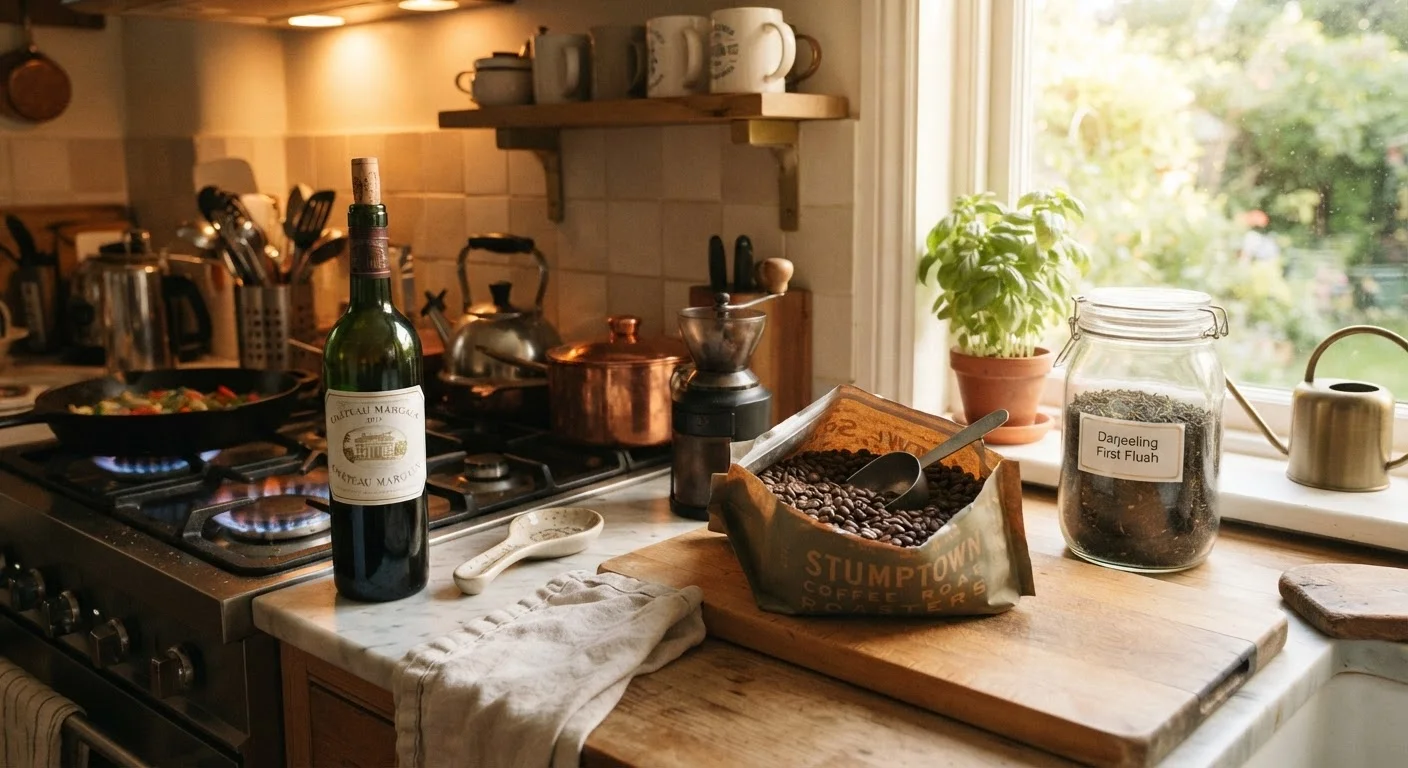
Photo credit: Glowwwatch.com
From wine kept near the stove to tea stored in clear jars, small storage missteps can quietly ruin flavor. Here's what to watch for.
Key Takeaways
- Heat and light are the two most damaging forces for nearly every stored beverage.
- Opened wine, cold brew, and fermented drinks all have specific refrigeration windows that matter.
- Loose tea and ground coffee degrade fastest when stored in clear or loosely sealed containers.
- Where you store a drink in your kitchen often matters as much as how you store it.
Why Storage Details Quietly Shape Flavor
Most people focus on choosing quality ingredients — a decent bottle of wine, good whole-bean coffee, a flavorful loose-leaf tea. What gets less attention is what happens after the purchase. Improper storage doesn't always produce obvious spoilage; more often, it simply dulls the experience quietly over time, and you never realize what you're missing.
Heat, light, air, and moisture are the four main forces that degrade beverages and the dry ingredients used to make them. Understanding where each threat shows up in a typical kitchen is the most practical starting point. If you've ever wondered why your coffee tastes flat or your tea seems bland, storage is often the first place worth examining — not the recipe.
For a broader look at how beverage choices affect your daily health, see common hydration misconceptions that shape what people reach for throughout the day.
Storing wine near a heat source like a stove, refrigerator top, or sunny window.
Why it happens: Most kitchens don't have a dedicated wine rack, so bottles end up wherever there's counter space — which is often close to appliances that radiate warmth.
Keeping loose-leaf tea or tea bags in a clear glass jar on the counter or windowsill.
Why it happens: Clear jars look attractive and make it easy to remember to use what's inside — they're a natural organizational choice.
Leaving ground coffee or whole beans in the original bag once it's been opened, folded loosely shut.
Why it happens: Coffee bags are convenient and feel sufficient — the resealable strip gives an impression of being airtight when it often is not.
Refrigerating opened wine for longer than it remains drinkable — or not refrigerating it at all.
Why it happens: There's a common assumption that wine keeps for as long as it tastes acceptable, but oxidation progresses steadily the moment a bottle is opened.
Storing cold brew concentrate or bottled fermented drinks at room temperature after opening.
Why it happens: Some consumers assume that because cold brew or kombucha was shelf-stable before opening, it remains stable afterward.
The Storage Habits Worth Rethinking
Even careful shoppers tend to repeat a handful of storage habits that quietly undercut their beverages. Here's what the patterns look like and why they matter.
65°F
Maximum recommended wine storage temperature
Wine industry guidance consistently identifies temperatures above this threshold as a risk for premature aging and flavor loss.
2–3 weeks
Peak flavor window for ground coffee post-roast
Specialty coffee educators widely cite this range as when freshly ground or whole-bean coffee expresses its fullest aroma and taste.
Coffee is one of the most storage-sensitive pantry staples, and its enemies are remarkably easy to avoid once you know them. For more on how decisions made before brewing shape the final cup, the guide on what changes coffee flavor before you brew is worth reading alongside these storage notes.
Wine storage is another area where context matters beyond the label. If you're working on reading bottles more confidently, decoding wine label terms pairs well with understanding how to keep that wine at its best once you're home.
Don't Store Tea Next to Coffee or Spices
Tea leaves are highly porous and absorb surrounding odors with ease. Even a tightly lidded tin can be compromised if it's wedged between a spice rack and an open coffee canister over time. Keep tea in its own dedicated, sealed container away from strong-smelling pantry staples.
Fermented beverages such as kombucha and kefir water add another layer of complexity because they remain biologically active after purchase. Improper temperature can either stall their flavor or accelerate it past the point of palatability. For a full primer on what these drinks are and how they're made, see fermented beverages explained.
This article is for informational purposes only. For health-related questions about specific beverages and your individual needs, consult a qualified healthcare professional.

Author
Food & Drinks Editorial Team
Food & Drinks Editorial Team is the collective byline for our editorial team and contributor network. Articles published under this byline or an editorial pen name are researched, written, and reviewed according to our editorial standards for clarity, consistency, and independence before publication.
View all articles →