
Sparkling Water, Club Soda, Tonic, and Seltzer: What's the Difference?
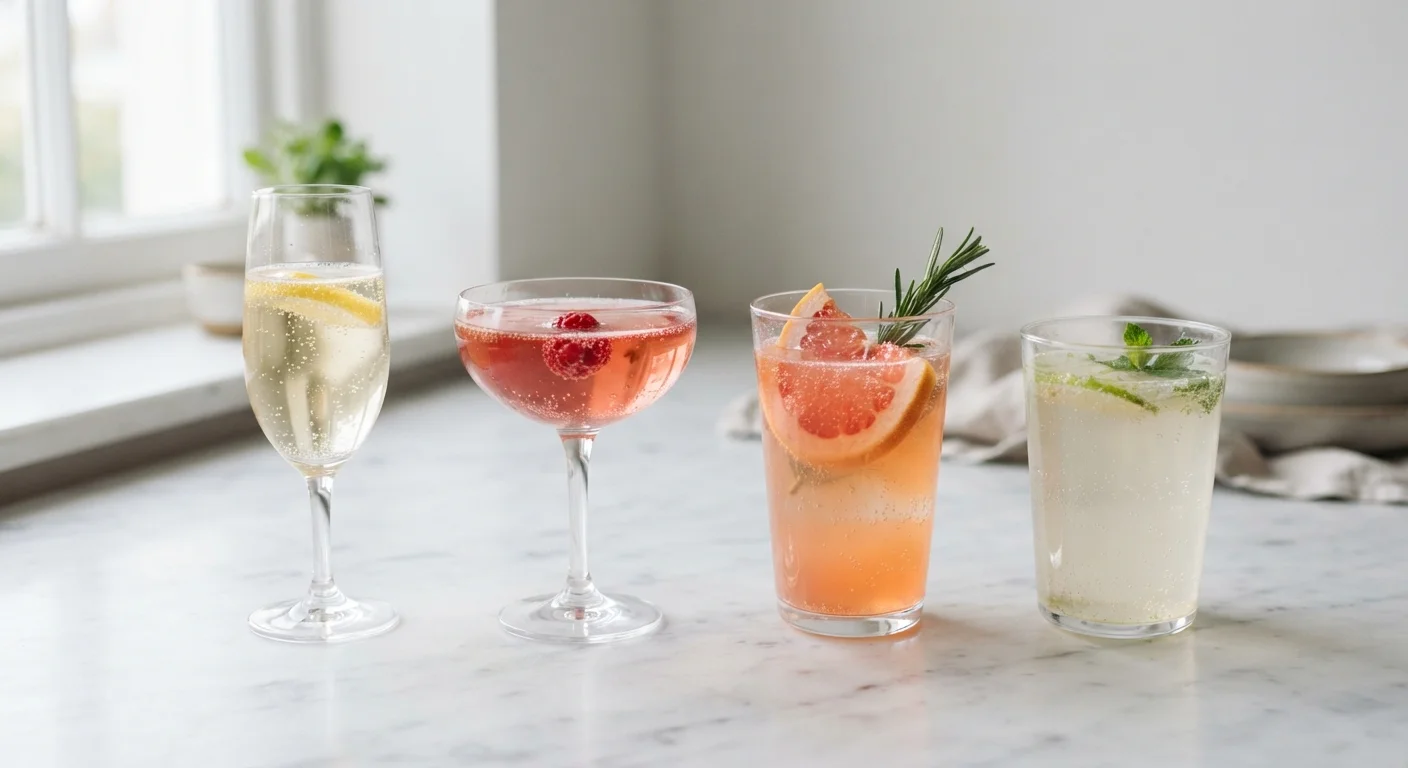
Photo credit: Glowwwatch.com
In this article
These four fizzy drinks look nearly identical but differ in minerals, additives, and taste. Here's a clear breakdown of each.
Key Takeaways
- Seltzer is plain water with added carbonation and no minerals or additives.
- Club soda contains added minerals like sodium bicarbonate, giving it a slightly salty taste.
- Sparkling mineral water gets its carbonation and minerals naturally from underground springs.
- Tonic water contains quinine and added sugar, making it the only one with significant calories.
- The right choice depends on your taste preference and how you plan to use the drink.
Why the Distinctions Actually Matter
Walk down the beverage aisle and you'll see a wall of fizzy water options. The labels use different words — sparkling, seltzer, club soda, tonic — and the bottles look nearly identical. But each category has a specific definition tied to its ingredients, production process, and flavor profile.
Understanding what's in each one helps you make better choices whether you're mixing drinks, tracking sodium intake, or simply looking for a refreshing alternative to still water. These aren't interchangeable terms, even if they're sometimes treated that way in casual conversation.
Breaking Down Each Beverage
Seltzer
Seltzer is the most straightforward of the four: it's plain water that has been carbonated by dissolving carbon dioxide (CO₂) under pressure. Nothing else is added — no minerals, no flavor compounds, no sweeteners. The result is a clean, neutral fizz with a slightly tart edge caused by the CO₂ reacting with water to form weak carbonic acid. It's the closest thing to plain drinking water in this category.
Club Soda
Club soda starts the same way as seltzer — carbonated water — but manufacturers add minerals such as sodium bicarbonate, sodium chloride, or potassium sulfate. These additions give club soda a faintly salty, slightly mineral taste that seltzer lacks. The exact mineral blend varies by producer. Club soda is widely used as a cocktail mixer because those minerals can round out flavors in a drink.
Sparkling Mineral Water
Sparkling mineral water comes from a natural underground source — typically a spring or well — and contains minerals that occur naturally in the water as it moves through rock. The U.S. Food and Drug Administration (FDA) requires that water labeled "mineral water" contain no less than 250 parts per million of total dissolved solids from a geologically protected underground water source. The carbonation may be natural (captured from the source) or added back after bottling. The mineral profile — which can include calcium, magnesium, and bicarbonate — varies significantly by source, and that's largely what gives different brands their distinctive tastes.
Tonic Water
Tonic water is a fundamentally different drink from the other three. It contains quinine — a bitter compound originally derived from the bark of the cinchona tree — along with added sugar (or sometimes artificial sweeteners in diet versions). This gives tonic water a distinctly bitter-sweet flavor and a calorie count that the other three categories don't carry. A standard 12-ounce serving of regular tonic water typically contains around 30–35 grams of added sugar, putting it closer to a soft drink than a plain sparkling water. For more on how sugar is classified and labeled in beverages, see our guide to natural vs. added sugar in drinks.
| Seltzer | Club Soda | Sparkling Mineral Water | Tonic Water | |
|---|---|---|---|---|
| Carbonation source | Added CO₂ | Added CO₂ | Natural or added CO₂ | Added CO₂ |
| Minerals | None | Added (sodium bicarbonate, etc.) | Naturally occurring | None significant |
| Added sugar | None | None | None | Yes (30–35g per 12 oz) |
| Calories | Zero | Zero | Zero | ~120 per 12 oz |
| Distinct additives | None | Mineral salts | None (natural minerals) | Quinine, sweeteners |
| Flavor profile | Neutral, clean | Slightly salty | Varies by source | Bitter-sweet |
| Best common use | Hydration, mixing | Cocktail mixer | Hydration, sipping | Cocktail mixer |
How to Choose the Right One for Your Needs
If you're using fizzy water purely for hydration, seltzer and sparkling mineral water are the most practical options. Both are calorie-free and additive-light; sparkling mineral water adds some naturally occurring minerals that may vary by brand.
If you're mixing cocktails or mocktails, club soda is a traditional choice because its mild mineral flavor complements spirits without overpowering them. Tonic water, by contrast, has a strong bitter-sweet character that defines drinks like the classic gin and tonic — it's a flavored ingredient, not a neutral base.
Reading the Label Before You Buy
Not all packaging is consistent — some brands label their seltzer as "sparkling water" even when it lacks natural mineral content. Look for the phrase "mineral water" with an identified natural source if that distinction matters to you. The ingredients list will also reveal whether sugar, quinine, or added mineral salts are present, which is especially worth checking if you're comparing tonic water to the others.
People monitoring sodium intake should check nutrition labels on club soda, as sodium content varies across products. Those with specific health conditions should consult a qualified healthcare professional before making significant changes to their diet or fluid intake — this article is for general informational purposes only.
Curious about how fermentation figures into other sparkling beverages? Our explainer on kombucha, kefir water, and jun tea covers a distinct but related category of fizzy drinks.

Author
Food & Drinks Editorial Team
Food & Drinks Editorial Team is the collective byline for our editorial team and contributor network. Articles published under this byline or an editorial pen name are researched, written, and reviewed according to our editorial standards for clarity, consistency, and independence before publication.
View all articles →