
Compound Interest: Why Your Money Grows Faster Than You Think
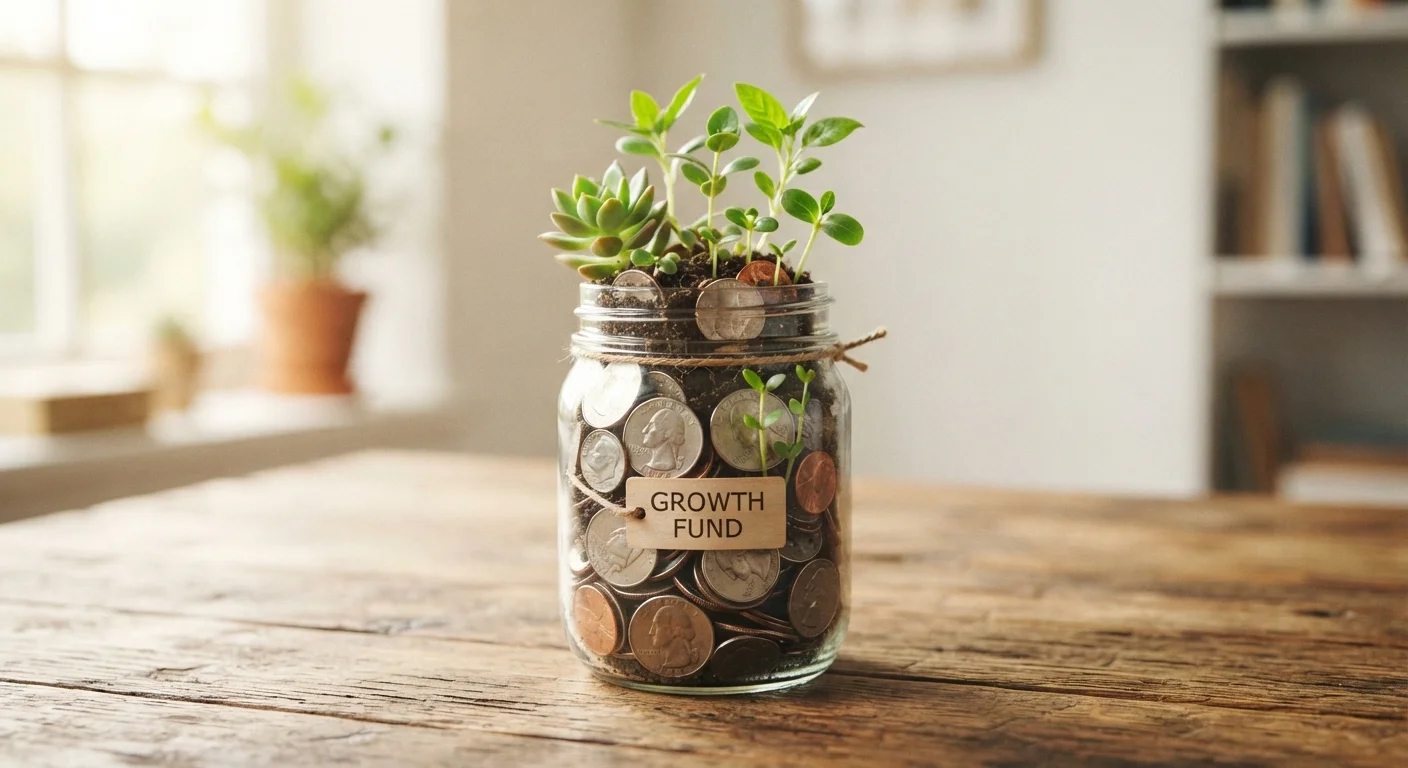
Photo credit: Glowwwatch.com
In this article
Learn how compound interest works, why it matters for savings and debt, and the key difference between compounding daily vs. monthly.
Key Takeaways
- Compound interest means you earn or owe interest on previously accumulated interest, not just the original amount.
- The more frequently interest compounds — daily vs. monthly — the faster a balance grows.
- Starting to save early dramatically amplifies the benefits of compounding over time.
- Compound interest works against you on credit card and loan debt, not just for you in savings.
- Even small, consistent contributions can grow significantly when compounding works over years.
The Basic Idea: Interest on Top of Interest
Most people understand that a savings account pays interest. What surprises many is how that interest is calculated. With simple interest, you only ever earn a return on your original deposit. With compound interest, each interest payment gets added to your balance — and then that larger balance earns interest in the next period.
Here's a straightforward illustration. Suppose you deposit $1,000 in a savings account with a 5% annual interest rate, compounded yearly:
- Year 1: You earn $50 in interest. Balance: $1,050.
- Year 2: You earn 5% of $1,050 — that's $52.50. Balance: $1,102.50.
- Year 3: You earn 5% of $1,102.50 — that's $55.13. Balance: $1,157.63.
Notice that the amount of interest earned increases every year, even though you haven't added a single dollar. That's compounding at work. To understand how this fits into a broader savings strategy, see our guide on saving vs. investing.
$1,629
Growth of $1,000 at 5% over 10 years
Illustrates annual compounding on a $1,000 deposit at a fixed 5% annual interest rate over a decade.
72
The Rule of 72: years to double money
Divide 72 by your interest rate to estimate how many years it takes to double a balance — a widely used financial planning rule of thumb.
10+ years
Time minimum payments can extend credit card debt
Consumer financial research consistently shows that making only minimum payments on a moderate credit card balance can extend repayment by a decade or more.
Daily vs. Monthly Compounding: Does It Matter?
Interest doesn't always compound once a year. Many financial products compound monthly, daily, or even continuously. The compounding frequency matters because more frequent compounding means interest gets added to your balance sooner — and that larger balance starts earning returns earlier.
Using the same $1,000 at 5% annual interest over 10 years:
| Compounding Frequency | Ending Balance |
|---|---|
| Annually | $1,628.89 |
| Monthly | $1,647.01 |
| Daily | $1,648.66 |
The difference between monthly and daily compounding is modest in small balances, but it becomes more meaningful over decades or with larger amounts. When evaluating savings accounts, look for the Annual Percentage Yield (APY) — this figure already accounts for compounding frequency, making it the most accurate way to compare accounts.
Use APY, Not APR, to Compare Savings Accounts
When shopping for a savings account, focus on the Annual Percentage Yield (APY) rather than the stated interest rate. APY already factors in compounding frequency, so it reflects what you'll actually earn over a year. Two accounts with the same nominal rate but different compounding schedules will have different APYs — and different real returns.
When Compounding Works Against You: Debt
Compound interest isn't always your ally. On credit cards, personal loans, and other forms of debt, the same mechanism inflates what you owe. If you carry a credit card balance from month to month, interest is charged on your existing balance — including any previously unpaid interest. The result is that even a manageable balance can balloon over time.
For example, carrying a $3,000 credit card balance at 20% APR and making only minimum payments could take years to pay off and cost hundreds — sometimes thousands — of dollars in total interest. Our article on why minimum payments cost more than you think walks through exactly how this plays out.
Understanding this dynamic is the first step toward protecting yourself. Paying more than the minimum, or paying off the full balance each month, drastically reduces the impact of compounding on debt.
Time Is the Most Powerful Variable
Of all the inputs in compound interest — rate, frequency, and principal — time is the one with the greatest long-term impact. Starting to save even a modest amount early in life can outperform larger contributions made later, simply because the earlier money has more time to compound.
This is why financial educators often emphasize starting to save in your 20s rather than waiting until your 40s. It's not about being wealthy — it's about giving compounding the time it needs to do its work.
Even if you're starting later, the principle still applies: the sooner you begin, the more compounding can work in your favor. For guidance on building the habits that make this possible, explore the Saving & Debt hub or our Budgeting Basics resources to get your finances organized. And for a deeper look at how compounding can help or harm depending on your financial position, see how compound interest works for and against you.
This article is for general informational and educational purposes only and does not constitute personalized financial advice. Consult a qualified financial professional for guidance specific to your situation.
Frequently Asked Questions

Author
Personal Finance Editorial Team
Personal Finance Editorial Team is the collective byline for our editorial team and contributor network. Articles published under this byline or an editorial pen name are researched, written, and reviewed according to our editorial standards for clarity, consistency, and independence before publication.
View all articles →