
Why Small Water Leaks Become Big Structural Problems
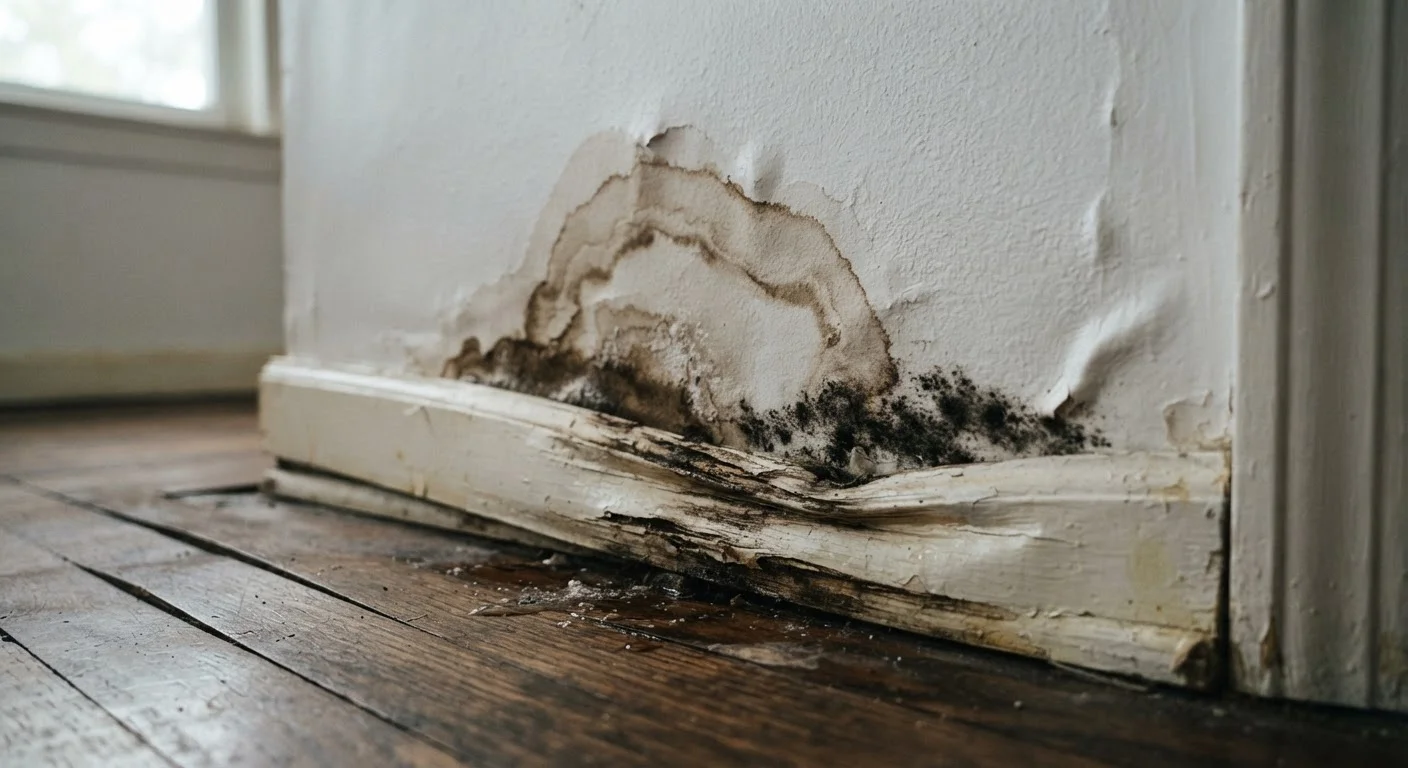
Photo credit: Glowwwatch.com
In this article
Even a slow drip can rot framing, feed mold, and compromise foundations. Learn how water damage escalates and when to act fast.
Key Takeaways
- Small leaks cause disproportionately large damage because water spreads silently behind walls and under floors.
- Mold can begin colonizing wet building materials within 24 to 48 hours of sustained moisture exposure.
- Wood framing, subfloors, and even concrete foundations are all vulnerable to prolonged water intrusion.
- Many structural repairs triggered by water damage require licensed contractors and may need permits.
- Early detection — through routine inspection — is far less expensive than remediation after the fact.
How a Drip Becomes a Disaster
Water is patient. A slow drip from a supply line, a hairline crack in roof flashing, or a worn seal around a window frame may lose only a small amount of water each day — but that water goes somewhere. It saturates insulation, wicks into wood framing, pools under subfloors, and migrates along structural members far from the original source.
The core problem is that most residential buildings use materials that are highly susceptible to sustained moisture. Drywall absorbs water readily and loses structural integrity quickly. Wood framing swells, warps, and — given enough time — begins to rot from the inside. Insulation that stays wet loses its thermal value and becomes a breeding ground for microbes. None of this is visible from the outside until the damage is already advanced.
This is why small leaks create outsized consequences. The damage isn't just at the drip site — it radiates outward through your home's hidden infrastructure. As explained in our article on why deferred maintenance compounds over time, what costs a few hundred dollars to fix today can easily become a multi-thousand-dollar repair if left alone.
Water Bills as an Early Warning Signal
An unexplained increase in your monthly water bill is one of the earliest detectable signs of a hidden leak. Many water utilities now offer online usage dashboards that let you track consumption day by day. If your usage climbs without a clear reason — extra guests, irrigation, etc. — it's worth investigating supply lines and fixtures before assuming the meter is wrong.
The Mold Factor: Fast, Hidden, and Hazardous
One of the most serious consequences of sustained moisture is mold growth. Mold spores are present in virtually every home environment — they only need moisture, a food source (like drywall paper or wood), and moderate temperatures to colonize. Under the right conditions, visible mold colonies can establish themselves within 24 to 48 hours of a surface staying wet.
Mold inside walls or under flooring is particularly difficult to detect early. By the time a musty odor is noticeable or discoloration appears on a surface, growth is often already widespread behind it. Remediation at that stage typically requires removing and replacing drywall, insulation, and sometimes framing — work that demands professional assessment and, in many jurisdictions, licensed remediation contractors.
24–48 hrs
Time for mold growth to begin on wet materials
Building science and restoration industry guidelines generally cite this window as the threshold after which wet drywall and wood become susceptible to mold colonization.
~19%
Moisture content at which wood decay begins
Wood framing held at or above roughly 19% moisture content for sustained periods creates conditions where decay fungi can establish and degrade structural integrity.
10× or more
Cost multiplier of delayed water damage repair
Restoration and construction professionals widely note that late-stage water damage repairs — involving mold, rot, or structural work — can cost many times more than early intervention.
It's important to note that mold-related health concerns fall outside the scope of a home maintenance article, and any specific health questions should be directed to a qualified healthcare professional. What matters structurally is this: once mold is embedded in building materials, those materials generally need to be removed — not simply dried out.
Structural Consequences: Framing, Subfloors, and Foundations
Wood rot is a direct result of prolonged moisture exposure and fungal activity. Unlike surface damage, rot degrades the fibers that give lumber its load-bearing strength. A floor joist or wall stud compromised by rot can no longer carry the load it was designed for — and replacing structural framing is a significant, permit-required project in most jurisdictions.
Subfloors — typically plywood or oriented strand board (OSB) — are especially vulnerable. A slow drip under a refrigerator or a bathroom fixture seal that has failed can silently delaminate the subfloor over months, creating soft spots that may eventually fail underfoot. By the time this is detected, the finished flooring above usually needs to come up entirely before repairs can begin.
Foundations face a different but related threat. Water that consistently collects against or below a foundation — whether from a leaking exterior pipe, misdirected downspouts, or poor grading — can undermine soil bearing capacity and create hydrostatic pressure against foundation walls. Our guide to signs your home's drainage is working against you covers what to watch for around your home's perimeter. Similarly, understanding how gutters fail is an important part of preventing foundation-directed water accumulation.
Detecting Leaks Before They Escalate
Routine inspection is the most reliable line of defense. A few targeted habits can surface problems before they become structural:
- Check under sinks and around toilets monthly for moisture, soft cabinet floors, or discoloration.
- Monitor your water meter — if usage spikes without explanation, a hidden leak may be the cause.
- Inspect your attic and crawl space at least twice a year for staining, daylight gaps, or damp insulation.
- Look at exterior walls and ceilings after heavy rain for new stains or bubbling paint.
- Test caulk and grout around tubs, showers, and windows annually and reseal wherever it has cracked or shrunk.
When in doubt, a licensed plumber can perform a pressure test on supply lines to identify hidden leaks without opening walls. For any suspected structural damage — soft floors, cracked drywall patterns, or bowing walls — consult a licensed contractor before attempting DIY repairs. Many structural repairs also require permits; verify local requirements before beginning work.
Do a Monthly Under-Sink Check
Take 60 seconds once a month to open the cabinets under every sink in your home and look for moisture, soft spots, or staining. This single habit catches the majority of household supply line leaks before they reach surrounding materials. Bring a flashlight — the back corners are where drips collect first.
Frequently Asked Questions

Author
Home & Garden Editorial Team
Home & Garden Editorial Team is the collective byline for our editorial team and contributor network. Articles published under this byline or an editorial pen name are researched, written, and reviewed according to our editorial standards for clarity, consistency, and independence before publication.
View all articles →