
Pressure-Washing Your Home's Exterior: What It Helps and What It Can Harm
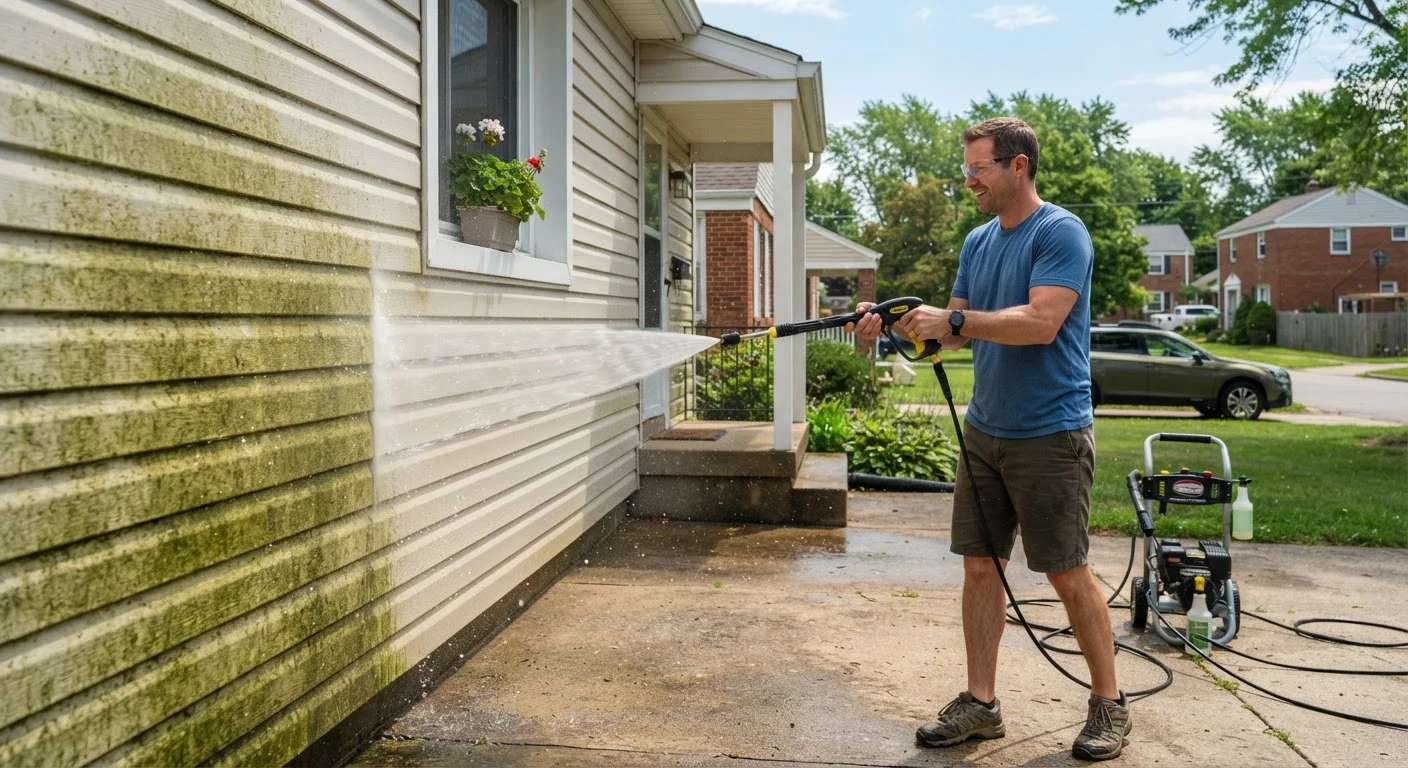
Photo credit: Glowwwatch.com
In this article
Pressure washing removes grime and extends siding life—but too much pressure on the wrong surface causes real damage. Here's the full picture.
Key Takeaways
- Pressure washing effectively removes mold, mildew, algae, and dirt that degrade siding over time.
- Using too much pressure on the wrong surface can crack siding, force water behind walls, or strip paint.
- Different exterior surfaces — vinyl, wood, brick, stucco — require very different pressure settings.
- A lower-pressure 'soft wash' method is often safer and more effective for delicate or painted surfaces.
- Many homeowners can handle basic pressure washing safely, but some surfaces warrant professional help.
Removes mold, algae, and mildew effectively
High-pressure water physically dislodges biological growth that degrades siding materials and causes staining. Regular removal can slow surface deterioration and extend the life of paint and cladding.
Restores curb appeal quickly
A single pressure-washing session can remove years of accumulated grime, dramatically improving a home's appearance without repainting or replacing materials.
Prepares surfaces for painting or sealing
Paint and sealant bond poorly to dirty or contaminated surfaces. Pressure washing is standard prep before exterior repainting, deck staining, or concrete sealing to improve adhesion and longevity.
Cost-effective compared to surface replacement
Routine cleaning can defer or prevent the need for early siding, deck, or driveway replacement, which represents significant savings over time.
Handles large surfaces efficiently
A pressure washer can clean a driveway or full house exterior in a fraction of the time required by hand scrubbing, making it practical for annual maintenance.
High pressure can damage wood and soft siding
Excess PSI raises wood grain, splinters soft fibers, and can gouge vinyl or fiber cement siding. Damage may not be immediately visible but creates entry points for moisture over time.
Water forced behind panels causes hidden moisture damage
Spraying upward or at an angle can drive water underneath siding panels or into wall cavities, where it promotes mold growth, rot, and structural deterioration — often without visible signs for months.
Can crack stucco or damage mortar joints
Stucco and old brick mortar are vulnerable to concentrated water pressure. Repairs to cracked stucco finish coats can be difficult to match and costly to complete properly.
Risk of stripping paint prematurely
On painted wood or masonry, too much pressure removes paint that wasn't ready to come off, turning a cleaning job into an unplanned repainting project.
Can void siding manufacturer warranties
Some vinyl and composite siding warranties specify maximum cleaning pressures. Exceeding those thresholds — even if no visible damage occurs — may void warranty coverage for future claims.
Personal injury risk if mishandled
Pressure washer jets can cause serious skin lacerations at close range. Using equipment on ladders adds fall risk, and the recoil from high-pressure nozzles requires firm, stable footing.
Why Homeowners Turn to Pressure Washing
Over time, every home's exterior accumulates a layer of grime: algae streaks on siding, mildew in shaded corners, dirt-packed concrete, and lichen creeping across brick. This buildup isn't just cosmetic — organic growth like mold and algae can degrade surface materials and, if left unchecked, contribute to rot, staining, and premature paint failure.
Pressure washing uses a motorized pump to force water through a narrow nozzle at high velocity, stripping contaminants that a garden hose and scrub brush can't touch. For many homeowners, it offers a dramatic result in a short amount of time — which is part of its appeal and part of its risk. The same force that blasts algae off concrete can splinter soft wood or drive water beneath vinyl panels.
Understanding what pressure washing actually does — and what it can undo — helps you make a smart call about when to use it, at what settings, and whether to handle it yourself. See our guide to DIY vs. professional maintenance tasks for a broader framework on this kind of decision.
What Pressure Washing Does Well
Removes mold, algae, and mildew effectively
High-pressure water physically dislodges biological growth that degrades siding materials and causes staining. Regular removal can slow surface deterioration and extend the life of paint and cladding.
Restores curb appeal quickly
A single pressure-washing session can remove years of accumulated grime, dramatically improving a home's appearance without repainting or replacing materials.
Prepares surfaces for painting or sealing
Paint and sealant bond poorly to dirty or contaminated surfaces. Pressure washing is standard prep before exterior repainting, deck staining, or concrete sealing to improve adhesion and longevity.
Cost-effective compared to surface replacement
Routine cleaning can defer or prevent the need for early siding, deck, or driveway replacement, which represents significant savings over time.
Handles large surfaces efficiently
A pressure washer can clean a driveway or full house exterior in a fraction of the time required by hand scrubbing, making it practical for annual maintenance.
Pressure washing genuinely earns its place in exterior home maintenance when used on forgiving, durable surfaces like concrete driveways, brick walkways, and vinyl siding. These materials can handle higher water pressure without absorbing moisture or sustaining physical damage.
It's also particularly effective at removing biological growth — algae, mold, and mildew — that feeds on surface moisture. Left untreated, these organisms can accelerate the breakdown of paint and siding materials. Removing them regularly helps surfaces last longer and maintain their appearance. A clean exterior also matters when it comes time to repaint, since paint adheres poorly to dirty or contaminated surfaces.
For decks, driveways, and walkways, pressure washing before seasonal sealing or staining is considered standard preparation by most painting and waterproofing professionals, because it removes the loose material that would otherwise prevent bonding.
Where Pressure Washing Causes Damage
High pressure can damage wood and soft siding
Excess PSI raises wood grain, splinters soft fibers, and can gouge vinyl or fiber cement siding. Damage may not be immediately visible but creates entry points for moisture over time.
Water forced behind panels causes hidden moisture damage
Spraying upward or at an angle can drive water underneath siding panels or into wall cavities, where it promotes mold growth, rot, and structural deterioration — often without visible signs for months.
Can crack stucco or damage mortar joints
Stucco and old brick mortar are vulnerable to concentrated water pressure. Repairs to cracked stucco finish coats can be difficult to match and costly to complete properly.
Risk of stripping paint prematurely
On painted wood or masonry, too much pressure removes paint that wasn't ready to come off, turning a cleaning job into an unplanned repainting project.
Can void siding manufacturer warranties
Some vinyl and composite siding warranties specify maximum cleaning pressures. Exceeding those thresholds — even if no visible damage occurs — may void warranty coverage for future claims.
Personal injury risk if mishandled
Pressure washer jets can cause serious skin lacerations at close range. Using equipment on ladders adds fall risk, and the recoil from high-pressure nozzles requires firm, stable footing.
The most common mistake homeowners make is using too much pressure on surfaces that can't handle it — or pointing the nozzle in directions that force water into gaps it was never meant to reach.
Wood siding and older painted surfaces are particularly vulnerable. High pressure can raise wood grain, gouge soft fibers, and strip paint, leaving a surface that looks worse than before and now needs repair. Stucco is similarly fragile; concentrated pressure can crack or chip the finish coat, which is expensive to patch invisibly.
Window seals, weep holes, and the gaps around door frames are pressure-washing hazards. Water forced behind siding or into wall cavities can't easily escape, creating the exact moisture conditions that lead to mold growth and rot — the problems you were trying to prevent. If your home has older or failing caulk around windows, pressure washing can push water directly into wall assemblies.
For homes with gutters that are already strained or partially blocked, directing large volumes of water at roof overhangs or soffits can overwhelm drainage and back water up into eaves.
What Is Soft Washing?
Soft washing uses a pressure washer set to very low PSI — typically under 500 — combined with biodegradable cleaning solutions that break down organic growth chemically rather than blasting it away physically. The result is effective cleaning with minimal risk of surface damage. It's the method most professionals use on stucco, wood, painted surfaces, and roofing materials. If you're renting equipment, ask specifically about soft-wash attachments or nozzle kits.
Matching Pressure to Surface: A Practical Guide
1,200–1,500 PSI
Recommended range for vinyl siding
Most pressure-washing guides and siding manufacturers suggest staying within this range to avoid panel damage or forcing water behind the cladding.
500–1,000 PSI
Safe range for wood siding and decks
The Pressure Washing Resource Association and most professional contractors recommend low-pressure or soft-wash methods for wood to prevent grain damage.
40°
Nozzle angle for exterior siding
A wider fan angle distributes water force over a broader area, significantly reducing the impact per square inch compared to a narrow-angle nozzle.
Pressure washers are rated in PSI (pounds per square inch) and GPM (gallons per minute). Most residential units range from 1,300 to 3,100 PSI, and the nozzle angle — indicated by color — controls how concentrated or wide the spray is. A 0-degree (red) nozzle concentrates all force into a pinpoint jet and should almost never be used on home exteriors. A 40-degree (white) nozzle fans the spray widely, reducing impact force substantially.
- Concrete and asphalt driveways: 2,500–3,000 PSI, 25-degree nozzle, safe for most residential units.
- Brick and block: 1,500–2,000 PSI maximum, with care around old mortar joints that may be eroding.
- Vinyl siding: 1,200–1,500 PSI, 40-degree nozzle, always spray downward — never up under the panels.
- Wood siding and decks: 500–1,000 PSI; many professionals recommend a 'soft wash' approach using chemical cleaners at low pressure instead.
- Stucco and EIFS (synthetic stucco): Soft wash only — high-pressure water can cause irreversible surface damage.
Always test in an inconspicuous area first, especially on painted or older surfaces. If you notice paint lifting, wood splintering, or grout loosening, stop and reassess before continuing. This caution applies equally to roof surfaces and overhangs, which should generally not be pressure-washed at all.
When to Call a Professional Instead
If your home has wood siding, stucco, EIFS, or significant paint failure, a professional soft-wash service is worth the cost. Professionals use lower-pressure equipment combined with surfactant solutions that lift biological growth chemically rather than physically — meaning less risk of surface damage and better results on porous materials.
Similarly, if your exterior has older caulk, cracked panels, or signs of moisture intrusion already — such as staining, soft spots, or peeling paint — pressure washing those areas before making repairs can worsen the damage. Address the underlying issues first. You can read more about how water management problems compound over time in our piece on drainage warning signs.
The decision isn't just about skill — it's about risk. Some common maintenance myths suggest that more cleaning power is always better. With pressure washing, the opposite is often true: matching the tool to the task is what protects the investment you're trying to maintain.

Author
Home & Garden Editorial Team
Home & Garden Editorial Team is the collective byline for our editorial team and contributor network. Articles published under this byline or an editorial pen name are researched, written, and reviewed according to our editorial standards for clarity, consistency, and independence before publication.
View all articles →