
Plumbing Shutoffs, Breaker Panels, and Other Home Systems Every Owner Should Locate
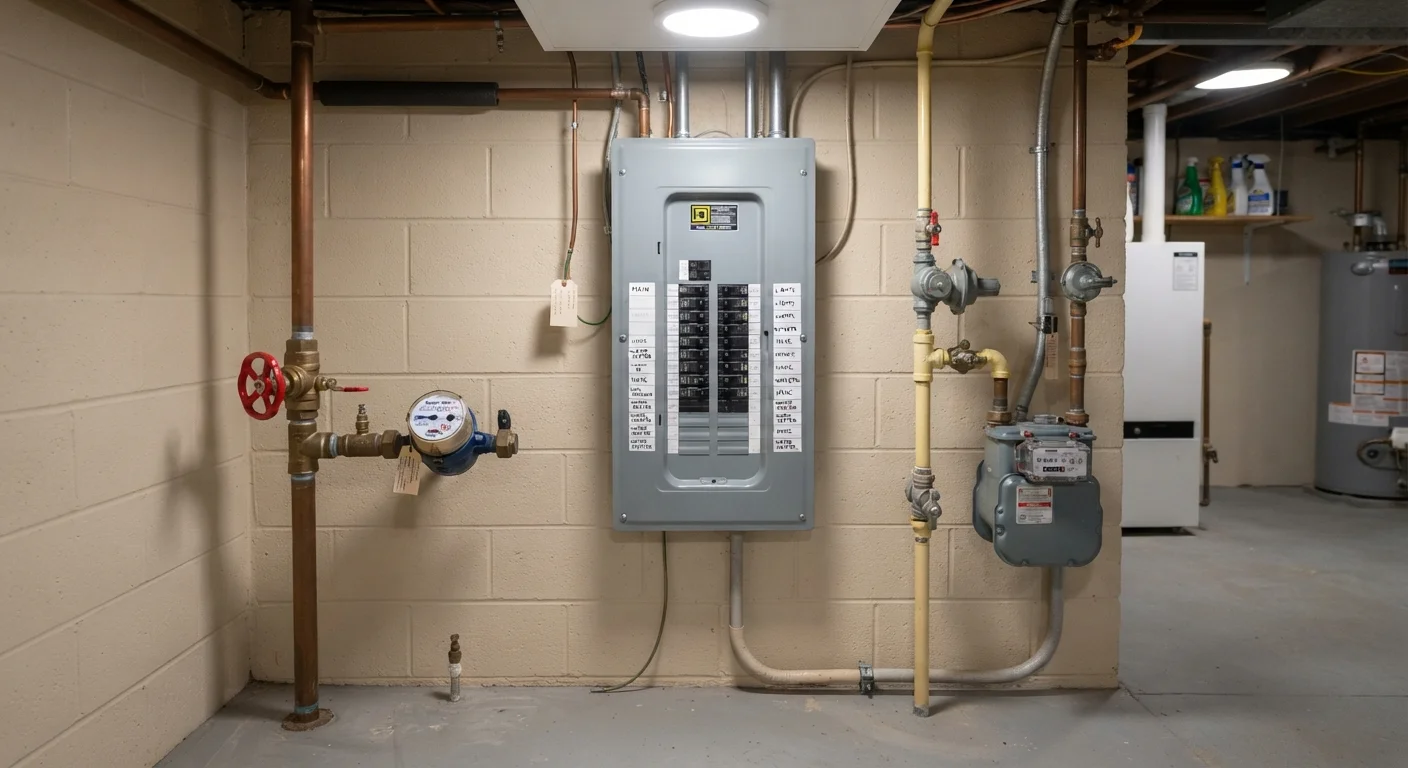
Photo credit: Glowwwatch.com
In this article
Knowing where your water shutoff, electrical panel, and gas valve are can prevent emergencies from turning into disasters.
Why Every Homeowner Needs to Know These Locations
A pipe bursts at midnight. The power flickers out during a storm. You smell something that might be gas. In each of these scenarios, how quickly you can reach and operate your home's core shutoff systems determines whether a stressful situation becomes a manageable one — or a disaster.
These aren't advanced maintenance skills. Locating your main water shutoff, breaker panel, gas valve, and a handful of other controls is foundational homeowner knowledge — the kind that pays off long before you ever need it. Consider this your reference guide for finding and familiarizing yourself with each system. See our guide to DIY vs. professional maintenance tasks for context on which follow-up work to tackle yourself and which to hand off.
| Main water shutoff location | Near foundation wall (basement) or utility closet; check where water line enters home |
| Breaker panel common locations | Basement, garage, laundry room, hallway closet, or utility room |
| Gas shutoff valve types | Per-appliance lever valve and main shutoff at the outdoor gas meter |
| Action if you smell gas | Leave immediately; call your gas utility emergency line and 911 from outside |
| Water valve types | Gate valve (round, multi-turn) or ball valve (lever, quarter-turn) |
| Who should map your breaker panel | Any capable household adult — not just the primary homeowner |
The Main Water Shutoff
The main water shutoff valve stops all water flow into your home. In a plumbing emergency — a burst pipe, a failed supply line, an overflowing appliance — turning this valve off immediately limits water damage.
Where to Look
- Basement or crawl space: In colder climates, the valve is typically near where the main water line enters the foundation, often on the front-facing wall closest to the street.
- Utility closet or garage: In warmer climates or slab-foundation homes, look near the water heater or in a utility area.
- Outside near the street: A buried curb shutoff (usually in a metal box flush with the ground) gives municipal crews access and can serve as a backup, though it typically requires a special wrench.
Types of Valves
Gate valves (round handle, turn multiple times) and ball valves (lever handle, quarter-turn) are the two most common types. Confirm yours is in working order by testing it occasionally — valves that haven't moved in years can seize. Also locate the individual shutoffs under each sink and behind each toilet so you can isolate one fixture without cutting water to the whole house.
Your Electrical Breaker Panel
The breaker panel (also called the electrical panel or load center) is where your home's electrical circuits are controlled. Each breaker protects one circuit; if a circuit overloads, the breaker trips and cuts power to prevent wiring from overheating.
Where to Look
- Common locations include the basement, garage, laundry room, hallway closet, or utility room.
- In apartments or condos, panels are sometimes inside a dedicated cabinet near the entry or in a shared utility space — check your move-in documentation or ask building management.
What to Do When You Find It
Open the panel door and review the directory label — a small chart inside the door that maps each breaker to its circuit (e.g., "Kitchen outlets," "Master bedroom," "HVAC"). If the directory is blank or outdated, mapping each circuit is a worthwhile afternoon project. Label every breaker clearly so anyone in the household can act quickly. For deeper guidance on what electrical work is safe to do yourself, see The Truth About DIY Electrical Work at Home.
Circuit Mapping: When to Call a Professional
Mapping your breaker panel — identifying which breaker controls which area — is generally a safe DIY task as long as you work with the panel door closed and never touch internal wiring. However, if your panel is older, shows signs of corrosion, has double-tapped breakers, or you're unsure what you're looking at, have a licensed electrician evaluate it. Some older panel types have known safety concerns and may warrant professional inspection.
Gas Shutoff Valves and Other Critical Systems
Natural gas lines have shutoff valves at each appliance (look for a lever handle on the pipe behind your stove, dryer, furnace, or water heater) and a main shutoff at the gas meter, located outside the home. If you smell gas, do not attempt to operate any switches or locate valves — leave immediately, avoid open flames, and call your gas utility's emergency line and 911 from outside or a neighbor's home.
For non-emergency situations, knowing where the per-appliance shutoffs are lets you isolate a single gas appliance for service. Note: the main gas meter shutoff typically requires a wrench. Keep one accessible and learn how to use it before you need it — your gas utility may offer guidance on this.
Other Systems Worth Locating Now
- HVAC Filter and Emergency Switch
- Furnaces and air handlers have a power switch (often looks like a light switch on the unit or nearby wall). Know where it is if a technician needs the system off quickly. Also note where your air filters are so replacements are easy.
- Water Heater Shutoffs
- Your water heater has its own cold-water supply shutoff and, if gas-powered, an appliance gas valve. Locate both in case of a leak or when the unit needs service.
- Sump Pump Location
- If your home has a sump pump in the basement or crawl space, know where it is and how to check that it's operating, especially before heavy rain seasons.
Integrate a walkthrough of all these systems into your regular routine. The seasonal home maintenance calendar is a useful framework for when to check each system throughout the year.
Main water shutoff valve
A valve that stops all water flowing into a home from the municipal supply or well. Closing it is the fastest way to stop water damage from a plumbing failure.
Breaker panel
The electrical distribution board that routes power from the utility to individual circuits throughout the home. Each circuit breaker protects one circuit from overloads.
Ball valve
A type of shutoff valve controlled by a lever handle. A quarter-turn (90 degrees) fully opens or closes the valve, making it fast to operate in an emergency.
Gate valve
An older style of shutoff valve with a round wheel handle that requires multiple turns to open or close. Common in older homes and slower to operate than a ball valve.
Curb shutoff
A water shutoff valve located at the property line near the street, housed in a buried box. It controls water from the municipal main and typically requires a special tool to operate.
Sump pump
A pump installed in a basement or crawl space pit that removes accumulated groundwater before it can flood the lower level of a home.

Author
Home & Garden Editorial Team
Home & Garden Editorial Team is the collective byline for our editorial team and contributor network. Articles published under this byline or an editorial pen name are researched, written, and reviewed according to our editorial standards for clarity, consistency, and independence before publication.
View all articles →