
The Case For and Against Finishing Your Basement
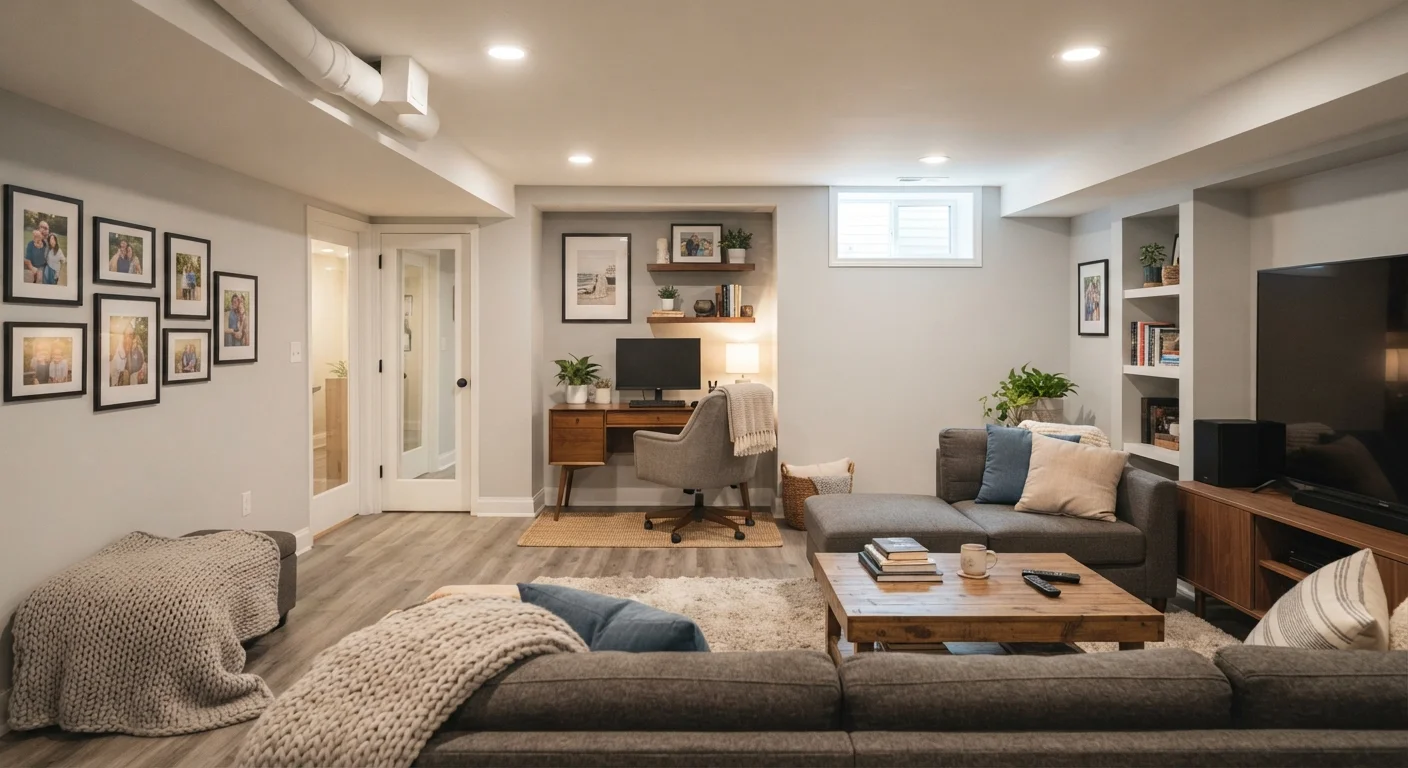
Photo credit: Glowwwatch.com
In this article
A balanced look at what a finished basement offers in livable space and potential value — alongside the moisture, cost, and permit considerations.
Key Takeaways
- Finishing a basement can add usable square footage without expanding your home's footprint.
- Moisture control is the single most critical issue to resolve before any finishing work begins.
- Permits are typically required and skipping them can create problems when you sell.
- Return on investment varies widely depending on your local market and the quality of work.
- Ongoing risks like flooding or mold can offset gains if the basement isn't properly prepared.
Adds livable square footage without expanding footprint
Basements are often among the most cost-effective ways to gain usable space since the foundation and roof already exist. This is especially valuable in higher-cost markets where square footage commands a premium.
Creates flexible, multipurpose space
A finished basement can serve as a home office, guest suite, playroom, gym, or media room — often all at once over the life of the home. That flexibility adapts to changing household needs over time.
Can improve energy efficiency
Properly insulating basement walls reduces heat loss through the foundation, which can lower heating costs. Unfinished basements are frequently a significant source of thermal loss in older homes.
May support rental income potential
In markets where it's permitted, a finished basement with a separate entrance can be configured as an accessory dwelling unit. This option comes with substantial legal and tax considerations that require independent professional guidance.
Can increase perceived home value
Finished square footage typically factors into comparable home pricing, and a well-executed basement finish can make a home more competitive in its local market — though returns are never guaranteed.
Moisture and flooding risk can be severe
Basements are inherently vulnerable to water intrusion. A single significant flood event can destroy finishes and create mold conditions that are expensive and disruptive to remediate.
Upfront costs are substantial
A basic finish can run $25,000–$50,000 or more depending on scope, region, and labor costs. Adding a bathroom, egress windows, or waterproofing dramatically increases that figure.
Permits and code compliance are non-negotiable
Most jurisdictions require permits for electrical, plumbing, and structural work in a basement finish. Unpermitted work can complicate or derail a home sale and may require costly corrections.
Low ceilings limit usability and appraisal value
Basements with less than 7-foot ceiling clearance may not qualify as habitable square footage under local building codes or appraisal standards, limiting both livability and resale benefit.
Ongoing maintenance requirements increase
Finished basements require attention to sump pumps, dehumidifiers, and HVAC systems. Neglecting any of these can lead to moisture damage that is far more expensive to repair in a finished space.
Return on investment is market-dependent and uncertain
In some markets, a finished basement adds clear value; in others, buyers don't factor it heavily into purchase decisions. There is no reliable way to guarantee cost recovery from this type of renovation.
What 'Finishing' a Basement Actually Means
An unfinished basement is typically a bare concrete shell — exposed joists overhead, raw walls, and minimal lighting. Finishing it means transforming that space into a livable area with insulation, framed walls, drywall, flooring, and proper electrical and HVAC connections. The scope can range from a simple recreation room to a fully equipped suite with a bathroom and kitchenette.
The distinction matters because cost and complexity scale dramatically with scope. A basic finish might involve little more than framing, drywall, and carpet. A full renovation with a bathroom addition, egress windows, and a wet bar is a significantly larger project requiring more trades, more time, and almost certainly multiple permits. Understanding where your project falls on that spectrum is the necessary first step before weighing any pros or cons.
The Case For Finishing Your Basement
The appeal of a finished basement comes down to one core idea: you already own the space, so putting it to use is often more economical than adding a room above grade.
Adds livable square footage without expanding footprint
Basements are often among the most cost-effective ways to gain usable space since the foundation and roof already exist. This is especially valuable in higher-cost markets where square footage commands a premium.
Creates flexible, multipurpose space
A finished basement can serve as a home office, guest suite, playroom, gym, or media room — often all at once over the life of the home. That flexibility adapts to changing household needs over time.
Can improve energy efficiency
Properly insulating basement walls reduces heat loss through the foundation, which can lower heating costs. Unfinished basements are frequently a significant source of thermal loss in older homes.
May support rental income potential
In markets where it's permitted, a finished basement with a separate entrance can be configured as an accessory dwelling unit. This option comes with substantial legal and tax considerations that require independent professional guidance.
Can increase perceived home value
Finished square footage typically factors into comparable home pricing, and a well-executed basement finish can make a home more competitive in its local market — though returns are never guaranteed.
Beyond personal use, a finished basement can factor into resale conversations. While recoup rates vary — and no renovation guarantees a dollar-for-dollar return — finished square footage is generally counted in a home's total livable area, which influences how it's priced and perceived. If you're considering uses that generate income, our article on renting out a room vs. staying single-family walks through the financial and legal tradeoffs worth understanding first.
The Case Against — or at Least for Pausing
Despite the upside, finishing a basement carries real risks that are easy to underestimate during the excitement of planning.
Moisture and flooding risk can be severe
Basements are inherently vulnerable to water intrusion. A single significant flood event can destroy finishes and create mold conditions that are expensive and disruptive to remediate.
Upfront costs are substantial
A basic finish can run $25,000–$50,000 or more depending on scope, region, and labor costs. Adding a bathroom, egress windows, or waterproofing dramatically increases that figure.
Permits and code compliance are non-negotiable
Most jurisdictions require permits for electrical, plumbing, and structural work in a basement finish. Unpermitted work can complicate or derail a home sale and may require costly corrections.
Low ceilings limit usability and appraisal value
Basements with less than 7-foot ceiling clearance may not qualify as habitable square footage under local building codes or appraisal standards, limiting both livability and resale benefit.
Ongoing maintenance requirements increase
Finished basements require attention to sump pumps, dehumidifiers, and HVAC systems. Neglecting any of these can lead to moisture damage that is far more expensive to repair in a finished space.
Return on investment is market-dependent and uncertain
In some markets, a finished basement adds clear value; in others, buyers don't factor it heavily into purchase decisions. There is no reliable way to guarantee cost recovery from this type of renovation.
Before committing, it's worth reading our overview of permits, inspections, and code compliance — skipping required permits on a basement finish is one of the most common and costly mistakes homeowners make, particularly when the home is later sold.
Moisture: The Issue That Decides Everything
No factor matters more than whether your basement is — and will stay — dry. Water intrusion can come from multiple sources: hydrostatic pressure through foundation walls, condensation from humidity, or surface water migrating inward. Each has a different fix, and confusing them leads to expensive re-work.
Identify the Source Before You Waterproof
Waterproofing treatments vary widely — interior drainage systems, exterior membrane coatings, crack injection, and grading corrections each address different problems. Applying the wrong solution wastes money and may mask symptoms without fixing the underlying issue. Always have the source of moisture professionally diagnosed before choosing a remediation approach. A sump pump, for example, manages water that enters — it does not prevent entry.
A qualified waterproofing contractor or structural engineer can assess your specific situation before you invest in framing and drywall. Addressing moisture after the fact — once walls are closed in — multiplies both the cost and the disruption significantly.
Thinking About Resale
A finished basement can be a selling point, but over-improving relative to your neighborhood can mean spending more than you'll recoup. The quality of the finish, local buyer expectations, and ceiling height all influence how the market receives the space. Buyers in many markets expect 7-foot ceilings at minimum; low-ceiling basements may be counted differently or excluded from livable square footage altogether depending on local appraisal standards.
If you're approaching a potential sale, our article on preparing your home for sale without over-improving it can help you calibrate whether a basement finish makes sense in your timeline. Similarly, layout decisions made during a basement finish — open recreation area versus defined rooms — are worth thinking through carefully, and our piece on open-concept vs. defined room layouts covers the key tradeoffs.
~70%
Average cost recouped on basement finishes
Remodeling Magazine's Cost vs. Value reports have historically shown basement remodels recouping roughly 60–75% of costs at resale, though this varies significantly by region and project scope.
$25K–$75K+
Typical finishing cost range
Industry estimates place the cost of finishing a basement between $25,000 and $75,000 or more depending on size, scope, and local labor rates; bathrooms and waterproofing add the most to that figure.
1 in 50
Insured homes with basement flood claims annually
Industry data suggests a meaningful share of homeowners with basements experience water intrusion in any given year, underscoring why moisture assessment is essential before investing in a finish.

Author
Home & Garden Editorial Team
Home & Garden Editorial Team is the collective byline for our editorial team and contributor network. Articles published under this byline or an editorial pen name are researched, written, and reviewed according to our editorial standards for clarity, consistency, and independence before publication.
View all articles →