
Why Watering More Doesn't Mean Growing More
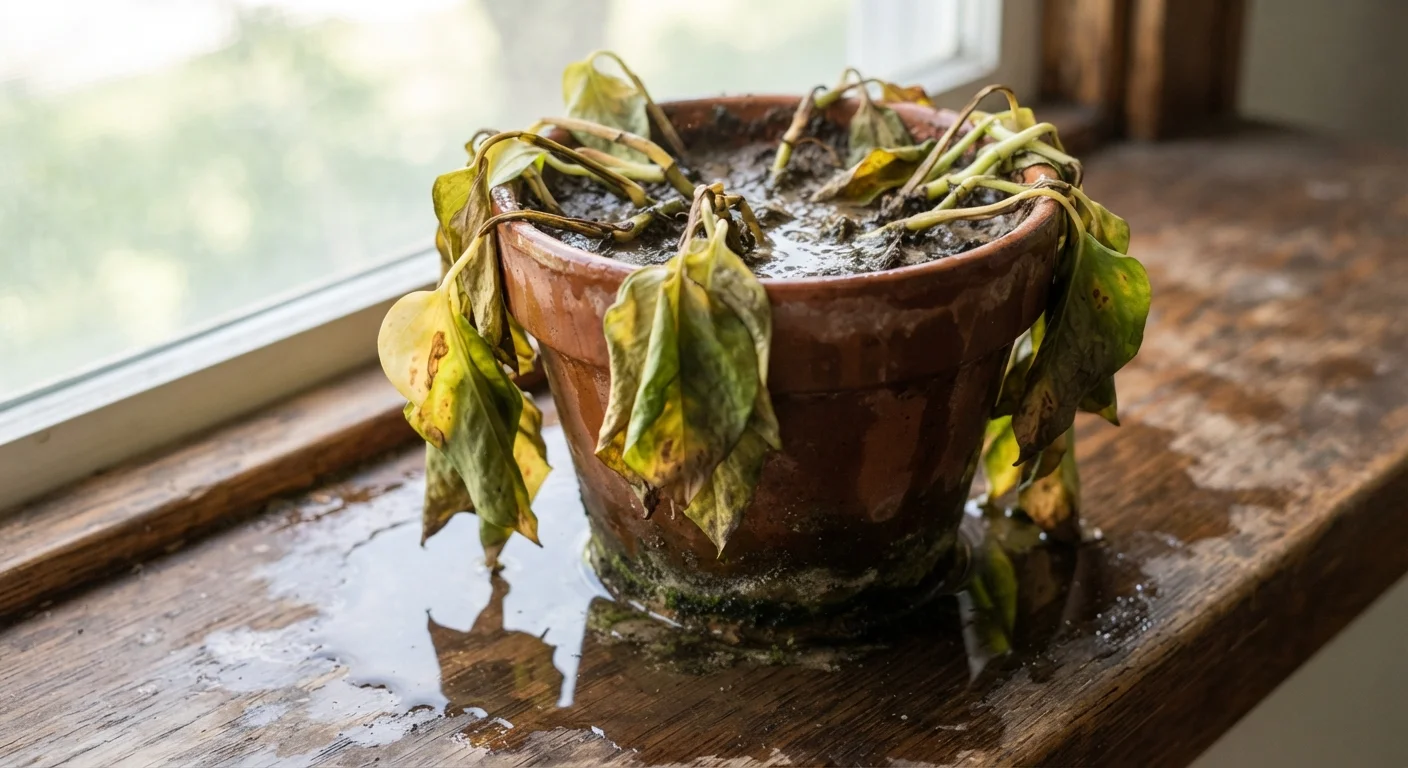
Photo credit: Glowwwatch.com
Overwatering is one of the most common reasons plants fail. Learn how to recognize it, what causes root damage, and how to water smarter.
Key Takeaways
- Overwatering is the leading cause of houseplant and garden plant death among beginners.
- Soggy soil suffocates roots by displacing the oxygen they need to function.
- The finger-test and pot weight are more reliable watering guides than a fixed schedule.
- Drainage — not just water volume — determines whether roots stay healthy.
- Plant species, pot material, season, and humidity all affect how often to water.
Why More Water Often Does Less Good
It feels intuitive: plants need water to grow, so more water should mean more growth. In practice, the opposite is frequently true. Overwatering is consistently cited by horticulturalists as the top reason houseplants and garden seedlings fail — not drought, not pests, not poor soil.
The problem is biological. Plant roots don't just absorb water; they also need to breathe. Healthy soil contains air pockets that supply oxygen to root cells. When those pockets fill with water and stay filled, roots are essentially suffocated. They lose the ability to draw nutrients upward, cell walls weaken, and the plant begins to decline from the ground up — long before the leaves show obvious distress.
Understanding this mechanism changes how you think about watering. The goal isn't to keep soil wet; it's to keep roots in a cycle of moist-then-dry that allows both hydration and respiration. For more context on common misconceptions that trip up new gardeners, see our guide to garden myths.
Watering on a rigid daily schedule regardless of soil conditions.
Why it happens: New gardeners often treat watering like a daily chore — something to tick off the list — without checking whether the plant actually needs it.
Assuming wilting always signals thirst.
Why it happens: Wilting is the most visible plant distress signal, and thirst is the most obvious cause — so the reflex is to add water.
Using pots without drainage holes, or blocking the drainage that exists.
Why it happens: Decorative pots often lack drainage, and some gardeners place plants directly in them for aesthetic reasons without a nursery pot insert.
Giving every plant in the house the same watering routine.
Why it happens: It's efficient to water everything at once on the same day, but different plant species have very different moisture needs.
Using heavy, compacted soil that holds water too long.
Why it happens: Standard garden soil or cheap potting mixes can compact over time, reducing air pockets and causing water to pool rather than drain.
How to Water Smarter Going Forward
Correcting your watering habits doesn't require expensive tools — it requires paying closer attention to your plants and their environment.
Check before you water. Push your finger about an inch into the soil. If it feels moist, wait. If it's dry at that depth, water thoroughly until it drains from the bottom. Pot weight is another useful proxy: a pot that feels noticeably lighter than usual is telling you the soil has dried out.
Match your approach to the plant and pot. Succulents and cacti store water in their tissues and tolerate — even prefer — long dry periods. Ferns and tropical plants prefer consistently moist (not wet) conditions. Clay pots dry out faster than plastic or glazed ceramic, meaning the same plant in different pots may need different watering schedules. If you're growing in containers, our container gardening guide covers drainage and soil selection in depth.
Account for season and conditions. A plant that needed water twice a week in summer may only need it once every two weeks in winter when growth slows. Low light and cool indoor temperatures dramatically reduce water uptake.
Drainage Problems Can Affect More Than Plants
Consistent overwatering near foundations, raised beds against walls, or garden borders close to the home can contribute to soil saturation and moisture issues that extend beyond the garden. If you notice pooling water near your home's exterior, it's worth reviewing your home's drainage to make sure garden watering habits aren't compounding any underlying issues.
Let drainage do its job. Always use pots with drainage holes, and never let a plant sit in a saucer full of standing water for more than an hour. If you're starting plants from seed or transplant, establishing good drainage habits from day one sets them up for long-term health — something we explore in our seeds vs. transplants comparison.

Author
Home & Garden Editorial Team
Home & Garden Editorial Team is the collective byline for our editorial team and contributor network. Articles published under this byline or an editorial pen name are researched, written, and reviewed according to our editorial standards for clarity, consistency, and independence before publication.
View all articles →