
Whole Grains vs. Refined Grains: What Changes During Processing
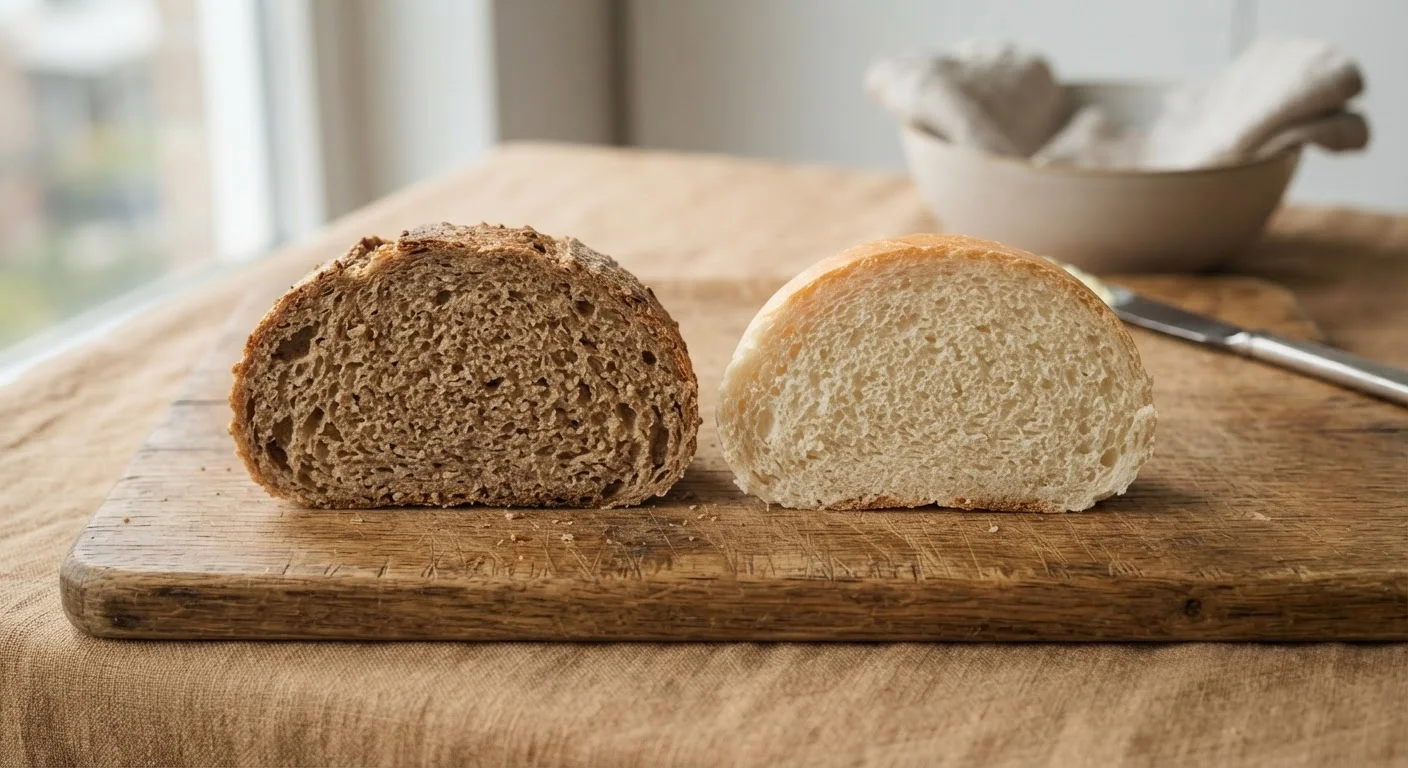
Photo credit: Glowwwatch.com
In this article
White bread vs. whole wheat — discover what nutrients are lost in refining and why that distinction shows up on food labels.
Key Takeaways
- Refining removes the bran and germ from a grain, leaving mostly the starchy endosperm.
- Up to 25% of a grain's protein and significant amounts of fiber, B vitamins, and minerals are lost in milling.
- Enrichment adds back some — but not all — of the nutrients removed during refining.
- Whole grains are consistently linked to better digestive health and reduced chronic disease risk in population studies.
- Food labels use terms like 'multigrain' and 'wheat bread' that do not guarantee a whole grain product.
- Switching even some refined grains for whole grains is a meaningful step most people can take gradually.
What Makes a Grain 'Whole' in the First Place
A grain kernel has three distinct parts: the bran (the fibrous outer layer), the germ (the nutrient-dense embryo), and the endosperm (the starchy inner core). A whole grain keeps all three parts intact — whether the grain is eaten in its original form, cracked, flaked, or ground into flour. A refined grain has had the bran and germ mechanically removed, leaving behind primarily the endosperm.
This distinction matters because each part of the kernel carries a different nutritional payload. The bran supplies dietary fiber, B vitamins such as niacin and thiamine, and trace minerals. The germ is rich in vitamin E, healthy fats, and additional B vitamins. The endosperm provides mostly carbohydrates and some protein. When you mill away two of the three parts, you are removing the majority of the grain's micronutrient and fiber content.
Common whole grains include oats, brown rice, whole wheat, barley, quinoa, and bulgur. Their refined counterparts include white flour, white rice, and degermed cornmeal — all of which are staples in the US food supply.
What the Refining Process Actually Removes
Milling is efficient and extends shelf life — the oil-rich germ, if left in flour, would go rancid relatively quickly. But efficiency comes at a nutritional cost. Research compiled by nutrition scientists shows that refining can strip away a substantial portion of several key nutrients.
~75%
Fiber lost during wheat refining
Estimates from nutritional science research indicate that milling whole wheat into white flour removes roughly three-quarters of its dietary fiber.
~60%
Calcium lost in milling
Studies on grain processing suggest calcium content can drop by more than half when the bran and germ are removed from wheat.
~80%
Vitamin E reduction after refining
Because vitamin E is concentrated in the germ, refining eliminates the vast majority of this antioxidant nutrient from grain products.
Fiber losses are among the most significant. Dietary fiber — which supports digestive regularity, feeds beneficial gut bacteria, and helps manage blood sugar response — is concentrated almost entirely in the bran. White bread, for example, contains a fraction of the fiber found in a comparable serving of whole wheat bread.
B vitamins including folate, thiamine, riboflavin, and niacin drop sharply during milling. So do minerals like iron, magnesium, and zinc. Vitamin E, found mainly in the germ, is nearly eliminated. Phytochemicals — plant compounds with potential antioxidant properties — are also heavily reduced, though research on their specific roles is still developing.
To partially address these losses, the US government established enrichment standards. Enriched grains have thiamine, riboflavin, niacin, folic acid, and iron added back after milling. This policy has meaningfully reduced deficiency-related conditions like neural tube defects. However, enrichment does not replace fiber, vitamin E, magnesium, or the range of phytochemicals lost during processing. It is a partial correction, not a full restoration. For more on how processing levels affect overall food quality, see our article on the spectrum of food processing.
How to Spot Whole Grains on a Food Label
Food packaging can be genuinely confusing. Terms like multigrain, wheat bread, stone-ground, and seven-grain sound nutritious but carry no legal requirement to contain any whole grain at all. Only the phrase "whole grain" or "whole wheat" (or another whole grain named specifically) in the first position on the ingredient list reliably signals that the primary grain ingredient is intact.
What 'Enriched' Means on a Label
When you see 'enriched wheat flour' on an ingredient list, it means the grain was refined and then had a handful of nutrients — thiamine, riboflavin, niacin, folic acid, and iron — added back in. This is meaningful for preventing specific deficiencies, but enrichment does not restore the fiber, magnesium, vitamin E, or phytochemicals lost in processing. Enriched does not equal whole grain. For more on what nutrition labels do and don't tell you, see where nutrition labels fall short.
The Nutrition Facts panel also offers clues. Higher fiber content per serving — particularly 3 grams or more — is a reasonable indicator that a grain-based product contains meaningful amounts of whole grain. That said, some products add isolated fiber ingredients, so cross-checking the ingredient list remains important.
For a broader look at what front-of-package marketing can and cannot tell you, see our guide to health claims like 'natural' and 'multigrain'. And if you want a practical framework for applying this knowledge while shopping, grocery shopping with nutrition in mind offers a useful checklist.
This article is for general informational and educational purposes only and is not a substitute for advice from a qualified healthcare or registered dietitian professional. Always consult a professional regarding your individual dietary needs.

Author
Health & Wellness Editorial Team
Health & Wellness Editorial Team is the collective byline for our editorial team and contributor network. Articles published under this byline or an editorial pen name are researched, written, and reviewed according to our editorial standards for clarity, consistency, and independence before publication.
View all articles →