
Decoding a Nutrition Facts Label, Line by Line
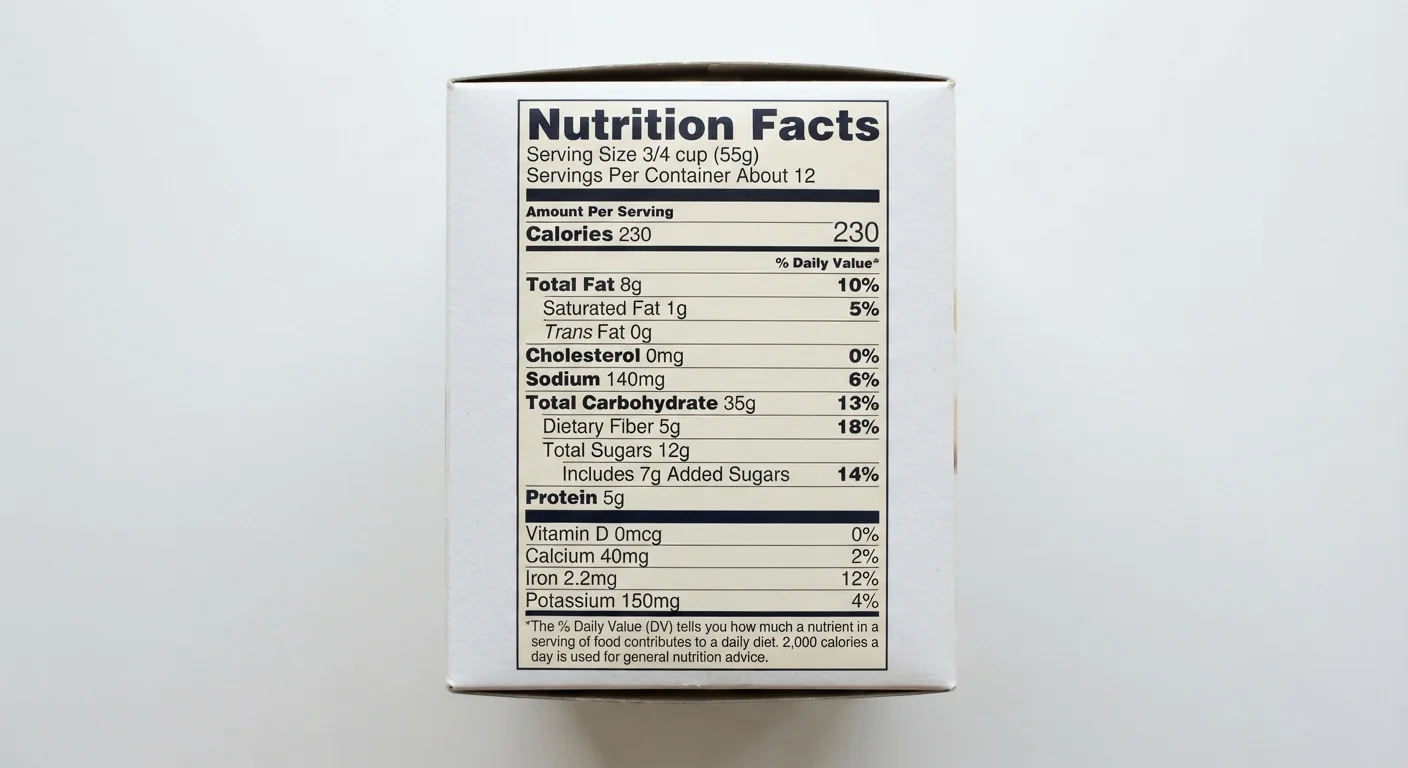
Photo credit: Glowwwatch.com
In this article
Serving sizes, daily values, added sugars — a plain-English walkthrough of every section on the FDA nutrition label.
Key Takeaways
- Serving size is the foundation of every number on the label — always check it first.
- % Daily Value tells you whether a nutrient is high or low relative to a standard 2,000-calorie diet.
- Added sugars and saturated fat are worth limiting; fiber, vitamins, and minerals are worth seeking.
- The updated FDA label now requires added sugars to be listed separately from total sugars.
- One package does not always equal one serving — many containers hold two or more servings.
Why the Nutrition Facts Label Matters
Every packaged food sold in the United States is required by the FDA to carry a Nutrition Facts label. It is one of the most reliable, standardized pieces of consumer health information available — yet most shoppers admit they either skip it or find it confusing. This walkthrough breaks it down section by section so you can use it with confidence.
Once you understand how the label is structured, comparing foods and making informed choices becomes much faster. For a broader foundation, see the end-to-end nutrition guide that puts label-reading in the context of balanced eating overall.
What you will need
Step-by-Step: Reading Every Line
Work your way down the label from top to bottom. Each section builds on the one above it, so the order matters.
Check the Serving Size and Servings Per Container
The very first line under "Nutrition Facts" tells you the serving size — for example, "2/3 cup (55g)." Every single number that follows is based on that amount, not the whole package. Directly below it, "Servings Per Container" tells you how many of those portions are inside.
If a bag shows 2.5 servings and you eat the whole bag, multiply every number on the label by 2.5 to get your actual intake.
Read the Calories
The large, bold Calories number shows how much energy is in one serving. This is total calories from all sources — fat, carbohydrate, and protein combined. If your serving is different from the label's, adjust proportionally.
Identify Nutrients to Limit
The next block lists Total Fat, broken into saturated fat and trans fat, followed by Cholesterol and Sodium. Dietary guidelines generally recommend limiting saturated fat, trans fat, and sodium, as habitual excess is associated with increased cardiovascular risk. Trans fat should ideally be as close to zero as possible.
Understand Total Carbohydrate, Fiber, and Sugars
Total Carbohydrate is listed next, with Dietary Fiber and Total Sugars indented below it. Most adults fall short of the recommended fiber intake, so a higher fiber value is generally favorable. Under Total Sugars you'll find Includes X g Added Sugars — this line, required on updated FDA labels, distinguishes sugars naturally present in a food from sugars added during processing. Limiting added sugars is a consistent recommendation across major dietary guidelines.
Note Protein
Protein is listed below sugars. The label does not currently require a % Daily Value for protein for most products. Use the gram amount to compare foods and assess whether a serving contributes meaningfully to your daily protein needs.
Use the % Daily Value Column
The right-hand column shows % Daily Value (%DV) for most nutrients. This percentage is based on a 2,000-calorie-per-day diet — a benchmark, not a prescription. As a general rule: 5% DV or less is considered low for a nutrient, and 20% DV or more is considered high. Use this column to quickly gauge whether a food is a significant source of a nutrient or not, without doing any math.
At the bottom of the label you'll find Vitamin D, Calcium, Iron, and Potassium with their %DVs. These are nutrients Americans commonly under-consume, so higher values here are generally favorable.
Once you're comfortable reading labels, you'll also want to know what front-of-package wording actually means legally. Our article on health claims like 'natural' and 'low-fat' explains how terms like "multigrain" and "light" can be misleading even when you already understand the back-panel numbers.
Putting It Together at the Store
Reading a single label is useful; comparing labels across similar products is powerful. When two items look similar, check serving size first — if they differ, all other comparisons are skewed. Then look at saturated fat, added sugars, and sodium as nutrients to limit, and fiber, calcium, iron, and vitamins D and potassium as nutrients to seek.
A Quick Rule of Thumb for %DV
5% DV or less means a nutrient is low in that food; 20% DV or more means it is high. Apply this to both nutrients you want more of (fiber, vitamin D) and those you want less of (saturated fat, sodium). It works as a fast filter without any calculation.
Keep in mind that labels have real limits. They report nutrients well, but they say little about ingredient quality, processing level, or how a food fits your overall diet pattern. Our article on where nutrition labels fall short covers those gaps in detail. For a practical shopping framework, see our grocery shopping with nutrition in mind checklist.
This article is for general informational and educational purposes only and is not a substitute for professional medical or dietary advice. Consult a registered dietitian or qualified healthcare provider for guidance tailored to your individual health needs.

Author
Health & Wellness Editorial Team
Health & Wellness Editorial Team is the collective byline for our editorial team and contributor network. Articles published under this byline or an editorial pen name are researched, written, and reviewed according to our editorial standards for clarity, consistency, and independence before publication.
View all articles →