
Reading a Recipe the Right Way Before You Start Cooking
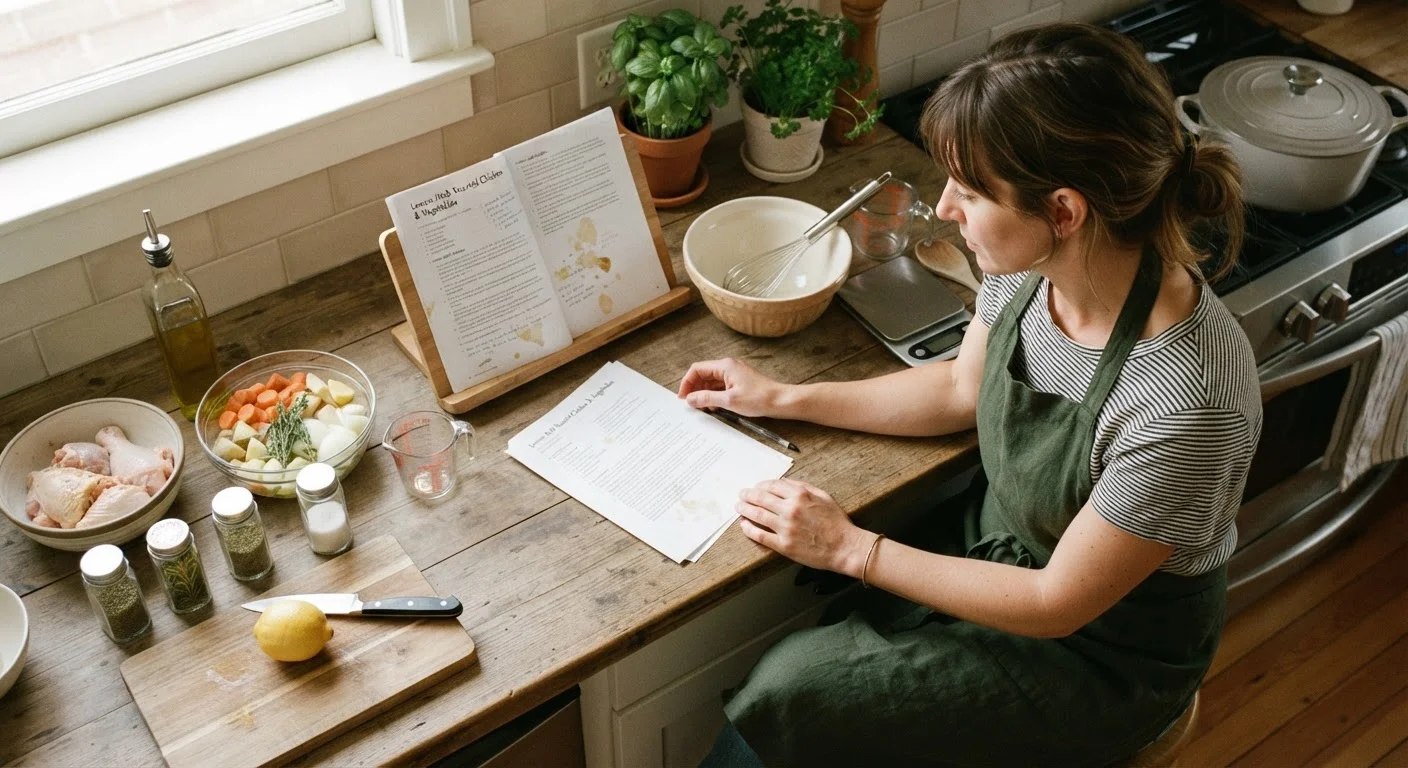
Photo credit: Glowwwatch.com
In this article
Most kitchen mishaps happen before the first ingredient hits the pan. Learn what to look for when reading a recipe from start to finish.
Key Takeaways
- Read the entire recipe from start to finish before touching a single ingredient.
- Check every technique term before cooking — unfamiliar methods can stall progress mid-dish.
- Ingredient prep notes like 'finely diced' or 'room temperature' affect your results significantly.
- Timing gaps in a recipe often require you to work on multiple components simultaneously.
- Scaling a recipe up or down isn't always straightforward — some elements don't convert proportionally.
Why Recipe Reading Is a Skill in Itself
Most kitchen mistakes don't happen at the stove — they happen in the ten seconds a cook glances at a recipe, decides they understand it, and dives straight in. A recipe that looks simple on the surface can hide crucial details: a marinade that needs four hours, a technique you've never tried, or an ingredient that must be at room temperature before use.
Reading a recipe the right way is less about speed and more about comprehension. Think of it the way you'd read instructions before assembling furniture. You skim once to get the big picture, then you read again carefully before you pick up a single tool. The same two-pass approach works exceptionally well in the kitchen.
This checklist walks you through exactly what to look for — and when — so that by the time you reach for your first ingredient, you already have a clear mental map of the whole dish. If you want to take your kitchen readiness even further, the mise en place habit pairs perfectly with this approach.
First Read-Through
Ingredient Review
Equipment Check
Timing and Sequencing
Final Prep Confirmation
Tools and Resources to Have Ready
Before you work through the checklist, gather a few things that will help you read and interpret a recipe accurately.
Kitchen scale
Weighing ingredients in grams or ounces gives you more consistent results than volume measurements, especially in baking.
Instant-read thermometer
Confirms internal temperatures for meat, bread, and candy without relying on guesswork.
Timer (separate from your phone)
Lets you track multiple cooking stages simultaneously without losing a count mid-step.
Notepad or sticky notes
Useful for jotting down parallel timing cues or marking which steps need your full attention.
Measuring cups and spoons (dry and liquid sets)
Accurate volume measurements for recipes that don't use weight — dry and liquid measures differ in design for good reason.
Common Pitfalls When Skipping Ahead
Even experienced home cooks occasionally skip the careful read-through and pay for it mid-cook. A few patterns come up repeatedly.
Timing surprises: Many recipes assume you'll run multiple steps in parallel. If you don't notice that the sauce simmers for 20 minutes while you prep the vegetables, you may end up with everything finishing at wildly different times. Scan through the method section specifically looking for how time overlaps across steps.
Hidden prep work: An ingredient listed as "caramelized onions" in the ingredient list can take 30–40 minutes to prepare correctly. "Softened butter" means butter left out at room temperature, not microwaved for 15 seconds. These small notes carry real consequences.
Unfamiliar techniques: If a recipe asks you to "fold" egg whites, "deglaze" a pan, or "bloom" spices, and you're not sure what those terms mean, stop and look them up before you start. Our foundational cooking techniques guide covers many of the methods you'll encounter most often.
Don't Trust 'Serves 4' Without Checking
Yield descriptions like 'serves 4' vary enormously by recipe source and cultural context — what one cookbook means by a serving may be a side portion, not an entrée. Before you start, consider whether the yield matches your actual needs. It's much easier to scale a recipe before cooking than to scramble halfway through.
One more area worth your attention: heat. Recipes often specify medium-high heat or a particular oven temperature, but those numbers mean different things across different stoves and ovens. Understanding why pan temperature matters helps you adapt any recipe to your actual equipment.
Finally, once you're cooking, tasting as you go is the habit that ties everything together — it's how you catch problems early and adjust before a dish is finished.

Author
Food & Drinks Editorial Team
Food & Drinks Editorial Team is the collective byline for our editorial team and contributor network. Articles published under this byline or an editorial pen name are researched, written, and reviewed according to our editorial standards for clarity, consistency, and independence before publication.
View all articles →