
Mise en Place: The Prep Habit That Changes How You Cook
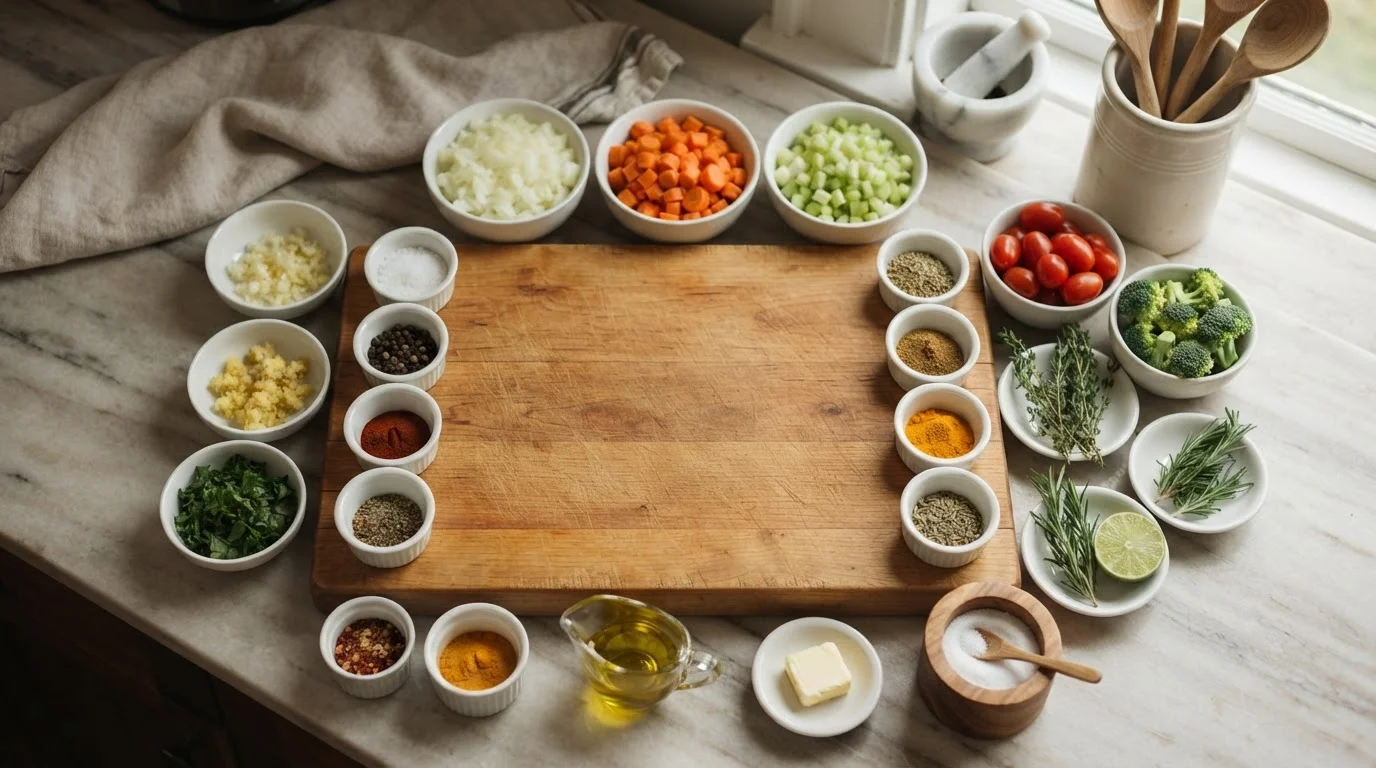
Photo credit: Glowwwatch.com
In this article
Mise en place isn't just a chef's term — it's a practical approach to organizing your kitchen that reduces stress and cooking errors.
Key Takeaways
- Mise en place means prepping and organizing all ingredients before cooking begins.
- It reduces stress, prevents mistakes, and helps you follow recipes more accurately.
- You don't need special equipment — small bowls, ramekins, or even paper plates work well.
- The habit is especially useful for recipes with multiple steps or fast-moving techniques.
- Professional chefs rely on mise en place to maintain consistency and speed in the kitchen.
What Mise en Place Actually Means
The phrase mise en place comes from French and literally translates to "put in place" or "everything in its place." In the culinary world, it describes the process of prepping, measuring, and organizing every ingredient you'll need before you start applying any heat. Onions get diced, garlic gets minced, spices get measured into small bowls, and liquids get portioned — all before the stove turns on.
The concept sounds simple because it is. But for home cooks, it's one of the most frequently skipped steps. The result is often a chaotic kitchen: something overcooks while you're still chopping, or a sauce breaks because you couldn't find the cream in time. Mise en place is the antidote to that kind of cooking stress.
It also pairs directly with reading a recipe carefully before you start — because prepping your ingredients forces you to engage with every step before the pressure of live cooking begins.
Why It Makes Such a Difference
Cooking is time-sensitive. Once a pan is hot, a sauce is reducing, or proteins are in contact with heat, everything happens fast. Stopping mid-process to search for an ingredient or measure a spice isn't just inconvenient — it can mean the difference between a perfectly cooked dish and a ruined one.
Mise en place removes that friction. When your ingredients are already prepped and arranged in order of use, you can focus entirely on technique, timing, and flavor. This is exactly why it's a foundational habit covered in the most essential cooking techniques to learn first.
~30%
Reduction in perceived cooking stress
Culinary educators commonly report that students who adopt mise en place describe feeling significantly less stressed and more in control during hands-on cooking sessions.
Step 1
Prep before heat — a universal professional rule
Culinary training programs across the US and internationally teach mise en place as the first lesson in kitchen organization and professional cooking practice.
There's also a cognitive benefit. Mentally, working through prep in advance gives you a clearer picture of the whole dish. You spot potential issues — like a missing ingredient or a step that requires more time — before they become problems.
How to Build the Habit at Home
You don't need a professional kitchen setup to practice mise en place. Here's a straightforward approach that works at home:
- Read the full recipe first. Go from top to bottom before touching anything. Note which steps require timed attention and which ingredients need to be at room temperature, soaked, or thawed in advance.
- Gather your containers. Small bowls, ramekins, or prep cups are ideal. Group ingredients the way the recipe will use them — if garlic and onion always go in together, they can share a bowl.
- Measure and prep in sequence. Work through the recipe order, not ingredient order. Prep what you'll use first, then what comes next.
- Clear as you go. Move prep scraps to a discard bowl and keep your workspace clean. A tidy station keeps you focused.
Start Small if the Full Routine Feels Like a Lot
If prepping everything upfront feels like too much of a shift, begin with just your spices and aromatics — the ingredients that go in first and need the most speed. Measuring garlic, ginger, and spice blends into small bowls before heating oil is a small change that immediately reduces panic at the stove. Build from there.
Once this becomes habit, you'll find it changes how confidently you approach unfamiliar recipes — including when you start building dishes from scratch without a recipe.
When Mise en Place Matters Most
While the habit is useful broadly, it pays off most in specific situations: dishes with multiple simultaneous components, recipes involving high heat or quick cooking methods like stir-frying, or any time you're cooking for guests and want to minimize stress. If you've ever felt frazzled while cooking, mise en place is the most direct fix.
It also supports better seasoning decisions. When everything is laid out and you're not rushing, you're more likely to taste and adjust as you go — a habit that separates consistently good cooks from those who rely on luck.
Even if you start small — just measuring spices into a bowl before heating oil — you'll notice the difference immediately. Mise en place isn't about perfection. It's about giving yourself the conditions to cook well.
Frequently Asked Questions

Author
Food & Drinks Editorial Team
Food & Drinks Editorial Team is the collective byline for our editorial team and contributor network. Articles published under this byline or an editorial pen name are researched, written, and reviewed according to our editorial standards for clarity, consistency, and independence before publication.
View all articles →