
Building a Flavorful Dish from Scratch Without a Recipe
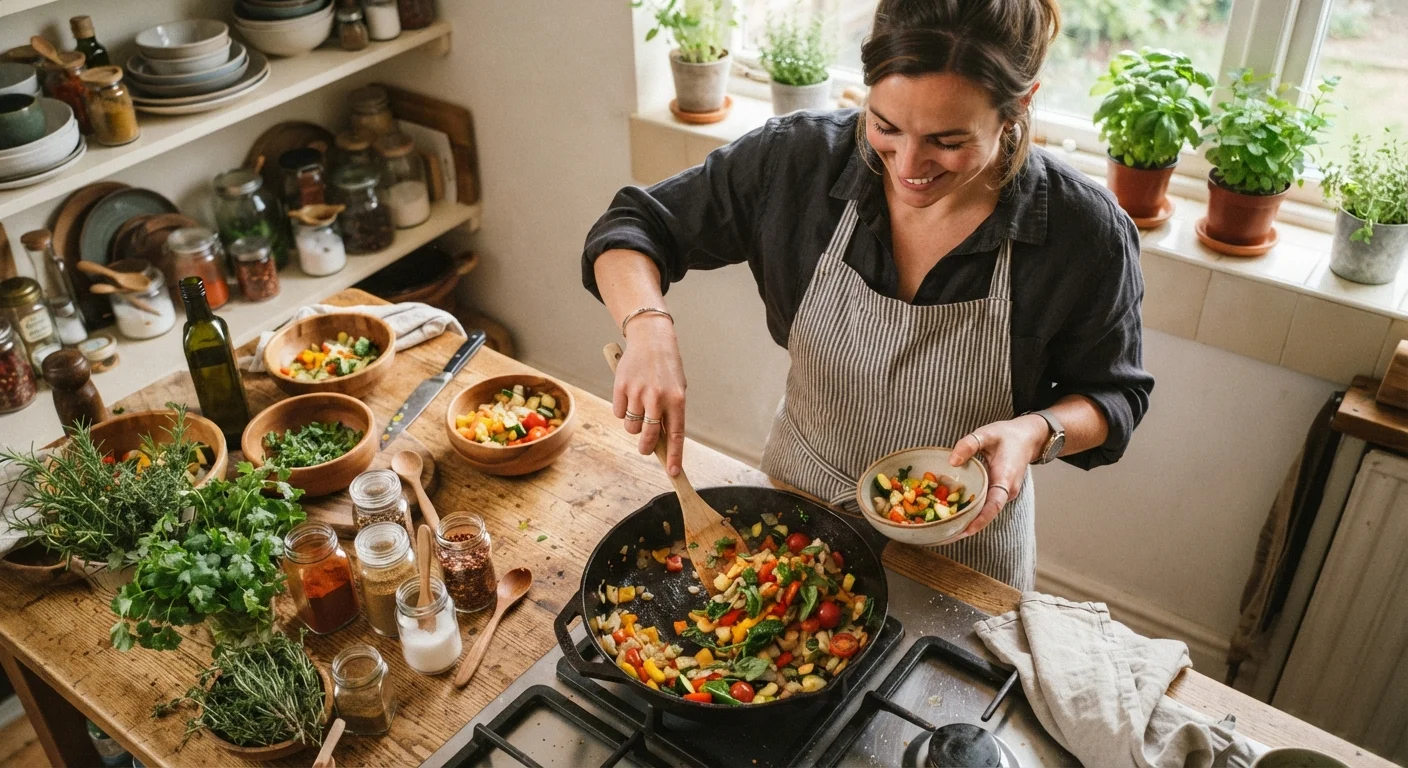
Photo credit: Glowwwatch.com
In this article
Learn how to think about flavor, balance, and technique so you can cook confidently without following instructions line by line.
Key Takeaways
- Every flavorful dish is built on a foundation of fat, aromatics, seasoning, and a cooking technique.
- Balancing salt, acid, fat, and heat is more important than following exact measurements.
- Tasting as you cook — not just at the end — is the single most powerful habit to develop.
- A simple flavor framework lets you improvise across cuisines using ingredients you already have.
- Mistakes made without a recipe are the fastest way to build real cooking intuition.
Why Cooking Without a Recipe Is a Learnable Skill
Most home cooks treat recipes as mandatory instructions — something to follow precisely or not attempt at all. But experienced cooks rarely think that way. They understand a set of underlying principles that make food taste good, and they apply those principles regardless of what's in the fridge.
This doesn't mean guessing randomly. It means developing a mental framework for how ingredients interact. Once you understand that framework, you can walk into a kitchen with whatever you have on hand and build something genuinely satisfying. If you're more comfortable starting with written guidance, our article on reading a recipe the right way is a useful starting point — but the goal is eventually to need it less.
What you will need
The Four Building Blocks of Any Flavorful Dish
Before picking up a pan, it helps to understand what makes food taste good at a structural level. Most satisfying dishes share four elements:
- Fat: Carries flavor, enables browning, and adds richness. Olive oil, butter, coconut oil, and animal fats all work differently — but all contribute.
- Aromatics: Onion, garlic, ginger, shallots, celery, and similar ingredients form a flavor base when cooked in fat at the start. This step builds depth that carries through the whole dish.
- Seasoning: Salt is the most important seasoning in any kitchen. It doesn't just add saltiness — it amplifies other flavors and changes texture. See our piece on what salt actually does to food for the science behind this.
- Acid: A squeeze of lemon, a splash of vinegar, or even a spoonful of yogurt brightens a dish and balances richness. If something tastes flat, acid is often the answer.
Think of these as dials you can adjust, not fixed measurements. Your job while cooking is to keep all four in balance.
Keep a Simple Spice Rotation
You don't need dozens of spices to cook well without a recipe. A handful of versatile options — smoked paprika, cumin, dried oregano, and red pepper flakes — covers a wide range of flavor directions. Add them to your aromatic base right before adding other ingredients so the heat blooms their flavor.
How to Build and Adjust Flavor as You Cook
The single habit that separates confident cooks from hesitant ones is tasting throughout the cooking process — not just before serving. Our article on tasting as you go breaks this down in detail, but the core idea is simple: every time you add an ingredient, taste what changes.
Ask yourself these questions as you cook:
- Does it taste flat? Add salt or acid.
- Does it taste sharp or harsh? Add fat or a pinch of sugar.
- Does it taste one-dimensional? Add another aromatic or a spice.
- Does it taste rich but heavy? Brighten it with lemon juice or vinegar.
This adjustment loop — taste, diagnose, correct — is what recipes can't fully teach you. It's also how you learn to trust your own palate over time.
Don't Mistake Underseasoning for a Flavor Problem
Many dishes that seem like they're missing something are simply under-salted. Before adding more spices, herbs, or acid, try a small additional pinch of salt and taste again after 30 seconds. Salt needs a moment to dissolve and integrate. Overspicing to compensate for lack of salt often makes a dish more complicated without making it better.
Putting It All Together: Steps for Building a Dish from Scratch
The following steps walk you through a general process that works across a wide range of dishes — stir-fries, braises, sautés, grain bowls, and more. Mastering the foundational techniques behind each step will make this process feel natural quickly.
Choose a cooking method first
Before you pick your ingredients, decide how you want to cook: sauté, roast, simmer, or steam. The method shapes everything else. Sautéing in a hot pan creates browning and concentrated flavor. Simmering in liquid builds gentler, more blended flavors. Choose based on what ingredients you have and how much time you have.
Build your flavor base with fat and aromatics
Heat your fat of choice in the pan over medium heat. Add your aromatics — onion, garlic, or ginger — and cook until softened and fragrant. This step, called building a base, is where most of the dish's depth comes from. Don't rush it; low and slow brings out sweetness and complexity.
Add your main ingredients in stages
Add ingredients that take longer to cook first — denser vegetables like carrots or potatoes, then proteins, then quick-cooking items like leafy greens or peas. Crowding the pan lowers the temperature and causes steaming instead of browning, so work in batches if needed.
Season as you go, not just at the end
Add salt in small amounts at multiple points during cooking — not all at once at the end. Season each layer: the aromatics, the protein, the vegetables. This builds seasoning into the dish itself rather than just coating the surface at serving time.
Taste, diagnose, and adjust before serving
Take a real taste — not just a quick lick of the spoon. Assess salt, richness, brightness, and depth. Add a squeeze of lemon or a splash of vinegar if it tastes flat. Add a small knob of butter if it tastes harsh. Adjust spice levels with a pinch of chili flakes or black pepper if it needs heat.
Once you're comfortable improvising individual dishes, applying these same principles helps when building a balanced plate across a full meal.

Author
Food & Drinks Editorial Team
Food & Drinks Editorial Team is the collective byline for our editorial team and contributor network. Articles published under this byline or an editorial pen name are researched, written, and reviewed according to our editorial standards for clarity, consistency, and independence before publication.
View all articles →