
Reading a Wine Label Without Feeling Lost
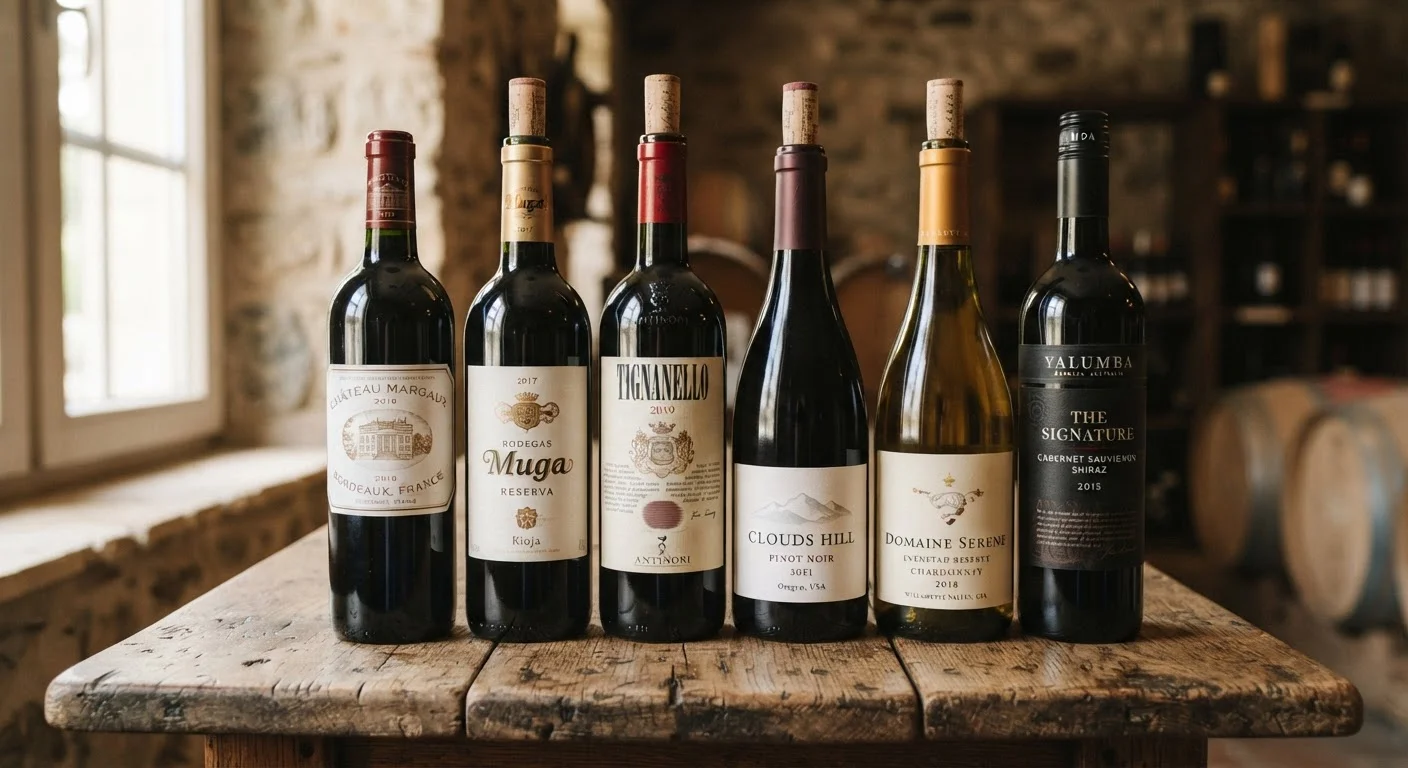
Photo credit: Glowwwatch.com
In this article
Region, vintage, varietal, appellation — wine labels pack in a lot. Here's what each term actually tells you about what's in the bottle.
Key Takeaways
- The producer name and region are the two most important pieces of information on any wine label.
- Vintage year refers to when the grapes were harvested, not when the wine was bottled or sold.
- Old World wines are often labeled by region; New World wines typically lead with the grape variety.
- Alcohol by volume (ABV) hints at body and ripeness — higher ABV often means a fuller, riper wine.
- Appellation designations signal that grapes meet specific geographic and sometimes quality standards.
- You don't need to memorize every term — knowing which details to look for is enough to shop with confidence.
Why Wine Labels Feel Confusing
A wine label is essentially a compressed biography of what's in the bottle — where the grapes grew, who made the wine, and when. The challenge is that different wine-producing regions use different conventions. A French Burgundy may show only a place name and producer, while a California Cabernet Sauvignon will likely lead with the grape variety. Neither approach is wrong, but switching between them without a guide can feel disorienting.
Understanding a few core terms removes most of that confusion. Labels are regulated — producers aren't free to write whatever they like. Each term carries a defined meaning, which means once you know the vocabulary, the label becomes a reliable source of information rather than a riddle.
Front Label vs. Back Label
The front label carries the regulated, legally required information: producer, region, vintage, and ABV. The back label is often written by the producer and may include serving suggestions, tasting notes, or food pairing ideas. Treat back-label tasting notes as marketing copy — useful for a rough flavor sketch, but not a guarantee of what you'll experience.
What Every Label Must (or Usually Will) Include
Regardless of origin, most wine labels share several common elements. Knowing what each one communicates makes the whole label easier to parse.
What you will need
Producer or winery name: This is the company or estate that made the wine. It's often the largest text on the label. A producer's reputation and winemaking philosophy are a strong signal of style.
Region or appellation: An appellation is a legally defined geographic area. In the US, these are called AVAs (American Viticultural Areas). In France they are called appellations d'origine contrôlée (AOC). When a label names an appellation, it means a significant percentage of the grapes — often 75–85% depending on the country — must come from that area. Smaller, more specific appellations generally indicate stricter standards and more distinctive character.
Varietal or grape blend: New World wines (the US, Australia, Argentina, and others) almost always list the primary grape variety — Chardonnay, Merlot, Pinot Noir. Old World wines (France, Italy, Spain) traditionally name the place instead, trusting that the region implies the grape. Burgundy, for example, is virtually always Pinot Noir or Chardonnay, but the label rarely says so.
Vintage: The vintage year is when the grapes were harvested. It matters because growing conditions vary each year. A warm, dry growing season in a particular region will produce different results than a cool, wet one. If no vintage year appears, the wine is likely a blend of multiple years, often called a non-vintage (NV) wine.
Alcohol by volume (ABV): This percentage is legally required on US wine labels. Most table wines fall between 11% and 15% ABV. Higher ABV often signals a riper, fuller-bodied wine; lower ABV can indicate a lighter, more delicate style — though winemaking technique also plays a role.
Terms That Appear on Some Labels
Beyond the core elements, you'll occasionally encounter terms that carry specific meaning but aren't universally required.
Reserve: In the US, "reserve" has no legally standardized definition and is used at the producer's discretion. In some other countries, such as Spain (where Reserva and Gran Reserva are regulated), it carries specific aging requirements. Treat it as a quality signal worth investigating, but not a guarantee.
Estate bottled: This phrase indicates the winery grew the grapes on land it owns or controls and bottled the wine at that same location. It signals a tighter chain of custody from vine to bottle.
Sulfites disclosure: US law requires the statement "contains sulfites" if sulfite levels exceed 10 parts per million. Sulfites occur naturally in wine and are also added as a preservative. Their presence on a label is not an indication of lower quality.
Just as reading a packaged food label rewards knowing what each line means, reading a wine label becomes straightforward once you know which details carry weight. For a complementary perspective on how label information only tells part of the story, see our piece on where labels fall short.
Step-by-Step: Reading Any Wine Label
Use this sequence each time you pick up an unfamiliar bottle. It takes less than a minute once you've practiced it a few times.
Identify the producer
Find the winery or estate name — typically the largest or most prominent text. Note whether it's a small family estate or a large regional producer. This helps you research the style if you want to learn more.
Locate the region and appellation
Find the place name. Determine whether it's a broad region (like "California" or "Bordeaux") or a specific appellation (like "Napa Valley" or "Pauillac"). More specific appellations generally indicate stricter sourcing standards.
Note the grape variety — or infer it from the region
If the grape is listed, that's your primary flavor reference point. If it isn't listed — common with Old World wines — use the region to infer the variety. Burgundy means Pinot Noir or Chardonnay; Barolo means Nebbiolo; Rioja means primarily Tempranillo.
Check the vintage year
Note the harvest year. If you're curious whether it was a strong year in that region, vintage charts are widely published by wine publications and are freely available. For everyday drinking wines, vintage variation matters less than for age-worthy bottles.
Read the ABV
Check the alcohol percentage. Use it as a rough guide to body: wines below 12.5% ABV tend to be lighter; wines above 14% are usually fuller-bodied and riper in style. This can help you pair the wine with food or predict its weight in the glass.
Once you've stored your bottle correctly, you'll get the most from what the label promised. Our guide on drink storage details that are easy to overlook covers the small missteps that quietly affect flavor over time.

Author
Food & Drinks Editorial Team
Food & Drinks Editorial Team is the collective byline for our editorial team and contributor network. Articles published under this byline or an editorial pen name are researched, written, and reviewed according to our editorial standards for clarity, consistency, and independence before publication.
View all articles →