
Why Tailgating Is More Dangerous Than Most Drivers Realize
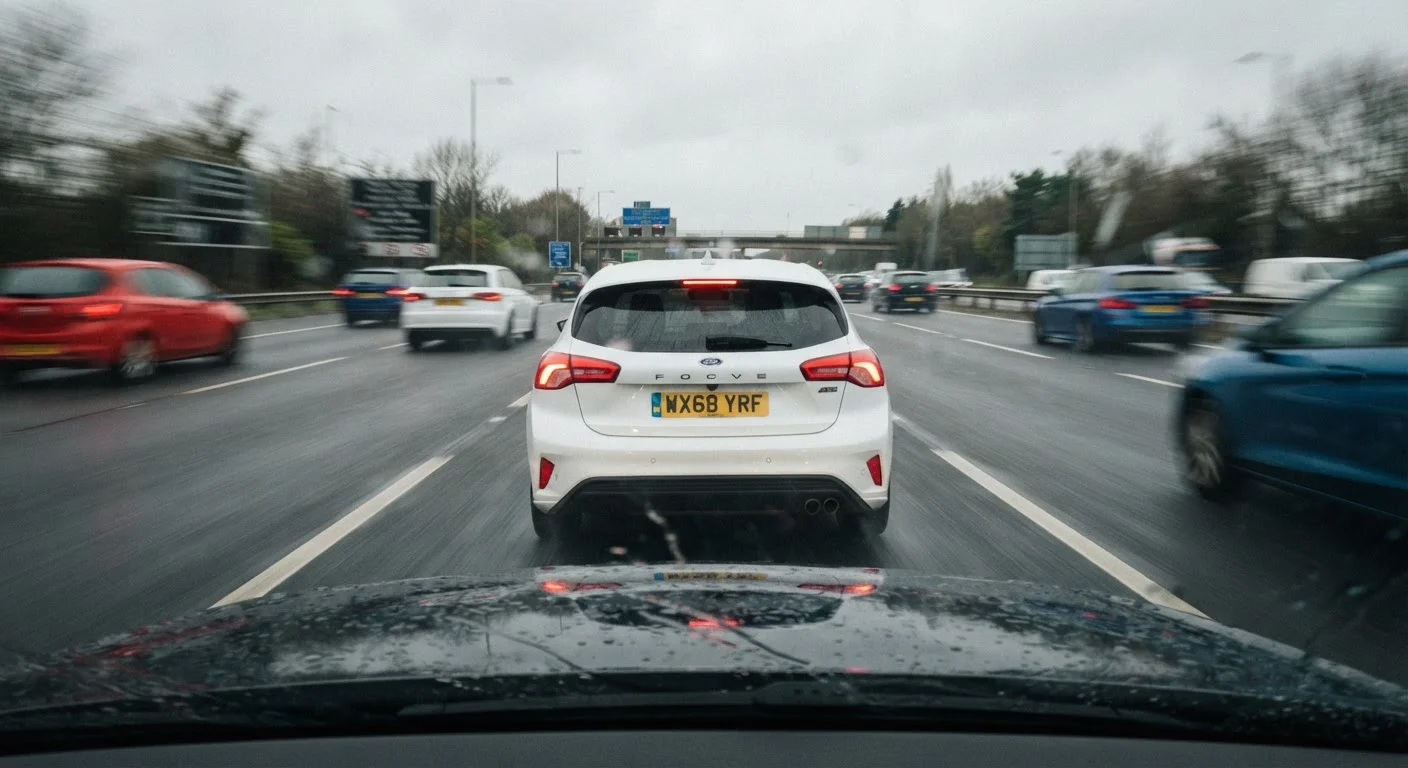
Photo credit: Glowwwatch.com
Following too closely is one of the most common causes of rear-end crashes. Here's what the science of stopping distance actually tells us.
Key Takeaways
- At highway speeds, tailgating leaves you almost no time to react before impact.
- Most drivers underestimate how long it actually takes to bring a vehicle to a full stop.
- Tailgating is a leading factor in rear-end crashes, which account for a large share of all collisions.
- Wet roads, fatigue, and distraction make an already-thin safety margin even thinner.
- The two-second rule is a minimum — not an ideal — and should be extended in poor conditions.
The Gap Between You and a Crash
Most drivers think of tailgating as a rude habit rather than a genuine safety threat. That assumption is wrong, and the physics of stopping distance explain why.
At 60 mph, your vehicle is covering 88 feet every second. A typical driver needs roughly 1.5 seconds just to perceive a hazard and move their foot to the brake — that's more than 130 feet gone before braking even begins. Add braking distance on top of that, and you need somewhere around 300 feet to stop on dry pavement. If you're riding two car lengths behind the vehicle ahead, you simply don't have that space.
Rear-end collisions are among the most common crash types on U.S. roads, and following too closely is consistently cited as a primary contributing factor by federal crash data. The damage ranges from minor fender-benders to fatal multi-vehicle chain reactions, particularly at highway speeds or in poor weather.
Understanding why tailgating is so hazardous starts with recognizing what's actually happening in those fractions of a second between the moment something goes wrong ahead and the moment your bumper makes contact. For a broader look at how to anticipate hazards before they become emergencies, see our guide to defensive driving.
Judging distance by how close the other car looks rather than by time.
Why it happens: Distance is visually intuitive, but at speed, visual gaps shrink faster than most drivers expect. People misjudge what looks "close enough" to stop safely.
Assuming modern vehicles stop faster than older ones, making a shorter gap acceptable.
Why it happens: Drivers familiar with cars equipped with anti-lock braking (ABS) or emergency braking assist may believe technology eliminates much of the stopping-distance problem.
Following closely to pressure a slow driver into moving over or speeding up.
Why it happens: Frustration with slow traffic is common, and tailgating can feel like a way to communicate that frustration. Many drivers don't consciously register that they're endangering themselves and others.
Maintaining the same following distance regardless of speed.
Why it happens: Drivers often develop a fixed habit of staying a set number of car lengths behind, without adjusting for speed changes as they move from city streets to highways.
Not accounting for the vehicle behind you when braking.
Why it happens: Drivers focus almost entirely on what's ahead and forget that their own following distance affects the driver behind them as well.
Why Following Distance Gets Worse in Real Conditions
The calculations above assume dry pavement, an alert driver, and a vehicle in good mechanical condition. Real driving rarely checks all three boxes at once.
~29%
Share of all U.S. crashes that are rear-end collisions
Rear-end crashes are consistently among the most frequently occurring collision types, according to data from the National Highway Traffic Safety Administration (NHTSA).
2x+
Increase in stopping distance from 40 to 60 mph
Because stopping distance grows exponentially with speed, highway tailgating leaves dramatically less margin for error than drivers typically assume.
Rain reduces tire traction significantly, extending stopping distances — sometimes by 50% or more depending on tire condition and road surface. Worn brake pads, underinflated tires, and older vehicles with less responsive braking systems add further to that gap. And if the driver is tired or distracted, the 1.5-second perception-reaction time can balloon to three seconds or beyond.
Speed compounds everything. The relationship between speed and stopping distance isn't linear — it's exponential. Going from 40 mph to 60 mph doesn't increase your stopping distance by 50%; it can more than double it. Drivers who tailgate at highway speeds are operating with an almost nonexistent safety margin.
Wet or Icy Roads Change Everything
On wet pavement, stopping distances can increase by 50% or more. On ice, they can multiply several times over. If you're already following closely in dry conditions, a sudden rain shower or unexpected icy patch could make a collision virtually unavoidable. Always increase your following distance before conditions deteriorate, not after.
Weather, fatigue, and speed are interconnected risks. Any one of them would justify more following distance on its own. Together, they make close following genuinely life-threatening. Our article on the two-second rule and following distance guidelines breaks down exactly when and how to adjust your gap based on conditions.
It's also worth noting that tailgating frequently escalates conflicts on the road. A driver who feels pressured may brake-check the tailgater, brake unpredictably out of anxiety, or become aggressive in return. For more on how close following fuels tense situations, see our overview of road rage triggers and how to de-escalate.

Author
Autos Editorial Team
Autos Editorial Team is the collective byline for our editorial team and contributor network. Articles published under this byline or an editorial pen name are researched, written, and reviewed according to our editorial standards for clarity, consistency, and independence before publication.
View all articles →