
Driver Fatigue: The Warning Signs Your Body Sends Before You Nod Off
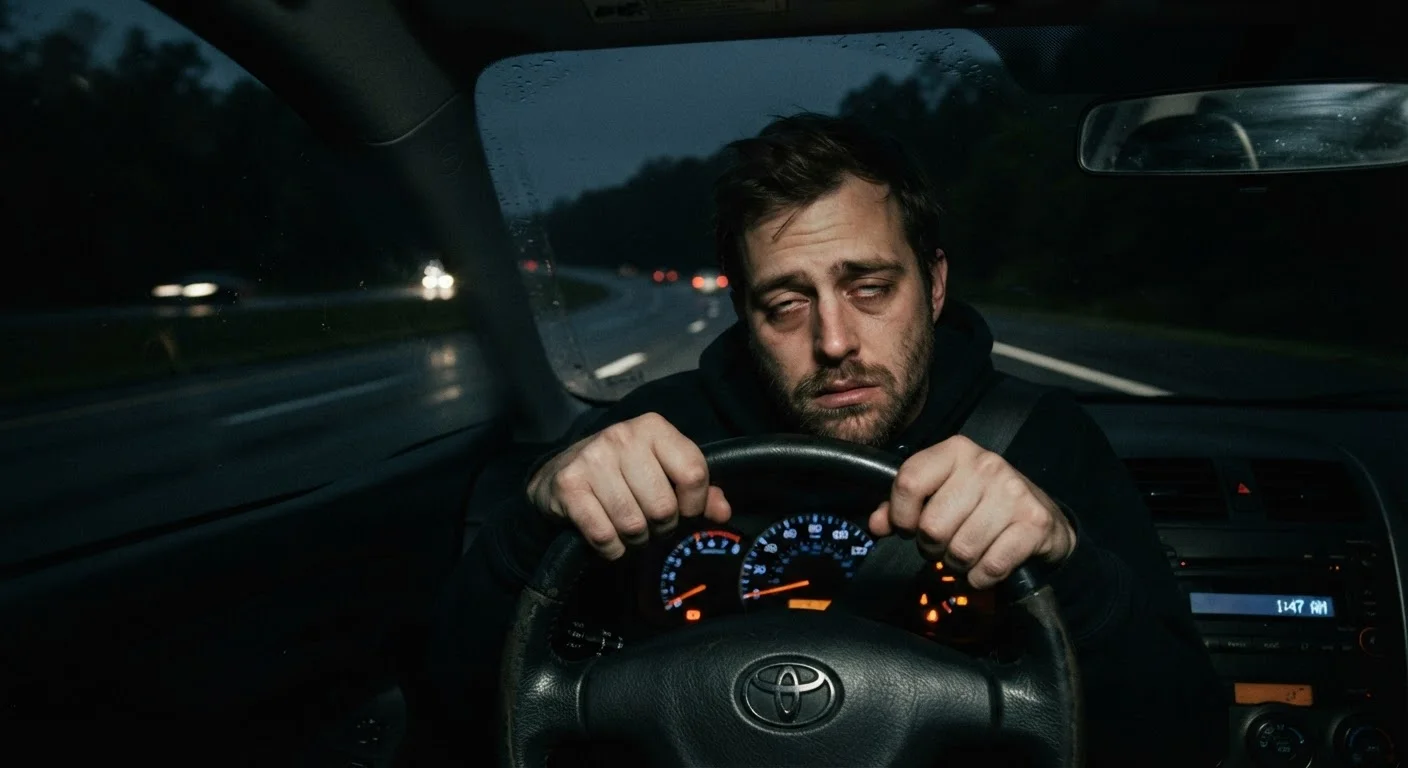
Photo credit: Glowwwatch.com
In this article
Drowsy driving impairs judgment similarly to alcohol. Learn to recognize the early physical signals of fatigue before they become dangerous.
Key Takeaways
- Drowsy driving impairs reaction time and judgment in ways similar to alcohol intoxication.
- Your body sends multiple physical warning signals before you actually fall asleep at the wheel.
- The only real fix for driver fatigue is stopping and resting — stimulants are not reliable substitutes.
- Microsleeps — brief, involuntary sleep episodes lasting seconds — can occur without the driver noticing.
- Certain times of day, including early afternoon and late night, carry higher fatigue risk for most drivers.
Why Drowsy Driving Is More Dangerous Than Most Drivers Realize
Most drivers have experienced mild road fatigue — the kind where you blink a little more, shift in your seat, and maybe crack a window. What fewer drivers appreciate is how quickly that mild tiredness can slide into genuine impairment. Research from the National Highway Traffic Safety Administration (NHTSA) consistently identifies drowsy driving as a significant factor in tens of thousands of crashes each year, many of them fatal.
The core problem is that sleepiness doesn't arrive with a clear warning alarm. It creeps in gradually, quietly dulling your alertness, slowing your reaction time, and narrowing your attention — often before you consciously feel "sleepy." By the time most drivers recognize they're impaired, they're already well past the point where they should have pulled over. Understanding how impairment affects driving can help put fatigue risk in perspective alongside other dangers.
The warning signs below are what your body actually produces in the lead-up to nodding off. Learn to treat each one as a signal to act — not to push through.
Frequent, heavy blinking or eyelid drooping
One of the earliest physical signals is a change in your blink pattern. Your eyes start to feel heavy, blinks become slower and more deliberate, and you may notice your eyelids drooping between blinks. This isn't just discomfort — it's your nervous system struggling to maintain wakefulness. If you're actively trying to keep your eyes open, treat that as an immediate red flag, not a minor inconvenience.
Actively trying to keep your eyes open is an immediate red flag, not a minor inconvenience.
Yawning repeatedly in a short span
An occasional yawn is normal. Yawning every few minutes, especially paired with any other symptom on this list, signals that your brain is actively trying to boost oxygen intake and maintain alertness — a sign the battle is already underway. Repeated yawning is one of the body's most consistent early-warning drowsiness cues and should not be rationalized away.
Repeated yawning means your brain is already fighting to stay alert — don't rationalize it away.
Difficulty remembering the last few miles driven
If you find yourself unable to recall passing a recent exit, landmark, or stretch of road, you may have experienced a microsleep — a brief, involuntary lapse in consciousness lasting anywhere from a fraction of a second to several seconds. During a microsleep, your eyes may remain partially open while your brain is effectively offline. At highway speeds, even two seconds of unconsciousness covers significant ground.
Microsleeps can last several seconds with your eyes open — covering a dangerous distance at highway speed.
Drifting out of your lane or hitting rumble strips
Rumble strips along highway shoulders are specifically designed to wake drowsy drivers who have drifted. If your tires hit them, don't interpret it as luck — interpret it as a close call. Unintentional lane drift often happens in small, gradual increments that the driver doesn't notice until a correction is already overdue. This is a late-stage warning sign that action was needed several miles ago.
Hitting a rumble strip isn't luck — it's a close call that needed action miles earlier.
Trouble holding your head up or head bobbing
When the muscles that support your head begin to relax involuntarily, it's a sign that sleep pressure is overcoming your voluntary control. Head nodding — where your chin drops toward your chest before you jerk awake — is a reliable indicator that you have already briefly lost consciousness. At this stage, continuing to drive is genuinely dangerous and stopping is not optional.
Head bobbing means you've already briefly lost consciousness — stopping is no longer optional.
Irritability, restlessness, or difficulty concentrating
Fatigue doesn't only show up physically. Cognitive and emotional changes are also part of the drowsiness picture. You might find yourself feeling unusually irritable at other drivers, unable to follow a conversation on the radio, or struggling to maintain awareness of your surroundings. These mental shifts indicate that the parts of your brain responsible for attention and decision-making are under-resourced — exactly the functions you need most while driving.
Unusual irritability or difficulty concentrating means the brain regions you need most are underperforming.
What to Do the Moment You Recognize These Signs
No amount of caffeine, cold air, or loud music reliably offsets serious fatigue. These measures may offer a brief, temporary lift — but they don't restore the cognitive function that sleep deprivation has already degraded. If you recognize multiple warning signs from the list above, the appropriate response is to exit the road safely and rest.
The "Coffee Nap" Has Real Support
Some research suggests that drinking a cup of coffee immediately before a short nap (15–20 minutes) may produce more alertness upon waking than either strategy alone. The caffeine takes roughly 20–30 minutes to peak in the bloodstream, so it kicks in right as you wake up. This works as a temporary bridge — not a substitute for genuine sleep — and should only be used when you have a safe place to stop and rest.
A 15–20 minute nap in a safe, well-lit rest area or parking lot is widely regarded by sleep researchers as one of the most effective short-term countermeasures for drowsy driving. Set an alarm, and give yourself a few minutes after waking before you drive again. For longer trips, build in planned rest stops before fatigue builds up — your pre-trip planning routine is the right time to map those out. Night driving compounds fatigue risk significantly; the habits outlined for safer night driving are worth reviewing before any after-dark road trip.
Drowsy driving is a choice point, not an unavoidable outcome. Catching the signals early and responding honestly — rather than assuming you can tough it out — is one of the most straightforward safety decisions you can make behind the wheel.

Author
Autos Editorial Team
Autos Editorial Team is the collective byline for our editorial team and contributor network. Articles published under this byline or an editorial pen name are researched, written, and reviewed according to our editorial standards for clarity, consistency, and independence before publication.
View all articles →