
What to Do After a Minor Fender-Bender
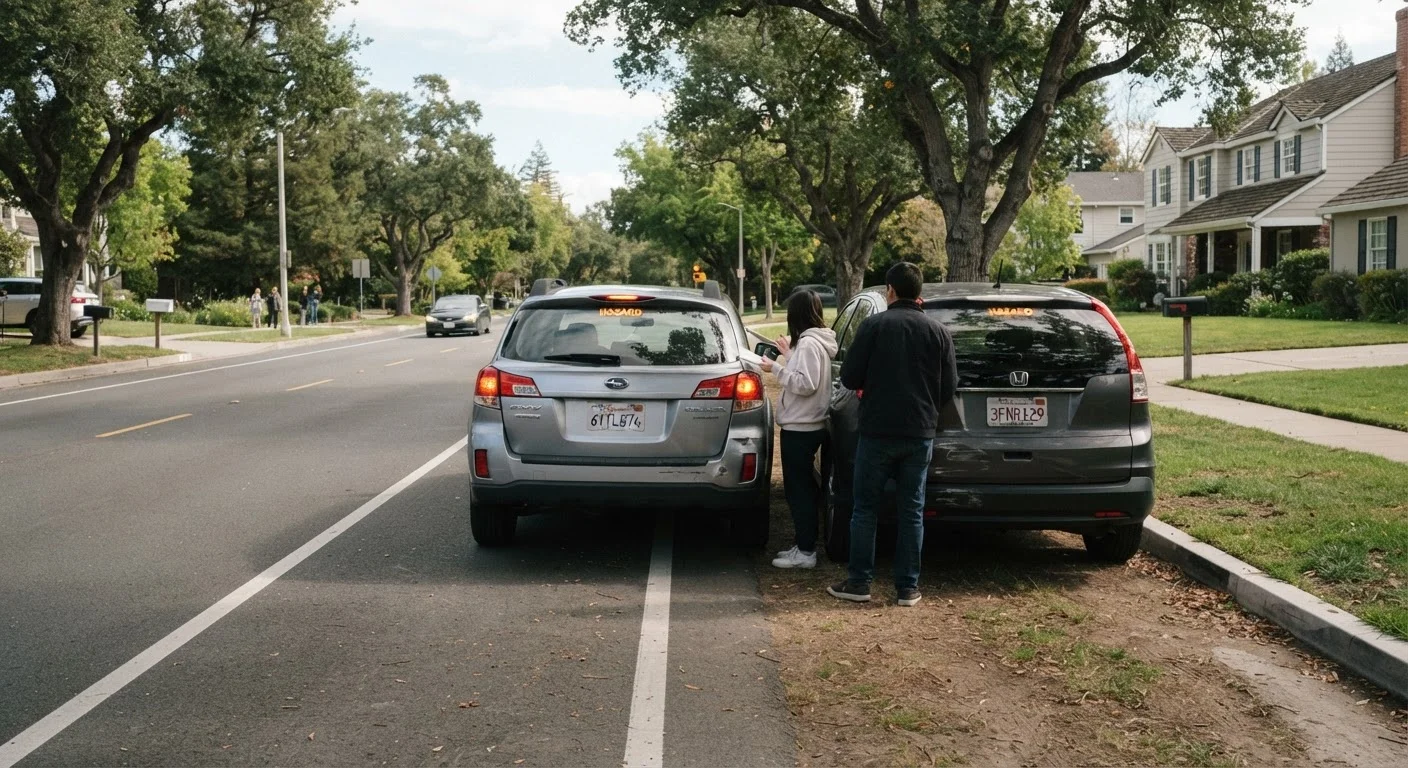
Photo credit: Glowwwatch.com
A step-by-step walkthrough of what drivers should do at the scene, how to document damage, and when to involve insurance.
Key Takeaways
- Move vehicles out of traffic and turn on hazard lights before doing anything else.
- Never admit fault at the scene — stick to exchanging information only.
- Photograph damage, license plates, and the surrounding scene before moving vehicles.
- You are generally required to exchange insurance and contact information with the other driver.
- Even minor-looking damage can hide costlier problems underneath — get an estimate.
- Notify your insurer promptly, even if you are unsure whether you will file a claim.
What to Do Right at the Scene
Your first few minutes after a fender-bender set the tone for everything that follows. Acting calmly and in the right order matters.
Move to Safety and Turn On Hazards
If the vehicles are drivable and it is safe to do so, pull them out of the lane of traffic — to a shoulder, parking lot, or side street. Turn on your hazard lights immediately. Staying in an active lane puts everyone at risk of a secondary collision.
Check for Injuries
Before anything else, make sure everyone involved — including passengers in both vehicles — is okay. If anyone is injured, call 911 immediately. Do not attempt to move someone who may have a neck or back injury unless there is an immediate safety hazard like fire.
Call the Police If Needed
In many states, you are legally required to report a collision that results in injury or damage above a certain dollar threshold. Even when it is not required, having an official police report creates a neutral record of the incident. Call non-emergency dispatch unless injuries are involved — then call 911.
Exchange Information — But Do Not Admit Fault
Get the other driver's full name, phone number, driver's license number, license plate, vehicle make and model, and insurance company with policy number. Provide yours in return. Be polite but careful — avoid saying "I'm sorry" or anything that could be interpreted as an admission of liability.
Document Everything With Photos
Use your phone to photograph both vehicles from multiple angles, focusing on all visible damage. Also capture the license plates, the position of the vehicles relative to the road, any skid marks or debris, and the surrounding area including street signs. This visual record can be invaluable later.
If there are witnesses, ask for their name and contact information. They are not obligated to stay, so act quickly.
Notify Your Insurance Company
Contact your insurer as soon as reasonably possible — ideally the same day. Most companies have 24-hour claims lines. Give them the facts, the other driver's information, and the report number if police responded. They will walk you through the next steps for your specific policy.
Before you leave the scene, make sure you have everything documented. Keep your registration and proof of insurance in the glove box so you are never scrambling to find them when it counts.
Do Not Leave the Scene Prematurely
Leaving the scene of an accident — even a minor one — before exchanging information can be considered a hit-and-run under state law, with serious legal consequences. Always stay until you have completed the information exchange or until law enforcement tells you that you may leave. If the other vehicle is unoccupied and you cannot locate the owner, leave a note with your name and contact number and report the incident to local police.
What to Know Before You Call Your Insurer
A lot of drivers hesitate to call their insurance company after a minor bump, worried their rates will go up. That concern is understandable, but delaying notification can create bigger problems — some policies require prompt reporting as a condition of coverage.
When you do call, stick to the facts: where it happened, what the vehicles looked like, and what information you exchanged. You are not required to speculate about fault on the call. Your insurer will conduct its own investigation.
Write Down Your Own Account Promptly
Memory fades quickly after a stressful event. As soon as you are safe and calm — before you go to sleep that night — write down everything you remember: the direction you were traveling, the speed involved, what the other driver said, and the sequence of events. This personal record can support your account if the facts are later disputed.
Even if the other driver seemed agreeable at the scene, keep in mind that people sometimes change their account of events later. Your photos, the written information you collected, and any witness contact details are your protection. Skipping even minor repairs after a collision can result in compounding damage that costs far more down the road.
Finally, remember that bumper-level impacts — even at slow speeds — can damage sensors, crumple zones, and other components that are not visible on the surface. Always get a written repair estimate from a qualified shop before deciding not to file a claim.
Understanding how accidents happen in the first place can help you avoid the next one. Even experienced drivers make avoidable errors in common situations like parking lots, intersections, and merge lanes — the exact places where most fender-benders occur.

Author
Autos Editorial Team
Autos Editorial Team is the collective byline for our editorial team and contributor network. Articles published under this byline or an editorial pen name are researched, written, and reviewed according to our editorial standards for clarity, consistency, and independence before publication.
View all articles →