
Situations Where Even Careful Drivers Make Avoidable Errors
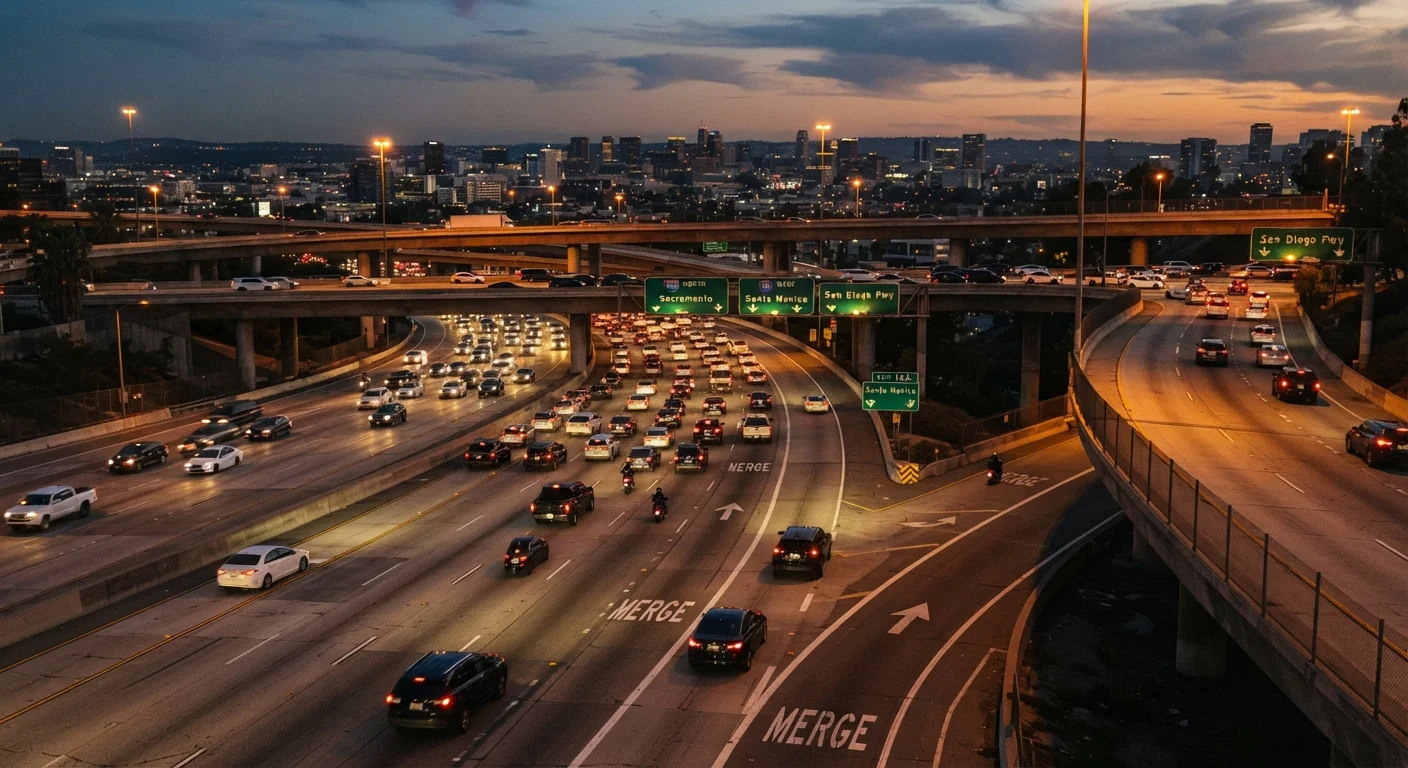
Photo credit: Glowwwatch.com
Merging, reversing, and navigating roundabouts trip up experienced drivers. Here's where mistakes cluster and what to do differently.
Key Takeaways
- Experienced drivers are not immune to errors — certain road situations reliably produce mistakes regardless of skill level.
- Merging, reversing, roundabouts, and left turns are among the highest-risk maneuvers for otherwise careful drivers.
- Most of these errors share a common cause: familiarity breeds reduced attention and incomplete observation.
- Slowing down mentally — not just physically — before complex maneuvers is the most effective correction.
- Understanding where mistakes cluster helps drivers apply extra caution precisely where it matters most.
Why Good Drivers Still Make Mistakes
Careful driving is a habit, not a guarantee. Most experienced drivers have internalized the basics — signaling lane changes, keeping a safe following distance, stopping at red lights — so thoroughly that these actions feel automatic. That automaticity is mostly a good thing. But it also creates a blind spot: when a situation feels familiar, we tend to give it less active attention than it actually requires.
The errors covered below aren't the result of recklessness or inexperience. They happen because certain road situations are structurally more demanding than they appear, and because habit can cause drivers to underestimate them. If you've been driving for years without incident, that's worth protecting — and the way to protect it is knowing exactly where your guard is most likely to drop.
For a broader foundation on staying safe behind the wheel, see our complete safe driving resource.
Merging onto the highway
Merging looks simple — accelerate up the ramp, find a gap, slide in. In practice, it requires simultaneously monitoring your speed, tracking multiple vehicles at highway pace, judging closing distances, and signaling, all within a few seconds. Experienced drivers often underestimate how much mental load this involves and merge too slowly or too aggressively.
The most common mistake is failing to reach highway speed before the merge point. A slow-moving vehicle entering fast-moving traffic forces others to brake suddenly and creates a cascading risk behind you. Use the full length of the on-ramp to match traffic speed, make eye contact (or at least visually confirm) with drivers in the target lane, and commit to the merge decisively rather than hesitating at the last moment.
Failing to match highway speed before merging is one of the most common — and preventable — entry errors.
Reversing in parking lots and driveways
Backing up is the maneuver most associated with low-speed collisions, and for good reason. Reversing puts your vehicle's largest blind zones directly in the path of travel. Even with a backup camera, the camera's field of view has limits — it typically doesn't capture what's approaching from the sides as you back out of a parking space.
Careful drivers often rely too heavily on cameras and mirrors and skip the one step that fills in the gaps: a full walk-around or a deliberate head-turn check before reversing. Pedestrians, cyclists, shopping carts, and small children move quickly across parking lot lanes. Back out slowly, pause mid-maneuver to reassess, and treat every reversal as if visibility is limited — because it usually is.
Cameras and mirrors have real blind spots — a quick visual scan before reversing fills the gaps they miss.
Navigating roundabouts
Roundabouts are less common in the US than in Europe, which means many drivers encounter them without a firm grasp of how they work. The rules aren't complicated — yield to traffic already in the circle, don't stop inside it, and signal your exit — but unfamiliarity leads to hesitation, over-braking, and incorrect lane use.
The most frequent error is stopping inside the roundabout to yield to entering traffic. Vehicles already circulating have the right of way; drivers entering must yield. Stopping mid-circle disrupts the flow and creates rear-end risk. If you're unsure, right-of-way rules at intersections are worth reviewing — roundabout logic is a natural extension of those principles.
Stopping inside a roundabout to yield to entering traffic is the most disruptive — and unnecessary — roundabout error.
Making unprotected left turns
An unprotected left turn — crossing oncoming traffic without a dedicated green arrow — is statistically one of the riskiest everyday maneuvers. The error isn't usually misjudging speed; it's misjudging the gap. Drivers underestimate how quickly oncoming vehicles close distance, particularly at speeds above 40 mph.
Experienced drivers compound the risk by creeping into the intersection to wait for a gap. While this is common practice, it leaves the vehicle partially exposed if the driver misjudges the moment to go. If you're making an unprotected left, wait until you have a gap that feels comfortably larger than necessary — not just barely enough. Overconfidence in gap judgment is precisely where careful drivers get caught out.
Drivers consistently underestimate how fast oncoming traffic closes the gap during an unprotected left turn.
Changing lanes on the highway
Lane changes on the highway feel routine after years of driving, which is exactly when they become risky. The standard error is a mirror check without a shoulder check. Mirrors cover most of the adjacent lane — but not the blind spot zone beside and slightly behind the vehicle. A motorcycle, a bicycle lane, or a car in your blind spot won't appear in either door mirror or the rearview mirror.
The fix is simple and takes less than a second: a brief head-turn to glance over the appropriate shoulder before moving over. This habit is easy to skip when you're confident and in a hurry, but it's the one step that catches what mirrors miss. For more on how highway and city driving differ in their demands, see this breakdown of highway vs. city driving skills.
Mirror checks alone miss the blind spot — a quick shoulder glance takes one second and catches what mirrors can't.
Driving in work zones
Work zones compress lanes, shift traffic patterns unexpectedly, and place workers at the edge of moving traffic. Careful drivers often handle the initial merge correctly but then relax once they're through it — unaware that the altered lane layout or an unexpected flagging signal is still ahead.
The mistake is treating the work zone as a single event rather than a sustained condition. Speed limits in work zones are typically enforced more strictly, and stopping distances on uneven pavement may be longer than expected. Keep your attention active throughout the entire zone, not just at the entry point. Fines for speeding violations in work zones are frequently doubled under state law.
Work zones require sustained attention throughout — not just at the entry merge — because hazards shift continuously.
Turning These Insights Into Better Habits
None of these situations require extraordinary skill to navigate safely — they require deliberate attention at the right moment. The common thread is that each one demands a brief pause in the autopilot mode that experienced drivers often operate in. Slowing down your decision-making for just a few seconds before a complex merge, a reversing maneuver, or an unfamiliar intersection is usually all it takes.
Build the pause into your routine
Before any complex maneuver — merging, reversing, turning across traffic — take one extra second to actively scan rather than rely on habit. It sounds minor, but deliberate attention at these specific moments is what separates an experienced driver from a complacent one. Think of it as resetting from autopilot mode before the situation actually demands it.
If you want to go deeper on the underlying principles, defensive driving techniques are built precisely for these moments — helping you anticipate hazards before they become emergencies. And if you're a newer driver still building these instincts, our introduction for new drivers covers the foundational habits that make every mile safer.

Author
Autos Editorial Team
Autos Editorial Team is the collective byline for our editorial team and contributor network. Articles published under this byline or an editorial pen name are researched, written, and reviewed according to our editorial standards for clarity, consistency, and independence before publication.
View all articles →