
The Documents Every Driver Should Keep in Their Glove Box
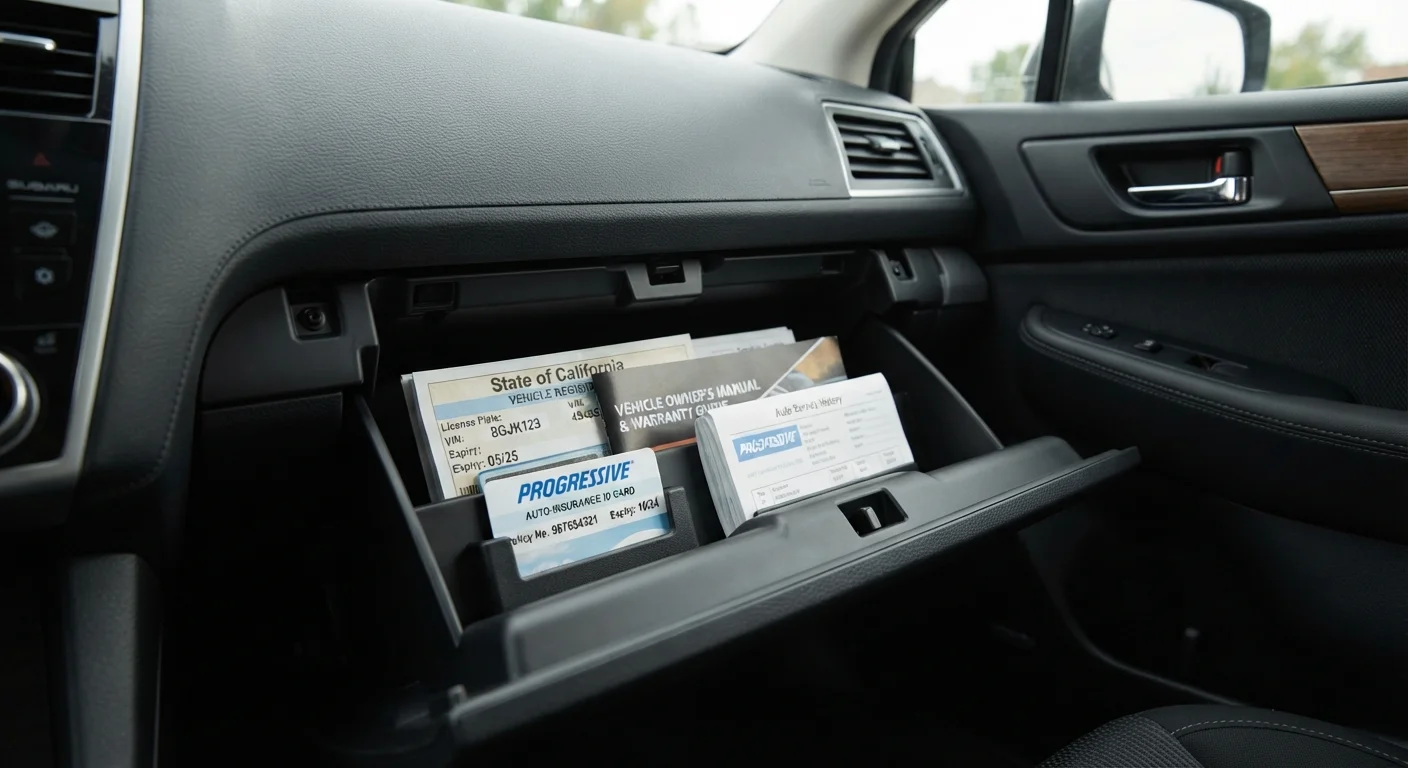
Photo credit: Glowwwatch.com
In this article
Registration, proof of insurance, and more—know exactly which documents belong in your vehicle and why each one matters.
Key Takeaways
- Every driver is legally required to carry proof of insurance and vehicle registration while driving.
- Your driver's license must be on your person, not stored in the glove box.
- A copy of your insurance policy's declarations page can help enormously after an accident.
- Emergency contact information and a roadside assistance card are smart additions beyond legal requirements.
- Outdated or expired documents can result in fines, even if your coverage or registration is actually current.
Why Your Glove Box Documents Matter
Most drivers think about their glove box only when a police officer is already waiting at the window. That's not the moment you want to discover something is missing, expired, or illegible. Having the right paperwork in order — and knowing exactly where it is — makes traffic stops, accidents, and roadside situations far less stressful.
Beyond convenience, many documents are legally required. Being unable to produce them can result in fines or complications, even if your registration and insurance are technically up to date. Think of this checklist as a five-minute audit you do once, then update whenever something changes.
If you're new to owning a vehicle, our guide on what car ownership actually involves covers registration, insurance, and maintenance basics that will give this checklist more context.
Digital Insurance Cards Are Accepted in Most States
Most states now allow drivers to show proof of insurance on a smartphone screen during a traffic stop. However, requirements vary — a small number of states still prefer or require a physical card. Keep a physical card in the glove box regardless, and treat the digital version as a backup. When in doubt, check your state's DMV website for the current rule.
What to Gather and Why Each Document Counts
Work through the checklist below and pull together every item. For each document, check that it's current — not expired — and legible. A faded insurance card is nearly as useless as no card at all.
Legally Required Documents
Accident and Claims Preparedness
Emergency and Roadside Information
Maintenance and Ownership Records
Ongoing Upkeep of Your Glove Box
On the registration front, it helps to understand what the document actually represents. Our article on vehicle registration, titles, and renewal deadlines explains the difference between a title and a registration card, and what happens if you miss a renewal.
If you're ever in an accident and need to exchange information or file a claim quickly, having a copy of your insurance declarations page alongside your insurance card makes the process significantly smoother. Walk through what to do after a minor fender-bender so you're prepared before anything happens.
Tools and Supplies Worth Keeping Nearby
Documents alone aren't enough. A few practical items stored alongside your paperwork round out your readiness.
Waterproof document sleeve or envelope
Keeps registration, insurance, and other paperwork protected from spills or glove box moisture.
Pen and small notepad
Used to record accident scene details, insurance information, and witness contacts.
Flashlight or phone with flashlight app
Helps you locate and read documents during nighttime traffic stops or roadside situations.
Insurer's mobile app (downloaded and logged in)
Provides digital proof of insurance accepted in most states and allows quick access to claims reporting.
Don't Store Your Title in the Car
Your vehicle title proves ownership and should be kept somewhere secure at home — not in the glove box. If your car is stolen with the title inside, recovering it becomes significantly more complicated. Store the title in a fireproof home safe or a bank safety deposit box.
Once your glove box is organized, pair it with good habits before every trip. Our pre-trip safety checklist takes just a couple of minutes and covers mirrors, tires, lights, and visibility — the kind of checks that prevent problems before they start.
This article is for general informational purposes only. Laws regarding required vehicle documents vary by state. Consult your state's DMV or a qualified legal professional for guidance specific to your situation.

Author
Autos Editorial Team
Autos Editorial Team is the collective byline for our editorial team and contributor network. Articles published under this byline or an editorial pen name are researched, written, and reviewed according to our editorial standards for clarity, consistency, and independence before publication.
View all articles →