
Synthetic vs. Conventional Motor Oil: What Everyday Drivers Need to Know
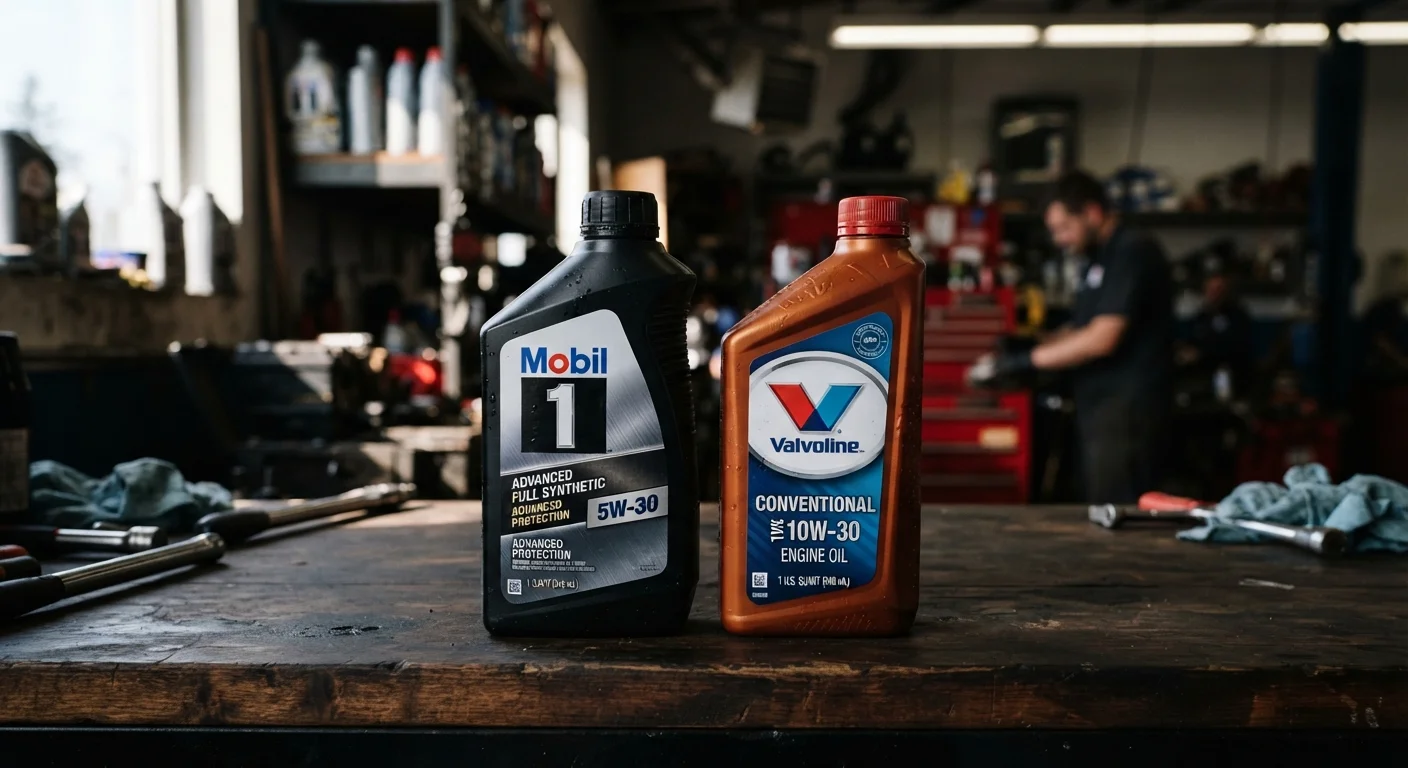
Photo credit: Glowwwatch.com
In this article
Understand the real differences between synthetic and conventional oil, and which makes sense for your driving habits.
Key Takeaways
- Synthetic oil is chemically engineered for consistency; conventional oil is refined directly from crude petroleum.
- Synthetic oil generally lasts longer between changes — often 7,500 to 10,000+ miles versus 3,000 to 5,000 for conventional.
- Your owner's manual, not marketing claims, should determine which oil type your engine requires.
- Switching from conventional to synthetic in a well-maintained engine is generally safe and does not cause leaks.
- Cost per quart is higher for synthetic, but the longer interval can offset the difference over time.
- Turbocharged, high-performance, and many modern engines specifically require full synthetic oil.
What's Actually Different Between the Two?
Motor oil's job is straightforward: lubricate moving engine parts, reduce friction, carry away heat, and keep things clean. Both synthetic and conventional oil do this — but they're made differently, and that matters.
Conventional motor oil is refined from crude petroleum. It contains naturally occurring molecules that vary in size and shape, which means its performance can vary with temperature and wear over time.
Synthetic motor oil is chemically engineered in a lab. Manufacturers build its molecules to a precise, uniform size — so it flows more consistently in cold starts, resists breakdown at high temperatures, and maintains its protective qualities longer.
Think of it like the difference between rough-cut lumber and precision-milled planks. Both can build a structure, but one is engineered for consistency.
| Criterion | Synthetic Motor Oil | Conventional Motor Oil |
|---|---|---|
| Source | Chemically engineered molecules | Refined from crude petroleum |
| Typical change interval | 7,500–10,000+ miles | 3,000–5,000 miles |
| Cold-weather flow | Flows more readily at low temps | Can thicken more in cold |
| High-heat stability | More resistant to breakdown | Degrades faster under heat |
| Cost per quart | Higher | Lower |
| Required for turbocharged engines | Yes, typically | No |
| Suitable for older engines | Generally yes, with caveats | Yes, if specs allow |
For a broader look at the fluids your car depends on, see Car Fluids Every Driver Should Know About.
Change Intervals, Cost, and the Math Behind It
One of the most common reasons drivers consider synthetic is the longer change interval. Conventional oil is typically changed every 3,000 to 5,000 miles. Synthetic can often go 7,500 to 10,000 miles or more — some manufacturer guidelines push even further for specific vehicles.
7,500–10,000
Miles between synthetic oil changes
Most major automakers and synthetic oil manufacturers cite this range as a general guideline, though your owner's manual remains the authoritative source.
~3,000–5,000
Miles between conventional oil changes
This traditional interval remains appropriate for many older vehicles or those with high-stress driving patterns, per general industry guidance.
95%+
New vehicles requiring 0W-20 or similar synthetic-grade oil
The shift to tighter engine tolerances and fuel-efficiency standards has made synthetic or synthetic-blend specifications the norm in most vehicles built after 2010.
Synthetic costs more per quart, but once you factor in fewer changes per year, the total annual cost may be similar — or even lower. That said, the actual math depends on your vehicle, driving habits, and what labor costs in your area.
The 3,000-mile oil change interval is largely outdated for most modern cars. Odometer Readings, Service Intervals, and the Myth of the 3,000-Mile Oil Change explains why manufacturer guidelines — not old habits — should drive your schedule.
The one rule that overrides everything: follow your owner's manual. It specifies the oil type and viscosity grade (like 5W-30 or 0W-20) your engine was designed for. Deviating from that spec, in either direction, can reduce protection.
Common Questions and Misconceptions
"Will switching to synthetic cause leaks in my older car?" This concern dates back to early synthetic formulations. Modern synthetics are compatible with the seals used in virtually all passenger vehicles. A well-maintained engine won't spring leaks from a switch — but if an older engine already has worn seals, those were a problem before the oil change, not because of it.
"Does synthetic oil last forever?" No. Even synthetic oil breaks down over time and accumulates contaminants. It lasts longer than conventional, but it still needs to be changed on a schedule.
"Can I mix synthetic and conventional?" In a pinch, yes — mixing won't damage your engine. But you'll lose some of the benefits of the synthetic, and you should still change the oil at the appropriate interval for the shorter-lived type.
If you're unsure whether to handle an oil change yourself or take it to a shop, DIY Car Maintenance vs. Taking It to a Shop breaks down what to weigh. And for the full picture on routine upkeep, Routine Car Maintenance: What Gets Checked and Why It Matters is a solid starting point.
Synthetic Blends: A Middle Ground
You'll also see "synthetic blend" or "part-synthetic" oils on shelves. These mix conventional and synthetic base oils to offer some performance advantages at a lower cost than full synthetic. They're a reasonable option for certain vehicles, but again, your owner's manual is the starting point for what your engine actually needs. Ask your mechanic if you're unsure whether a blend is appropriate for your situation.

Author
Autos Editorial Team
Autos Editorial Team is the collective byline for our editorial team and contributor network. Articles published under this byline or an editorial pen name are researched, written, and reviewed according to our editorial standards for clarity, consistency, and independence before publication.
View all articles →