
Odometer Readings, Service Intervals, and the Myth of the 3,000-Mile Oil Change
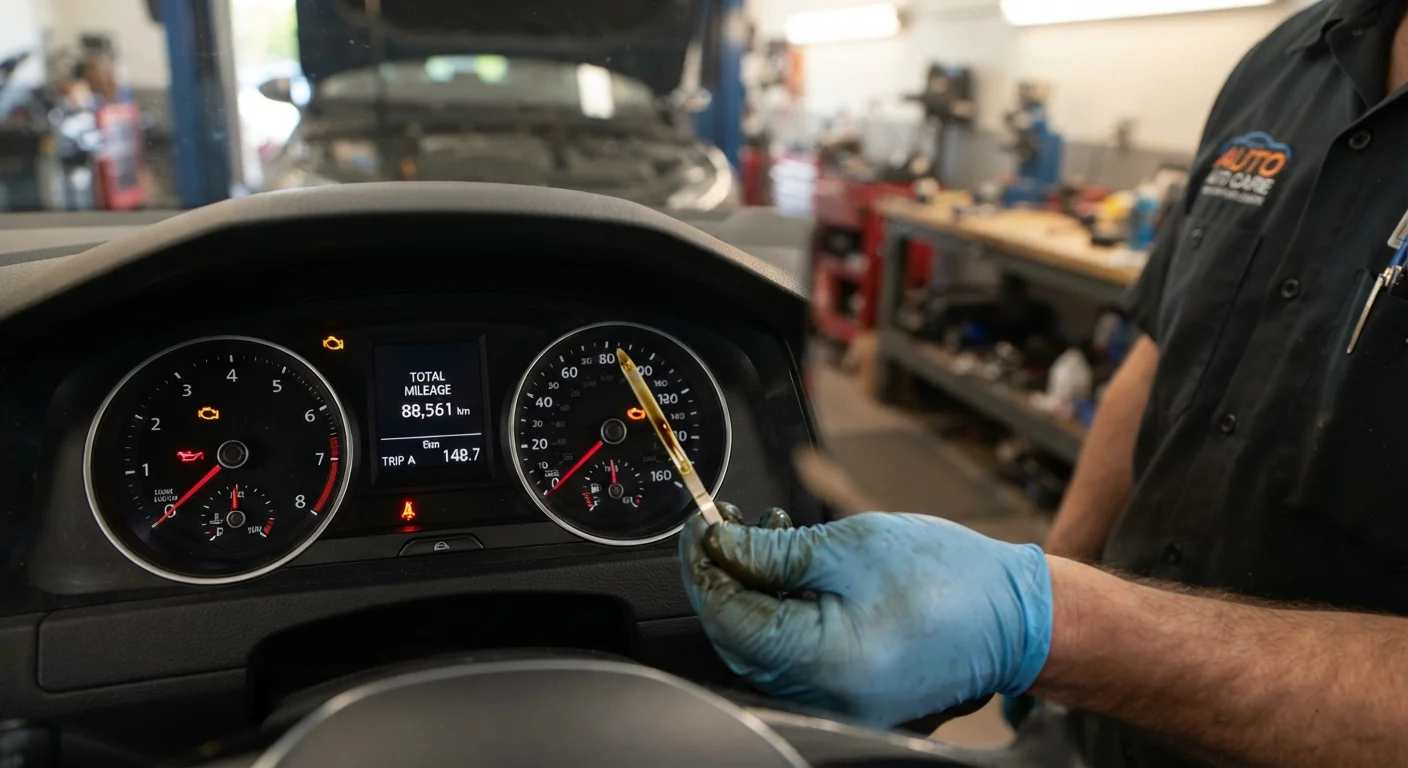
Photo credit: Glowwwatch.com
In this article
Many drivers change their oil far more often than necessary. Here's what modern engine technology and manufacturer guidelines actually say.
Key Takeaways
- Most modern vehicles can go 5,000 to 10,000 miles or more between oil changes.
- The 3,000-mile rule was designed for older engines and conventional oil — not today's technology.
- Your owner's manual, not a quick-lube shop sign, is the most reliable guide for service intervals.
- Synthetic oil lasts significantly longer than conventional oil and handles heat and stress better.
- Oil life monitoring systems in newer cars calculate actual engine wear, not just miles driven.
Where the 3,000-Mile Rule Came From
The 3,000-mile oil change recommendation has roots in the 1960s and 70s, when engines were less refined, oil formulations were simpler, and driving conditions were rougher on lubricants. Quick-lube chains then popularized the interval through marketing — and it stuck. For decades, drivers repeated it like gospel, and many still do.
The problem is that neither engines nor motor oil are what they were fifty years ago. Today's vehicles are engineered with tighter tolerances, improved filtration, and onboard monitoring systems that actually track engine stress in real time. Treating a modern car like a 1972 pickup is a mismatch that costs drivers money without delivering any real benefit.
For a deeper look at how this rule persisted despite the evidence, see our detailed breakdown of the 3,000-mile myth.
Common Myths — and What's Actually True
A handful of persistent misconceptions keep drivers changing their oil more often than necessary, or making other maintenance missteps based on outdated assumptions. Here's what the evidence actually shows.
Myth
You need to change your oil every 3,000 miles, no exceptions.
Fact
Most modern vehicles with conventional oil need changes every 5,000 to 7,500 miles; those using full synthetic oil can often go 7,500 to 10,000 miles or longer, per manufacturer specifications.
This interval varies by vehicle, engine design, and oil type — but 3,000 miles is almost universally too conservative for cars built in the last 20 years. Following your owner's manual instead of an arbitrary round number will save you money without harming your engine.
Myth
Dark oil means it's dirty and needs to be changed immediately.
Fact
Oil darkens quickly during normal use because it's doing its job — suspending combustion byproducts and keeping them away from engine surfaces. Color alone is not a reliable indicator of whether an oil change is needed.
Mechanics and engineers have long noted that darkening is a sign that oil is functioning, not failing. A better measure is your vehicle's oil life monitor or your mileage against the manufacturer's recommended interval. If you want to assess oil condition more precisely, a simple oil analysis service can test acidity and contamination levels.
Myth
Synthetic oil causes leaks in older or high-mileage engines.
Fact
Modern full synthetic oil does not cause leaks. This belief likely originated from early synthetic formulations that were sometimes incompatible with older seal materials, but that issue has not applied to current products for many years.
Today's synthetic oils are engineered to be compatible with modern and older engine seals alike. If an engine is already leaking, switching oil types won't fix the underlying seal problem — but synthetic oil itself isn't the cause. High-mileage synthetic formulations are actually designed with seal conditioners to address minor shrinkage in older gaskets.
Myth
If you switch to synthetic oil, you can never go back to conventional.
Fact
Synthetic and conventional motor oils of the correct viscosity grade can be mixed and switched between without engine damage, though it's generally better to stay consistent with one type.
There is no chemical reaction that permanently locks an engine into one oil type. That said, mixing oils reduces the performance advantages of full synthetic, and inconsistency can make it harder to track actual oil condition and intervals. Picking one type and sticking with it is simply more practical and easier to manage.
Myth
The oil change sticker on your windshield is the official service recommendation.
Fact
Those stickers are placed by the service shop, not your vehicle's manufacturer, and they often default to 3,000-mile intervals regardless of what your car actually requires.
Quick-lube shops have a financial incentive to bring you back sooner rather than later. The sticker is a reminder tool, not an engineering specification. Your owner's manual — or your vehicle's built-in oil life monitoring system — is the authoritative source. Following the sticker over the manual could mean changing your oil two to three times more often than necessary.
How to Find Your Real Service Interval
The most reliable source for your vehicle's oil change schedule is the owner's manual. Manufacturers publish specific intervals based on engine design, oil type, and driving conditions — and those numbers reflect real engineering, not a marketing decision.
5,000–10,000 mi
Typical modern oil change interval
Most vehicle manufacturers now recommend oil changes in this range for normal driving conditions, according to published owner's manual specifications across major automotive brands.
~$0
Extra engine benefit from over-changing oil
Automotive engineers and industry groups, including the American Petroleum Institute, have consistently stated that changing oil more frequently than the manufacturer recommends provides no measurable engine protection benefit.
Many vehicles built in the last decade also include an oil life monitoring system (OLMS). This isn't simply a timer or a mileage counter — it uses algorithms that factor in engine temperature, RPM patterns, load, and trip length to estimate how much protective life your oil actually has left. When the system alerts you, that's the time to act. Ignoring it, or changing oil well before it triggers, both represent poor maintenance choices.
Driving conditions do matter. Short trips under five miles, extended idling, towing, or driving in extreme heat or cold all put more stress on oil. Manufacturers typically call these "severe" conditions and may recommend shorter intervals for them. Check your manual — it usually defines both a standard and a severe-duty schedule.
For a plain-language walkthrough of what all those service codes and mileage markers mean, our maintenance schedule explainer is a helpful starting point. And if you're weighing synthetic versus conventional oil for your situation, this guide on oil types covers the practical differences without the sales pitch.
Skipping Too Long Is Still a Real Risk
Correcting the over-changing myth doesn't mean oil changes don't matter — they absolutely do. Oil breaks down over time and accumulates combustion byproducts, metal particles, and moisture. Neglecting changes long enough causes sludge buildup, accelerated wear, and eventually serious engine damage.
Don't Ignore Your Oil Life Monitor
If your vehicle has an oil life monitoring system, treat its alert as your primary signal to schedule a change — not an arbitrary mileage milestone. Resetting the monitor without actually changing the oil defeats its purpose entirely and can mask genuinely degraded oil. Always reset it correctly after a completed oil change.
The goal isn't to stretch intervals as far as possible — it's to follow the interval that your vehicle's manufacturer and oil type actually call for. That's not laziness; it's informed maintenance. Drivers who skip or significantly delay oil changes often end up paying far more in repairs than they saved. Our article on how deferred maintenance compounds costs walks through exactly how that math plays out.
Keep a simple log — a notepad in the glove compartment or a note on your phone — recording the date, mileage, and oil type used each time you change your oil. It takes thirty seconds and gives you a clear record if questions arise later. For broader habits that protect your vehicle over the long haul, see our guide on keeping a car in good shape over time.

Author
Autos Editorial Team
Autos Editorial Team is the collective byline for our editorial team and contributor network. Articles published under this byline or an editorial pen name are researched, written, and reviewed according to our editorial standards for clarity, consistency, and independence before publication.
View all articles →