
What Your Car's Dashboard Warning Lights Are Actually Telling You
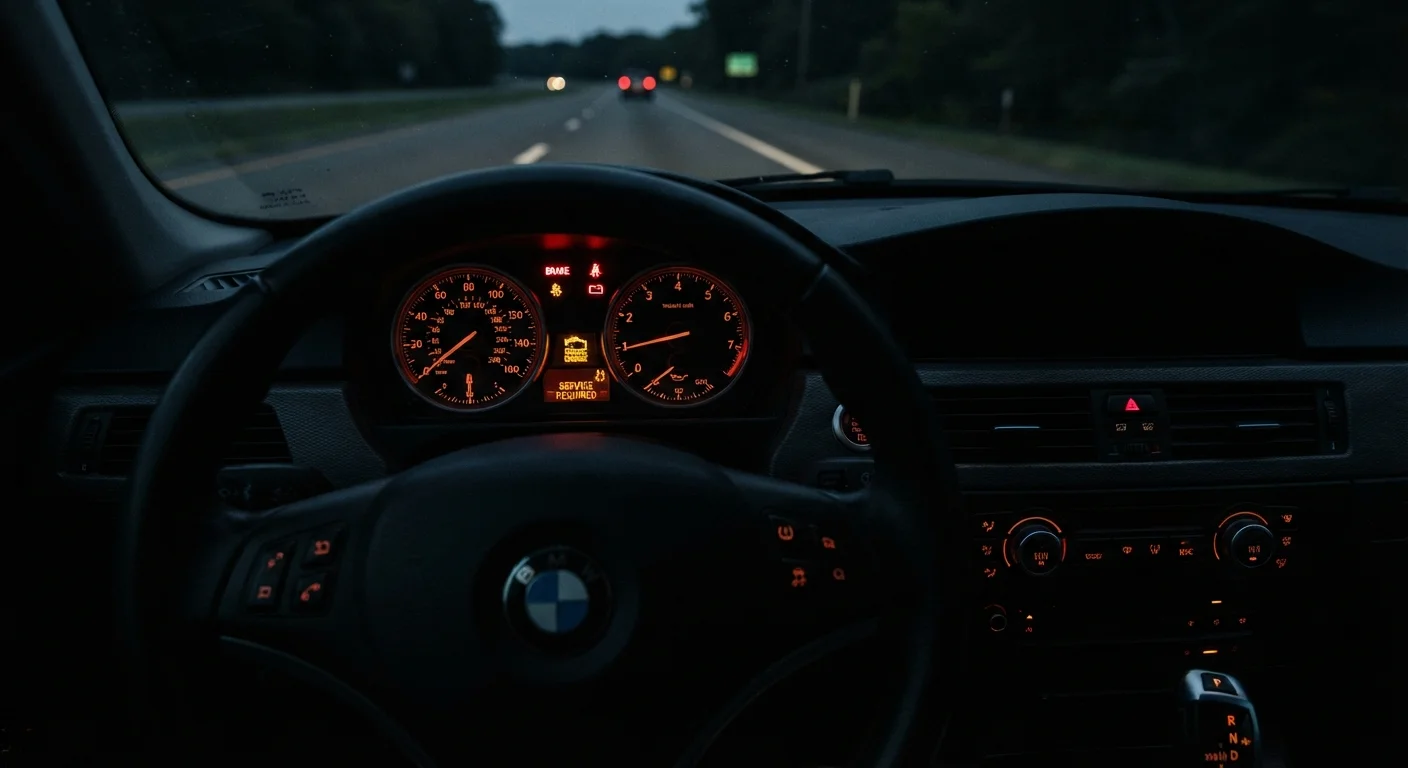
Photo credit: Glowwwatch.com
In this article
A plain-language reference to the most common dashboard warning symbols, what triggers them, and when to act immediately.
How Dashboard Warning Lights Work
Modern vehicles use an onboard diagnostic system — often called OBD-II — that constantly monitors dozens of sensors throughout the car. When something falls outside the expected range, the system flags it by turning on a dashboard warning light. Think of it as your car's way of sending you a text message.
Warning lights generally fall into one of three urgency levels:
- Red: Stop driving or act immediately. Red lights signal conditions that can cause serious engine damage, a safety hazard, or both.
- Amber/Yellow: Investigate soon. Something needs attention, but you typically have time to schedule a service visit rather than pulling over on the spot.
- Green or Blue: Informational only. These confirm that a system — like your high beams or turn signal — is currently active.
Color alone isn't the whole story, though. Always cross-reference your owner's manual, which contains the exact symbols and meanings for your specific vehicle.
| Number of DTC codes in OBD-II system | Thousands of possible codes (Society of Automotive Engineers (SAE) standardization) |
| TPMS required in US vehicles since | 2008 model year (NHTSA mandate) |
| Red light urgency | Stop or act immediately |
| Amber light urgency | Schedule service soon |
| Flashing check engine light means | Active misfire — pull over safely (General industry guidance) |
The Warning Lights You're Most Likely to See
Here's a plain-English breakdown of the most common symbols and what they're actually telling you.
Check Engine (Amber Engine Outline)
This is the most misunderstood light on any dashboard. It can mean something as minor as a loose gas cap or as serious as a misfiring engine. A steady light usually means a non-emergency issue; a flashing check engine light means pull over safely and call for service — a flashing light often indicates an active misfire that can damage your catalytic converter in minutes. A mechanic can read the stored fault code with a scan tool to pinpoint the exact problem. See your car's full maintenance schedule to understand how routine service can prevent many check engine triggers.
Oil Pressure (Red Oil Can)
This is a stop-immediately light. Low oil pressure means your engine's moving parts aren't getting adequate lubrication. Driving even a short distance can cause permanent engine damage. Pull over safely, shut off the engine, and check the oil level. If the level is fine and the light stays on, do not restart — have the vehicle towed.
Battery / Charging System (Red Battery Outline)
When this appears while driving, your alternator may have stopped charging the battery. The car is running on battery power alone, which will run out. Minimize electrical use (turn off the A/C, radio, and rear defogger) and drive directly to a shop or safe stopping point.
Brake System (Red Exclamation or BRAKE)
If the parking brake is fully released and this light stays on, you may have low brake fluid or a hydraulic system fault. Brakes are your vehicle's most critical safety system — don't ignore this one. For a deeper look at brake wear, learn how pads and rotors wear over time.
Tire Pressure (TPMS — Yellow Tire with Exclamation)
One or more tires is significantly under- or over-inflated. Check pressures at a gas station when tires are cold. A persistently lit TPMS light after inflating tires may mean a sensor fault or a slow leak.
Temperature Warning (Red Thermometer in Waves)
Your engine is overheating. Pull over immediately, turn off the engine, and do not open the radiator cap. Let the engine cool completely before checking coolant levels. Continuing to drive an overheated engine can warp the cylinder head — an extremely expensive repair.
OBD-II
On-Board Diagnostics, second generation. A standardized system built into all US vehicles sold after 1996 that monitors engine, emissions, and other systems and stores fault codes when something goes wrong.
Fault Code (DTC)
A Diagnostic Trouble Code stored by your vehicle's computer when a sensor reading falls outside expected parameters. A mechanic reads these codes with a scan tool to identify which system triggered a warning light.
TPMS
Tire Pressure Monitoring System. A sensor-based system required on all US passenger vehicles since 2008 that alerts you when tire pressure drops significantly below the recommended level.
Catalytic Converter
An emissions control device in the exhaust system that converts harmful gases into less harmful ones. It can be damaged by prolonged engine misfires, which is why a flashing check engine light demands immediate attention.
Alternator
A generator driven by the engine that recharges the battery and powers the vehicle's electrical systems while the engine is running. A failed alternator will eventually drain the battery and stall the car.
A Simple Rule for Deciding What to Do
When a light appears, follow this three-step approach:
- Note the color and symbol. Red means stop soon or immediately; amber means schedule service.
- Check your owner's manual. Every symbol is defined there. If you've lost yours, most automakers publish digital versions on their websites.
- Don't assume it will go away on its own. Some lights do clear after a minor issue resolves — but many persist because the underlying condition is still present. A cleared light without a fix is still an unfixed problem.
When in doubt, have a qualified mechanic read the fault codes. Many auto parts stores will do a basic code scan at no charge, giving you a starting point before you head to a shop.
Staying ahead of warning lights is part of a broader ownership mindset. Pairing this reference with a solid maintenance schedule is one of the most straightforward ways to reduce the chance of a serious dashboard event in the first place.

Author
Autos Editorial Team
Autos Editorial Team is the collective byline for our editorial team and contributor network. Articles published under this byline or an editorial pen name are researched, written, and reviewed according to our editorial standards for clarity, consistency, and independence before publication.
View all articles →