
Tracking Spending by Hand vs. Using an App
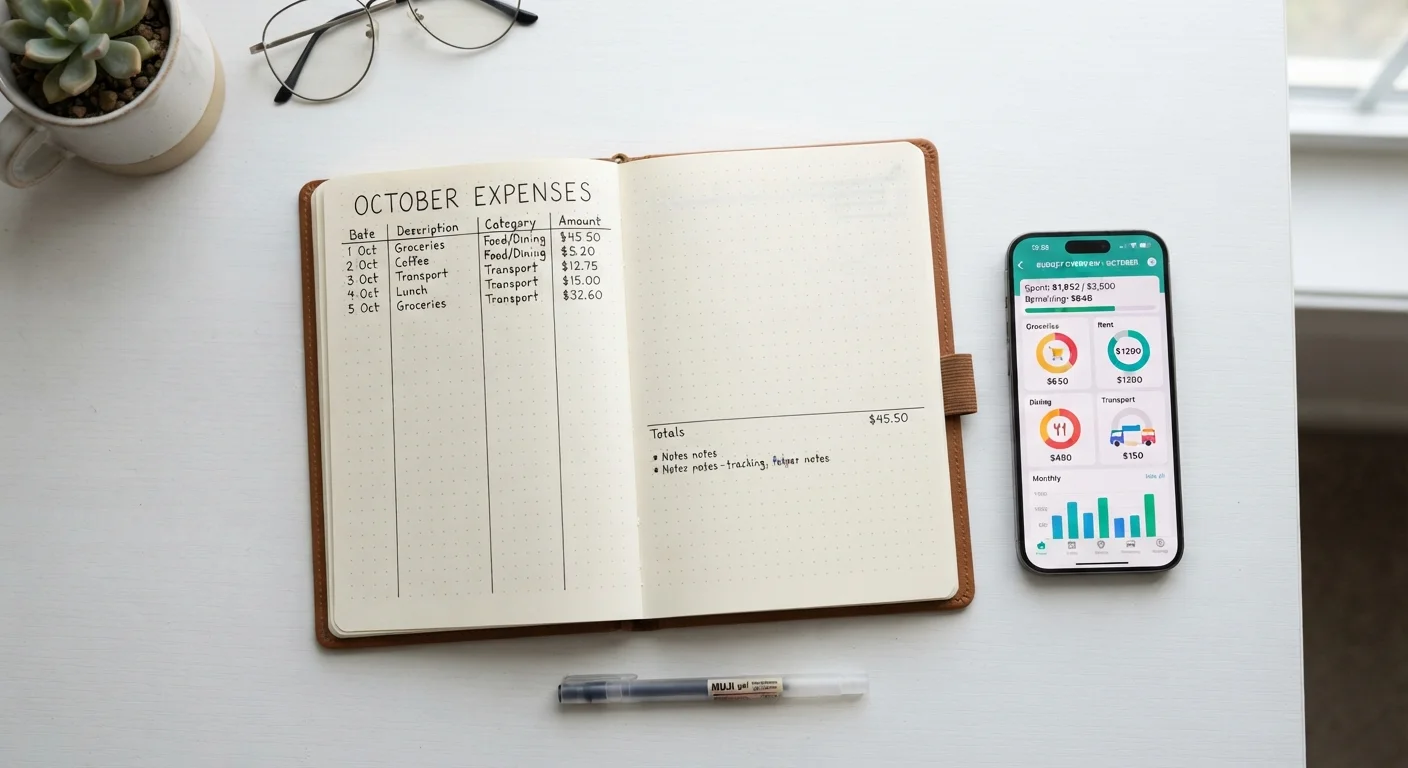
Photo credit: Glowwwatch.com
In this article
Pen-and-paper or digital dashboard? Weigh the real trade-offs between manual expense tracking and budgeting apps so you can pick what you'll actually stick with.
Key Takeaways
- Manual tracking builds stronger awareness of spending habits but requires consistent daily effort.
- Budgeting apps automate data entry and provide instant visuals, lowering the barrier to getting started.
- Neither method works if you don't use it consistently — the best choice is the one you'll actually stick with.
- You can combine both methods, using a notebook for reflection and an app for real-time tracking.
Why Tracking Spending Matters
Before you can build a realistic budget, you need an honest picture of where your money is going. Most people significantly underestimate how much they spend in categories like dining out, subscriptions, and small daily purchases. Tracking is the tool that closes that gap between perception and reality.
The good news: you don't need a financial background or fancy software to track spending effectively. You have two primary options — doing it by hand or using a digital app. Each has genuine strengths, and neither is universally superior. If you haven't yet built a budget, our step-by-step guide to your first budget is a helpful starting point before choosing a tracking method.
Tracking by Hand: What You Gain and What It Costs You
Manual tracking means writing down every purchase — in a notebook, on a spreadsheet you update yourself, or on printed budget sheets. This low-tech approach has real psychological benefits.
What works well
- Greater mindfulness: The act of physically writing a purchase reinforces its reality. Research in behavioral economics suggests that tangible recording can make spending feel more deliberate.
- No technology required: No app, no account, no syncing. A $2 notebook works.
- Full privacy: Your financial data stays entirely offline.
- Customizable: You design the categories, layout, and review schedule yourself.
Where it falls short
- Time-intensive: Every transaction must be entered manually, which takes discipline and daily consistency.
- Easy to fall behind: Miss a few days, and reconstruction becomes guesswork.
- No automatic totals: You have to add up columns yourself, which introduces errors.
- Hard to see trends: Without charts or summaries, spotting patterns requires extra work.
Try One Method for 30 Days
Rather than overthinking the choice, pick one method and commit to it for a full month. A single month of consistent tracking — even imperfect — will teach you more about your spending than weeks of planning. At the end of the month, evaluate whether the method felt sustainable. If not, try the other approach.
If you go the manual route, pair your notebook habit with our monthly budget review checklist to make end-of-month analysis easier.
Using a Budgeting App: Convenience and Its Trade-Offs
Budgeting apps connect to your bank accounts and credit cards, automatically importing and categorizing transactions. Many offer dashboards, spending alerts, and visual breakdowns by category.
What works well
- Low friction: Transactions appear automatically, so there's no daily entry burden.
- Real-time visibility: You can check your spending at any moment without manual calculation.
- Visual summaries: Charts and graphs make it easy to spot problem areas quickly.
- Goal tracking: Many apps let you set savings targets or category limits and alert you when you're close to them.
Where it falls short
- Data privacy concerns: Linking financial accounts to a third-party app means sharing sensitive data. Review the app's privacy and security practices carefully before connecting accounts.
- Miscategorization: Apps don't always sort transactions correctly. You may still need to review and correct entries regularly.
- Passive relationship with money: Because the work is automated, some users disengage and stop noticing overspending until it's significant.
- Subscription costs: Some apps charge monthly fees, which adds an ongoing expense.
| Criterion | Manual Tracking | Budgeting App | |
|---|---|---|---|
| Ease of setup | Very easy — just a notebook | Moderate — requires account linking | |
| Daily effort required | High — every entry is manual | Low — transactions auto-import | |
| Spending awareness | High — writing reinforces habits | Moderate — automation can reduce engagement | |
| Privacy | Full — no digital accounts | Lower — data shared with third party | |
| Trend visibility | Low — requires manual analysis | High — charts and summaries built in | |
| Cost | Minimal — notebook and pen | Free to paid subscription tiers | |
| Customization | Fully flexible | Limited to app's framework |
Keep in mind that even the most capable app can't replace thoughtful decision-making — something worth remembering especially when budgeting for less predictable costs like those covered in our guide on irregular expenses and annual bills.
How to Decide Which Method Fits You
There's no universal right answer. Consider the following questions when making your choice:
- How consistent are you with daily habits? If you often forget tasks that require daily attention, an app's automation may help more than a notebook.
- Are you comfortable linking bank accounts online? If privacy is a priority, manual tracking is worth the extra effort.
- Do you learn better from visuals or writing things out? Visual learners often find apps more motivating; reflective learners often benefit from the act of writing.
- What's your goal right now? If you want to build deeper spending awareness quickly, the friction of manual tracking can actually be an asset.
Some people find success combining both: using an app for real-time transaction logging and a notebook for weekly reflection and planning. Either way, the method is only as powerful as your commitment to reviewing what you record. Consistent tracking — whatever the tool — is also what makes building toward long-term goals in saving and debt management far more achievable.
This article provides general financial education and is not personalized financial advice. For guidance specific to your situation, consider consulting a qualified financial professional.

Author
Personal Finance Editorial Team
Personal Finance Editorial Team is the collective byline for our editorial team and contributor network. Articles published under this byline or an editorial pen name are researched, written, and reviewed according to our editorial standards for clarity, consistency, and independence before publication.
View all articles →