
Your First Budget in Seven Steps
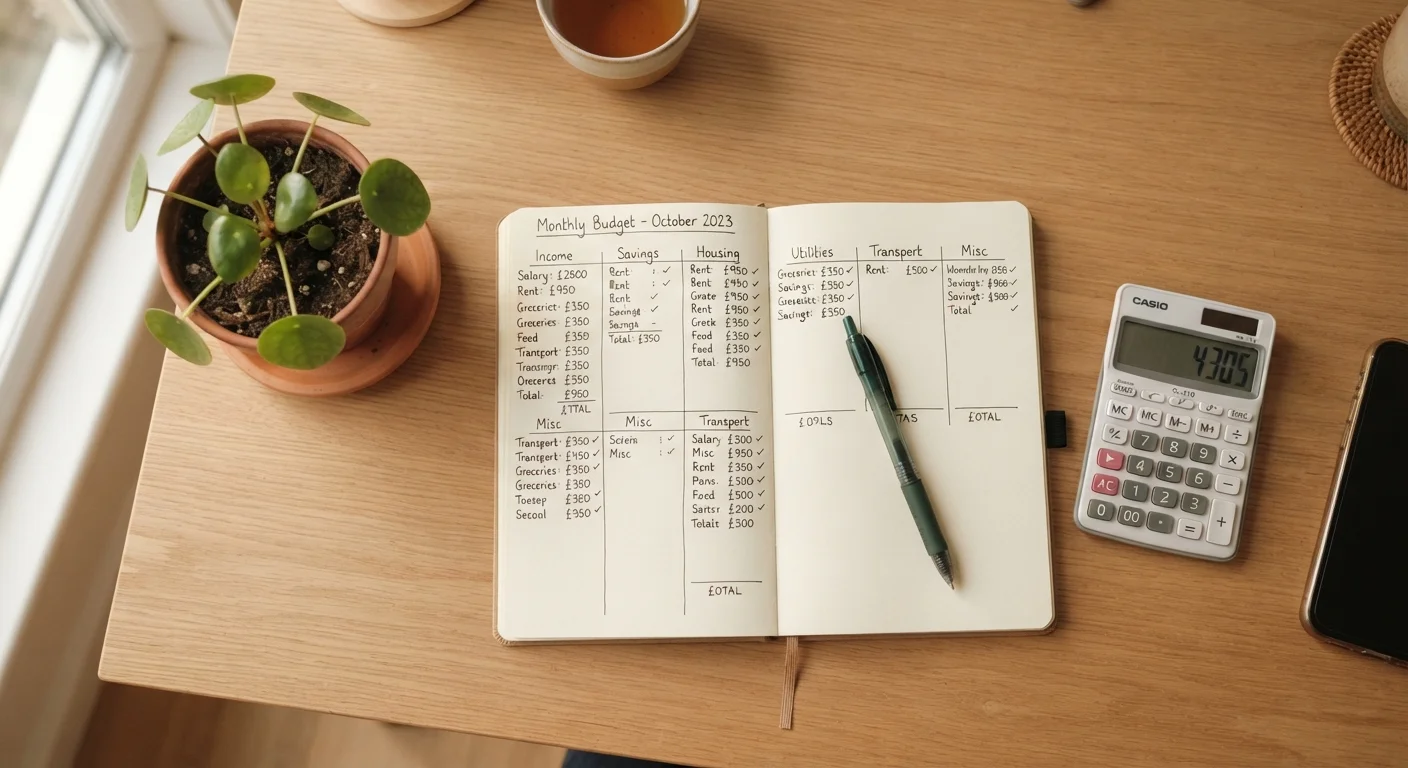
Photo credit: Glowwwatch.com
In this article
Never budgeted before? This plain-language walkthrough covers everything from listing income to setting spending categories — no financial background needed.
Key Takeaways
- A budget is simply a written plan for where your money goes each month.
- Start by calculating your total monthly take-home pay, not your gross salary.
- Fixed expenses come first; discretionary spending fills in what remains.
- The 50/30/20 framework is a useful starting guideline, not a rigid rule.
- Reviewing your budget monthly is just as important as building it initially.
- Even a rough first budget gives you far more control than having none at all.
Why a Budget Is Simply a Spending Plan
The word "budget" carries a lot of unnecessary baggage. Many people picture restriction, deprivation, or endless spreadsheets. In practice, a budget is just a written plan that tells your money where to go before the month begins — rather than wondering where it went afterward.
Budgeting works for any income level. It is not a tool reserved for people in debt or financial crisis. If you have income and expenses, a budget helps you align the two on purpose. For a deeper look at misconceptions holding people back, see common budgeting myths.
Net income
The money you actually take home after taxes and other payroll deductions are removed. This is the number you use when building a budget.
Fixed expense
A recurring cost that stays the same each month, such as rent or a car loan payment. These are usually non-negotiable in the short term.
Variable expense
A cost that changes from month to month, like groceries or entertainment. These are usually the most flexible part of a budget.
Discretionary spending
Money spent on wants rather than needs — dining out, hobbies, subscriptions. This category typically offers the most room for adjustment.
50/30/20 rule
A simple budgeting guideline suggesting 50% of take-home pay for needs, 30% for wants, and 20% for savings or debt. It's a starting framework, not a strict formula.
Budget category
A labeled group of related expenses (e.g., "Housing" or "Food") that helps you organize and track where your money goes each month.
Steps 1–3: Know Your Numbers
Before allocating a single dollar, you need an accurate picture of what's coming in and going out.
- Step 1 — Calculate your net monthly income. Add up every source of take-home pay: your main job, any side work, regular freelance income. Use net income (after taxes and deductions), not your gross salary. Variable earners should use their lowest recent month as a conservative baseline.
- Step 2 — List every monthly expense. Pull the last two or three bank and credit card statements. Write down everything: rent, utilities, groceries, subscriptions, loan payments, and the coffee you buy most mornings. Nothing is too small to record right now.
- Step 3 — Separate fixed from variable expenses. Fixed expenses stay the same each month (rent, car payment, insurance). Variable expenses change (groceries, dining out, entertainment). Knowing which is which shows you where you have flexibility. For plain definitions of these and other key terms, visit essential budgeting terms.
Steps 4–5: Build Your Categories
With your numbers in hand, you can now design a category structure that reflects real life.
- Step 4 — Group expenses into categories. Common categories include housing, transportation, food, utilities, health, personal care, entertainment, savings, and debt repayment. Don't over-engineer it — six to ten categories is enough for a first budget. The goal is clarity, not perfection.
- Step 5 — Apply a simple framework as a guide. The 50/30/20 rule is a widely recognized starting point: approximately 50% of take-home pay toward needs, 30% toward wants, and 20% toward savings and debt repayment. Treat these as rough targets rather than fixed rules — your situation may call for different proportions, and that's fine.
Start With Real Numbers, Not Ideal Ones
When setting category limits, look at what you actually spent last month — not what you wish you had spent. Budgets built on optimistic guesses rarely survive contact with real life. Once you see your true spending patterns, you can set realistic targets and make gradual improvements from there.
Once your categories are set, subtract total planned spending from your net income. If the result is zero or positive, your budget balances. If it's negative, reduce discretionary categories before touching essentials. Building even a small savings line into your budget from day one — even $20 — establishes the habit. See how to start an emergency fund for guidance on where that money should go.
Steps 6–7: Put the Plan Into Motion
- Step 6 — Choose a tracking method. A simple spreadsheet, a printed worksheet, or a notebook all work well. The best method is whichever one you'll actually use consistently. You can always adopt budgeting apps later once the habit is established.
- Step 7 — Review and adjust at month's end. A budget is a living document. Spend 15 minutes at the end of each month comparing what you planned against what you actually spent. Adjust categories that were consistently off. Use the monthly budget review checklist to make this routine systematic.
Month two of any budget is usually more accurate than month one. Each review makes the plan more realistic and more useful.
Essential Budgeting Terms, Defined Simply
A plain-English reference covering the key vocabulary you'll encounter as you build and manage your budget, from net income to discretionary spending.
Monthly Budget Review Checklist
A practical end-of-month checklist to compare planned versus actual spending, catch surprises early, and adjust your plan before the next month begins.
Common First-Budget Mistakes to Avoid
Even a well-intentioned budget can break down quickly. These are the patterns that derail beginners most often:
- Forgetting irregular expenses. Annual car registration, quarterly insurance premiums, and holiday gifts don't show up monthly — but they will show up. Divide these costs by 12 and add a small monthly line item for them.
- Setting categories too tight. If your grocery budget requires perfect behavior every week, one busy week can make the whole plan feel like a failure. Build in a small buffer.
- Abandoning the budget after one bad month. A budget that gets adjusted is still a budget. Missing a target isn't failure — it's data. Learn what really causes budgets to fail and how to prevent it.
- Ignoring savings entirely. If saving feels impossible right now, start with any amount. Even small, consistent contributions build the habit and add up over time. Explore foundational saving and debt guidance when you're ready to go further.
This article is for general informational and educational purposes only and does not constitute personalized financial advice. Consider speaking with a qualified financial professional about your specific circumstances.
Frequently Asked Questions

Author
Personal Finance Editorial Team
Personal Finance Editorial Team is the collective byline for our editorial team and contributor network. Articles published under this byline or an editorial pen name are researched, written, and reviewed according to our editorial standards for clarity, consistency, and independence before publication.
View all articles →