
Tile, Hardwood, Laminate, and Vinyl: Choosing the Right Flooring for Each Room
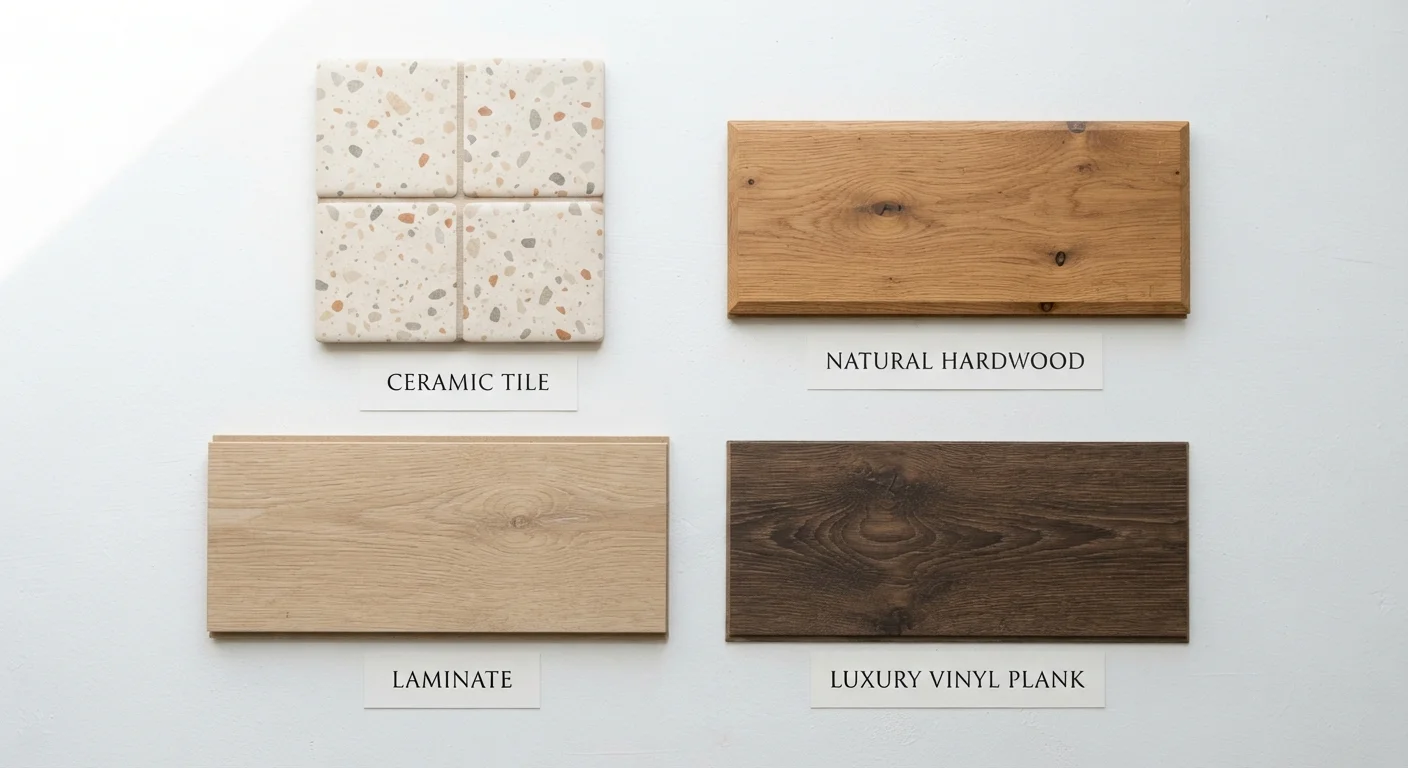
Photo credit: Glowwwatch.com
In this article
A practical look at how common flooring materials perform across durability, moisture resistance, maintenance, and comfort in different home spaces.
Key Takeaways
- No single flooring type excels in every room — match the material to the room's moisture and traffic conditions.
- Tile leads for wet areas like bathrooms and kitchens; hardwood adds warmth and value to living areas.
- Laminate and vinyl offer budget-friendlier alternatives but differ significantly in moisture resistance.
- Comfort underfoot and acoustic performance matter as much as durability in bedrooms and main living spaces.
- Installation requirements and subfloor compatibility can significantly affect your total project cost.
Why Flooring Choice Depends on the Room
Flooring is one of the highest-impact decisions in any home improvement project — it affects comfort, maintenance, indoor air quality, and even resale value. Yet a single material rarely performs equally well across every space. A kitchen, a bedroom, and a basement each impose entirely different demands: moisture levels, foot traffic, temperature swings, and cleaning frequency all vary dramatically from room to room.
Understanding what each flooring type does best — and where it falls short — lets you plan smarter rather than defaulting to whatever looks appealing in a showroom. This guide walks through tile, hardwood, laminate, and vinyl along the dimensions that matter most for everyday homeowners. For readers planning a larger renovation, our kitchen renovation planning guide covers how flooring decisions fit into the broader remodel process.
How the Four Materials Compare
Before diving room by room, it helps to see how these materials stack up across the most common evaluation criteria.
| Tile | Hardwood | Laminate | Luxury Vinyl | |
|---|---|---|---|---|
| Moisture Resistance | Excellent | Poor to Fair | Poor | Excellent |
| Durability / Lifespan | Very long (50+ years) | Long (refinishable) | Moderate (10–25 years) | Moderate to long (15–25 years) |
| Comfort Underfoot | Hard, cold | Warm, moderate | Moderate, padded | Soft, warm |
| Maintenance Effort | Low (grout needs sealing) | Moderate (refinishing) | Low | Very low |
| Typical Installed Cost | Moderate to high | High | Low to moderate | Low to moderate |
| DIY Friendliness | Difficult | Difficult | Moderate | Moderate to easy |
| Best Room Fit | Baths, kitchens | Living, dining, bedrooms | Bedrooms, dry areas | Kitchens, basements, baths |
A few important clarifications: luxury vinyl plank (LVP) and luxury vinyl tile (LVT) are the dominant vinyl products today — they're thicker, more realistic-looking, and more durable than older sheet vinyl. Laminate uses a photographic wood or stone layer under a wear coating, but its core is wood-based and therefore susceptible to moisture damage. Keep these distinctions in mind as you evaluate rooms.
Room-by-Room Recommendations
Kitchens
Kitchens need flooring that handles spills, grease, and heavy foot traffic without warping or staining. Tile and luxury vinyl are the two strongest performers here. Tile is virtually impervious to moisture but can feel hard underfoot during long cooking sessions — anti-fatigue mats help. Vinyl offers cushion and warmth underfoot while still resisting water effectively. Hardwood can work in kitchens with diligent sealing and prompt spill cleanup, but it carries more long-term risk. Standard laminate is not advisable due to moisture vulnerability at seams.
Bathrooms and Laundry Rooms
Tile dominates these spaces for good reason: it is fully waterproof, easy to sanitize, and available in slip-resistant finishes suited for wet floors. Luxury vinyl is also an acceptable choice and warmer underfoot than tile. Hardwood and laminate should generally be avoided in full bathrooms — even modest moisture infiltration can cause swelling, cupping, or mold growth beneath the surface.
Living Rooms and Dining Rooms
These spaces reward aesthetic investment. Hardwood is a traditional favorite: it adds warmth, can be refinished multiple times, and tends to hold its appeal with buyers. Engineered hardwood (a hardwood veneer over a plywood core) offers similar looks with slightly better dimensional stability. Laminate and vinyl are budget-conscious alternatives that mimic wood convincingly, though neither can be refinished if worn through.
Bedrooms
Comfort and acoustics matter most in bedrooms. Hardwood and laminate both perform well here since moisture is rarely an issue. Laminate's foam underlayment often provides a quieter, softer feel than hardwood at lower cost. Vinyl is also an option, particularly for households with young children where spills and accidents are possible.
Test for Basement Moisture Before Installing
Before laying any flooring in a basement, tape a square of plastic sheeting to the concrete slab and seal the edges with tape. Leave it for 24–48 hours. If condensation forms on the underside, moisture is wicking up from the ground — address the source before installing any flooring, as even waterproof vinyl will not protect against ongoing water infiltration.
Basements
Basements require flooring that can tolerate ground moisture wicking up through concrete slabs. Luxury vinyl is the most widely recommended choice — it is 100% waterproof and handles temperature fluctuations better than wood-based products. Tile also works well but is cold in colder climates without in-floor heating. Hardwood and standard laminate are high-risk choices below grade.
Installation, Subfloor, and Cost Considerations
Material cost is only part of the picture. Installation complexity and subfloor requirements add meaningfully to total project cost and should be verified before purchasing materials.
- Tile requires a stable, level subfloor (typically cement board in wet areas) and professional installation to avoid cracking — grout lines also need periodic sealing.
- Hardwood must be acclimated to the home's humidity before installation and is typically nailed or stapled to a wood subfloor. Not suitable for direct installation over concrete slabs without an engineered product.
- Laminate is a floating floor that clicks together and sits over underlayment, making it one of the more DIY-accessible options on flat, dry subfloors.
- Luxury vinyl can float, be glued, or be loose-laid depending on the product — many LVP planks are marketed as DIY-friendly and tolerate minor subfloor imperfections better than tile or hardwood.
If you are planning a layout change alongside your flooring project — such as opening up rooms — our article on open-concept vs. defined room layouts explores how floor plans affect material choices and installation logistics. Always verify local permit requirements if structural work is involved in your renovation.

Author
Home & Garden Editorial Team
Home & Garden Editorial Team is the collective byline for our editorial team and contributor network. Articles published under this byline or an editorial pen name are researched, written, and reviewed according to our editorial standards for clarity, consistency, and independence before publication.
View all articles →