
Refinishing vs. Replacing Hardwood Floors
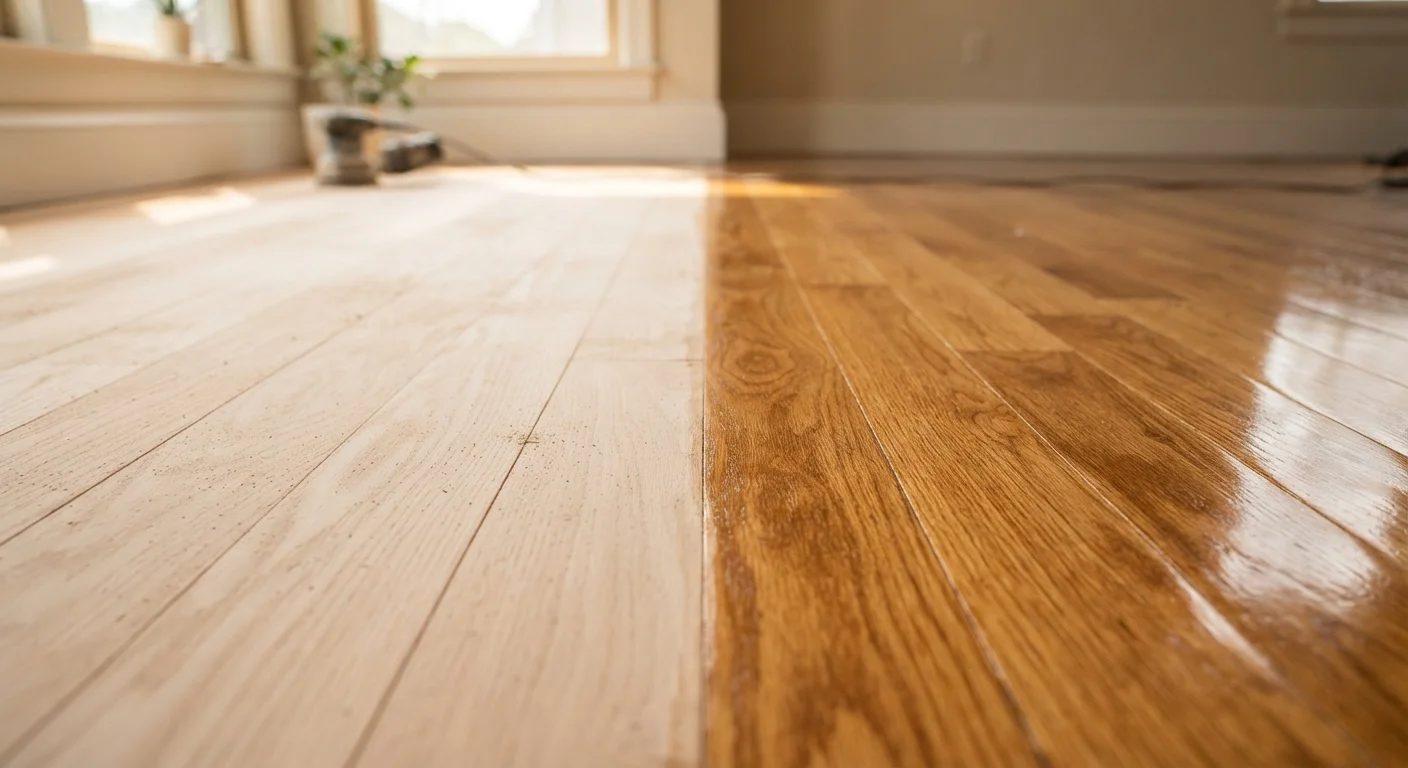
Photo credit: Glowwwatch.com
In this article
When is refinishing enough, and when do floors need full replacement? A side-by-side look at cost, condition thresholds, and disruption.
Key Takeaways
- Refinishing typically costs significantly less than full replacement and causes less home disruption.
- A floor can generally be refinished if it has at least 3/32 inch of wood above the tongue-and-groove joint.
- Structural damage such as rot, warping, or pest damage usually requires replacement rather than refinishing.
- Replacement offers the opportunity to change species, width, or finish for a completely updated look.
- Both projects require vacating the area for several days; replacement timelines are generally longer.
How to Tell Which Option Your Floor Actually Needs
Before committing to either path, inspect your floor carefully — ideally with a professional's eye. The central question is whether the damage is surface-level or structural.
Run your hand across the boards. Light scratches, a faded finish, or minor surface staining are refinishing candidates. Now look for boards that flex underfoot, gaps wider than a quarter-inch that weren't there before, dark staining that penetrates the wood (often a sign of moisture damage or subfloor issues), or boards that have cupped or buckled. These are warning signs that go beyond what sanding can fix.
A key technical threshold: solid hardwood floors can typically be sanded and refinished multiple times, but only while enough wood remains above the tongue-and-groove joint — generally considered to be at least 3/32 of an inch. A flooring professional can use a gauge or visual inspection to assess this. Engineered hardwood has a thinner wear layer, so it may have fewer refinishing cycles available, sometimes only one or two.
Get a Floor Thickness Assessment First
If you're unsure about your floor's remaining thickness, hire a flooring contractor for an assessment before committing to either option. Attempting to refinish a floor that's too thin can expose the tongue-and-groove and ruin the boards entirely. Most flooring professionals offer assessments as part of a quote visit.
If you're unsure about your floor's remaining thickness, hire a flooring contractor for an assessment before committing to either option. Attempting to refinish a floor that's too thin can expose the tongue-and-groove and ruin the boards entirely.
Cost and Disruption: A Side-by-Side Look
Cost is often the deciding factor, and the gap between the two options is significant. Refinishing is generally far less expensive per square foot than full replacement, which must account for materials, removal of the old floor, subfloor preparation, and installation labor.
| Criterion | Refinishing | Replacing |
|---|---|---|
| Typical cost range | Lower per sq ft | Higher per sq ft |
| Project timeline | 3–5 days | 5–10+ days |
| Addresses surface scratches | Yes | Yes |
| Fixes structural damage | No | Yes |
| Changes wood species or width | No | Yes |
| Preserves original character | Yes | No |
| Dust and debris | Moderate (sanding dust) | High (demolition debris) |
| Subfloor inspection included | Rarely | Yes |
Beyond price, consider disruption. Refinishing requires the room to be cleared of furniture and vacated for typically three to five days while coats of finish cure. Dust from sanding can spread throughout the home; dustless sanding systems reduce — but don't eliminate — this. Replacement timelines are longer, often five to ten days or more depending on square footage, and involve more noise, debris removal, and potential subfloor repairs that can add unexpected cost.
For a broader look at which home improvement projects tend to add genuine value versus create headaches at resale, see renovations that frequently disappoint sellers.
Long-Term Value and When to Invest in Replacement
Refinishing extends the life of your existing floor — often by eight to fifteen years per refinish cycle — and preserves the character of original hardwood, which many buyers view favorably. If your home has old-growth wood floors that are no longer widely available, preserving them through refinishing is often the smarter long-term decision.
Replacement makes clear sense in a few specific situations: when the subfloor itself is damaged and must be repaired regardless; when the existing flooring species or layout conflicts with a major remodel; or when you're opening walls and rerouting the floor plan, making patching impossible. If you're thinking about a significant layout change, weighing open versus defined floor plans is worth reading alongside this decision, since open-concept renovations often require flooring continuity across newly connected spaces.
One more consideration: both refinishing and replacing solid hardwood floors are generally seen as value-positive improvements by home appraisers and buyers, provided the work is done professionally and matches the home's overall condition. Neither choice is inherently wrong — the right one depends on your floor's specific condition, your timeline, and your goals for the space.

Author
Home & Garden Editorial Team
Home & Garden Editorial Team is the collective byline for our editorial team and contributor network. Articles published under this byline or an editorial pen name are researched, written, and reviewed according to our editorial standards for clarity, consistency, and independence before publication.
View all articles →