
Vitamins and Minerals at a Glance: A Quick-Reference Guide
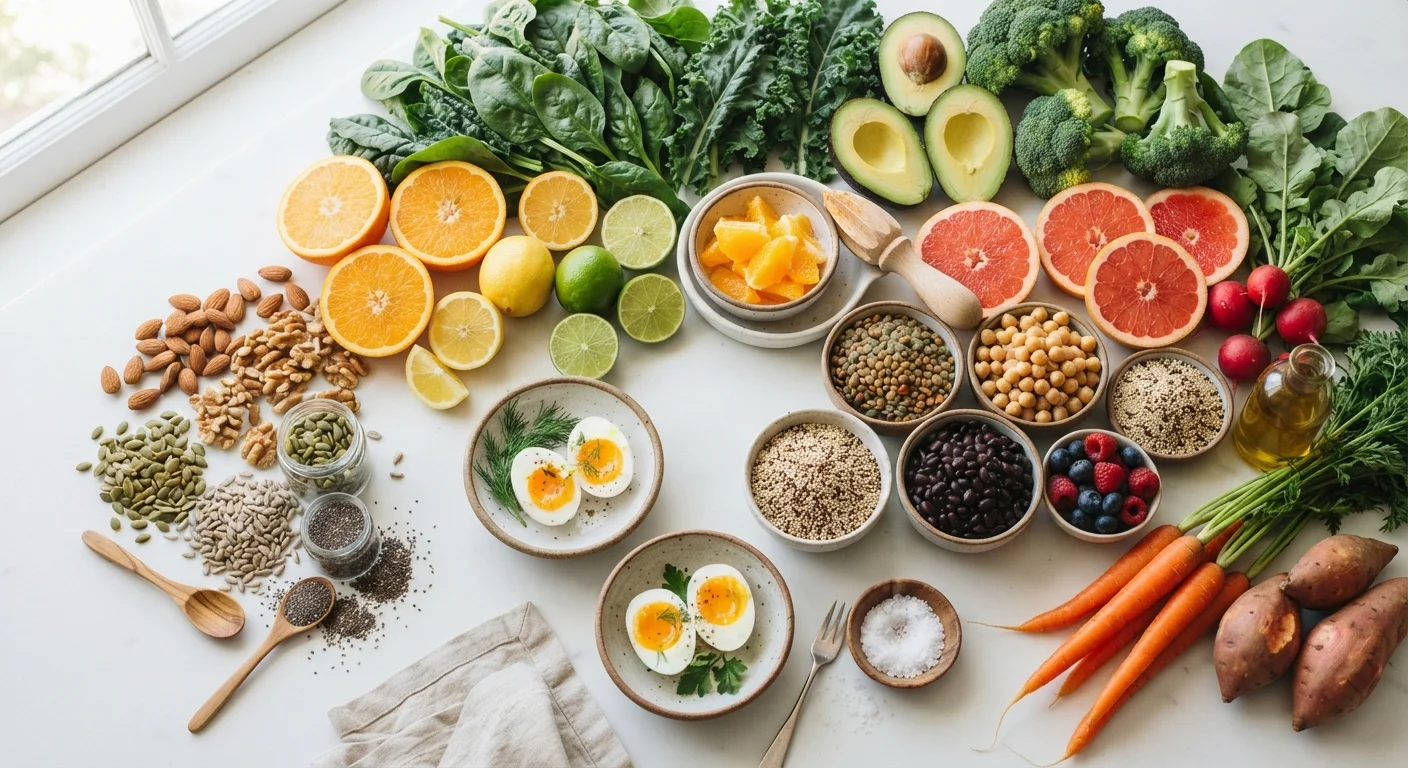
Photo credit: Glowwwatch.com
In this article
A concise reference covering the key vitamins and minerals, what they do, and common food sources for each.
What Are Vitamins and Minerals?
Vitamins and minerals are micronutrients — nutrients your body needs in relatively small amounts but cannot function well without. Unlike carbohydrates, proteins, and fats (the macronutrients), micronutrients provide no calories; instead, they enable nearly every biological process, from energy production to immune defense. For a deeper look at how these categories fit together, see our guide to macronutrients and micronutrients.
Vitamins are organic compounds, meaning they come from living things — plants and animals. Minerals are inorganic elements drawn from soil and water and absorbed by the foods we eat. Both groups are essential; a shortfall in any one of them over time can have measurable effects on health.
Micronutrient
A nutrient required by the body in small quantities — vitamins and minerals fall into this category. Despite being needed in small amounts, they are essential for growth, disease prevention, and overall health.
Fat-Soluble Vitamin
A vitamin that dissolves in fat and is stored in body tissue (liver and fat cells). Vitamins A, D, E, and K are fat-soluble, meaning excessive intake can accumulate to problematic levels over time.
Water-Soluble Vitamin
A vitamin that dissolves in water and is not stored in significant amounts — excess is excreted through urine. Vitamin C and all eight B vitamins are water-soluble, so regular dietary intake is important.
Trace Mineral
A mineral the body needs in very small (trace) quantities. Iron, zinc, iodine, selenium, and copper are examples. Though needed in tiny amounts, deficiencies can have significant health effects.
Antioxidant
A compound that helps neutralize unstable molecules called free radicals, which can damage cells. Several vitamins and minerals — including vitamins C and E, and selenium — act as antioxidants.
Bioavailability
The proportion of a nutrient that the body can actually absorb and use from food. For example, heme iron from meat has higher bioavailability than non-heme iron from plant sources.
The good news: a varied, whole-food diet covers most needs for most people. The goal of this reference is to give you a plain-language map of the key players so you know what each one does and where to find it.
Key Vitamins: Functions and Food Sources
Vitamins are grouped into two categories based on how the body handles them:
- Fat-soluble vitamins (A, D, E, K) dissolve in fat and are stored in body tissue, so they accumulate over time.
- Water-soluble vitamins (C and the eight B vitamins) dissolve in water. The body uses what it needs and excretes the rest, which means regular dietary intake matters more.
| Total essential vitamins | 13 (National Institutes of Health, Office of Dietary Supplements) |
| Fat-soluble vitamins | A, D, E, K |
| Water-soluble vitamins | C and 8 B vitamins |
| Most common US vitamin shortfall | Vitamin D (2015–2020 Dietary Guidelines for Americans) |
| Major minerals (examples) | Calcium, magnesium, potassium, sodium |
| Trace minerals (examples) | Iron, zinc, iodine, selenium |
Fat-Soluble Vitamins
- Vitamin A
- Supports vision (especially in low light), immune function, and skin health. Found in liver, dairy, eggs, and as beta-carotene in orange and yellow produce such as sweet potatoes and carrots.
- Vitamin D
- Regulates calcium absorption and supports bone density and immune function. Synthesized by skin exposed to sunlight; also found in fatty fish, fortified dairy, and egg yolks. Vitamin D is among the most commonly under-consumed nutrients in the US diet — see our overview of underconsumed nutrients for context.
- Vitamin E
- Acts as an antioxidant, protecting cells from oxidative damage. Found in nuts, seeds, vegetable oils, and leafy greens.
- Vitamin K
- Essential for blood clotting and bone metabolism. K1 is found primarily in leafy greens; K2 in fermented foods and some animal products.
Water-Soluble Vitamins
- Vitamin C
- Supports immune function, collagen synthesis, and iron absorption. Richest sources include citrus fruits, bell peppers, strawberries, and broccoli.
- B Vitamins (B1, B2, B3, B5, B6, B7, B9, B12)
- This family of eight vitamins works together to convert food into usable energy, support nervous system function, and produce red blood cells. Whole grains, legumes, meat, eggs, dairy, and leafy greens collectively cover this group. Folate (B9) is especially important during pregnancy; B12 is found almost exclusively in animal products, making it a key consideration for those following plant-based diets.
Key Minerals: Functions and Food Sources
Minerals are divided into major minerals (needed in larger amounts) and trace minerals (needed in very small amounts). Both are equally essential.
Major Minerals
- Calcium
- The most abundant mineral in the body. Critical for bone and tooth structure, muscle contraction, and nerve signaling. Sources: dairy products, fortified plant milks, tofu made with calcium sulfate, leafy greens like kale and bok choy.
- Magnesium
- Involved in over 300 enzymatic reactions, including energy production, muscle function, and blood sugar regulation. Found in nuts, seeds, legumes, whole grains, and dark leafy greens. It ranks among the shortfall nutrients in typical US diets — our nutrient gap article explains why.
- Potassium
- Regulates fluid balance, nerve signals, and muscle contractions, including the heart. Found in bananas, potatoes, beans, dairy, and many vegetables.
- Sodium
- Works with potassium to control fluid balance and nerve function. Most Americans consume well above recommended levels, primarily through processed and restaurant foods.
Trace Minerals
- Iron
- Carries oxygen in red blood cells. Heme iron from meat and seafood is absorbed more readily than non-heme iron from plants; pairing plant sources with vitamin C improves uptake.
- Zinc
- Supports immune function, wound healing, and DNA synthesis. Found in meat, shellfish, legumes, nuts, and seeds.
- Iodine
- Required for thyroid hormone production, which regulates metabolism. Iodized salt and seafood are primary sources in the US diet.
- Selenium
- Functions as an antioxidant and supports thyroid health. Brazil nuts, seafood, and whole grains are good sources.
For practical tips on building a shopping list around nutrient-dense foods, visit our guide to grocery shopping with nutrition in mind.
This article is for general informational and educational purposes only and is not a substitute for professional medical or dietary advice. If you have questions about your specific nutritional needs, consult a qualified healthcare provider or registered dietitian.

Author
Health & Wellness Editorial Team
Health & Wellness Editorial Team is the collective byline for our editorial team and contributor network. Articles published under this byline or an editorial pen name are researched, written, and reviewed according to our editorial standards for clarity, consistency, and independence before publication.
View all articles →