
The Many Faces of Added Sugar on an Ingredient List
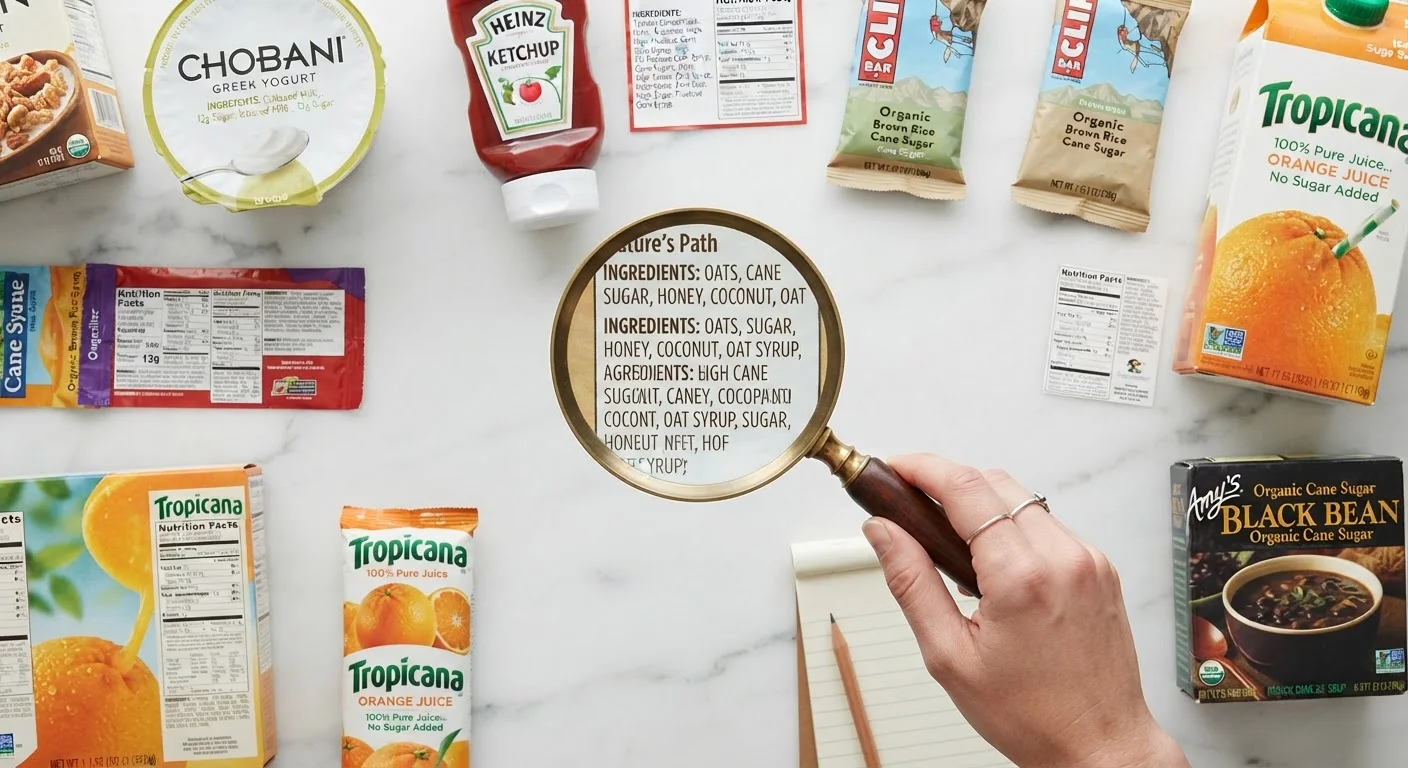
Photo credit: Glowwwatch.com
In this article
High-fructose corn syrup, dextrose, agave — learn the dozens of names manufacturers use for added sugar and how to spot them.
Why Manufacturers Use So Many Names for Sugar
Food manufacturers are required to list ingredients in descending order by weight. Using several different forms of sugar allows a product to spread sweeteners across multiple ingredient positions — which can make sugar appear lower on the list than its total quantity warrants. That's one reason a single product might contain maltose, brown rice syrup, and cane juice concentrate all at once.
Learning to recognize these aliases is one of the most practical nutrition-label skills you can develop. For a broader understanding of how ingredient lists and nutrition facts work together, see our plain-English walkthrough of every section on the FDA nutrition label.
| Number of added sugar aliases | 60+ (Commonly cited across nutrition education resources, including the American Heart Association) |
| FDA daily value for added sugars | 50 grams (based on 2,000-calorie diet) (U.S. FDA Nutrition Facts label rules) |
| Common suffix signal | Words ending in "-ose" or "-syrup" |
| Ingredient list order rule | Descending by weight (U.S. FDA food labeling regulations (21 CFR 101.4)) |
| "Natural" sweeteners that count as added sugar | Honey, maple syrup, agave, coconut sugar (Per FDA added sugars definition) |
The Full Roster: Added Sugar by Category
Added sugars fall into several families. Recognizing the category can help you spot unfamiliar names more quickly.
Syrups and Liquid Sweeteners
- High-fructose corn syrup (HFCS) — Derived from corn starch; widely used in soft drinks, condiments, and baked goods.
- Corn syrup — Less processed than HFCS; mostly glucose.
- Brown rice syrup — Made from fermented rice; has a mild flavor but raises blood sugar similarly to table sugar.
- Agave nectar / agave syrup — High in fructose; marketed as a "natural" alternative but metabolized similarly to other concentrated sweeteners.
- Maple syrup — Counts as added sugar when used as an ingredient, even though it comes from a natural source.
- Molasses — A byproduct of sugar refining; contains trace minerals but is still a concentrated added sugar.
- Barley malt syrup — Common in grain-based products and some beers.
Dry and Granulated Sugars
- Sucrose — The chemical name for ordinary table sugar; made from cane or beet.
- Dextrose — Another name for glucose; used in processed snacks, sports products, and bakery items.
- Fructose — The sugar found naturally in fruit, but when listed as an ingredient it is an isolated, concentrated additive.
- Maltose — A two-glucose unit sugar formed during starch digestion; used in malted products.
- Lactose — Milk sugar; added to some processed foods for texture or mild sweetness.
- Turbinado sugar — Partially refined cane sugar; the coarse, light-brown crystals sometimes labeled "raw sugar."
- Muscovado sugar — Unrefined cane sugar with a strong molasses flavor; still an added sugar.
- Coconut sugar — Derived from coconut palm sap; lower glycemic index than table sugar in some studies, but still an added sugar per FDA labeling rules.
Juice-Based and "Fruit" Sweeteners
- Fruit juice concentrate — Water is removed from fruit juice, leaving a dense sugar solution used to sweeten products.
- Grape juice concentrate, apple juice concentrate — Specific juice concentrates used as sweeteners; all count as added sugar.
- Cane juice / evaporated cane juice — Less processed than refined white sugar but chemically very similar.
Added Sugar
Any sugar or caloric sweetener that is added to a food or beverage during processing or preparation, as opposed to sugar that occurs naturally in the whole ingredient. The FDA requires this amount to be listed separately on the Nutrition Facts panel.
High-Fructose Corn Syrup (HFCS)
A liquid sweetener made by converting some of the glucose in corn syrup to fructose. It is widely used in processed foods and beverages because of its sweetness, low cost, and ability to extend shelf life.
Fruit Juice Concentrate
Fruit juice from which most of the water has been removed, leaving a dense, highly sweet liquid. When used as an ingredient to sweeten a product, it is classified as an added sugar.
Dextrose
The commercial name for glucose, the simplest form of sugar. It is derived from starch and is widely used in processed snacks, cereals, and sports products.
Invert Sugar
A liquid sweetener made by chemically splitting sucrose into its two component parts — glucose and fructose. It is sweeter than table sugar and is used to retain moisture in baked goods and confections.
Agave Nectar
A sweetener derived from the agave plant that is high in fructose. Despite a "natural" reputation, it is a concentrated added sugar and is processed by the body similarly to other high-fructose sweeteners.
Other Names to Watch
- Invert sugar — A liquid mixture of glucose and fructose made by splitting sucrose; used to keep baked goods moist.
- Treacle — British term for molasses-based syrup; appears in imported or specialty products.
- Caramel — When listed as an ingredient (not a flavoring), it is essentially cooked sugar.
- Honey — Counts as added sugar when used in processing, even though it is a whole food in other contexts.
For a deeper look at why the source of sugar matters — and where the science is still evolving — see what research actually says about added vs. naturally occurring sugar.
Putting It Into Practice
You don't need to memorize every alias to shop more thoughtfully. A few habits go a long way:
- Check the Nutrition Facts panel first. The FDA requires manufacturers to list "Added Sugars" as a separate line, in grams and as a percentage of the Daily Value. This gives you a reliable number regardless of how many aliases appear in the ingredient list.
- Count sugar aliases in the ingredient list. If you see two or more sweetener names in the first five ingredients, the product is likely high in added sugar overall.
- Watch for "concentrate" and "syrup." These suffixes almost always indicate an added sugar, no matter what plant they came from.
- Don't be misled by "natural." Agave, coconut sugar, and honey are often marketed as healthier alternatives, but your body processes concentrated fructose and glucose from any source in broadly similar ways.
Beverages deserve particular attention — juices, sports drinks, and flavored waters can contain multiple sweetener types. Our article on natural vs. added sugar in drinks breaks down how to read labels on common beverages.
This article is for general informational and educational purposes only and is not a substitute for professional dietary or medical advice. If you have specific health concerns related to sugar intake — such as diabetes or metabolic conditions — consult a qualified healthcare provider or registered dietitian.

Author
Health & Wellness Editorial Team
Health & Wellness Editorial Team is the collective byline for our editorial team and contributor network. Articles published under this byline or an editorial pen name are researched, written, and reviewed according to our editorial standards for clarity, consistency, and independence before publication.
View all articles →