
Plant Protein vs. Animal Protein: What the Research Says About Both
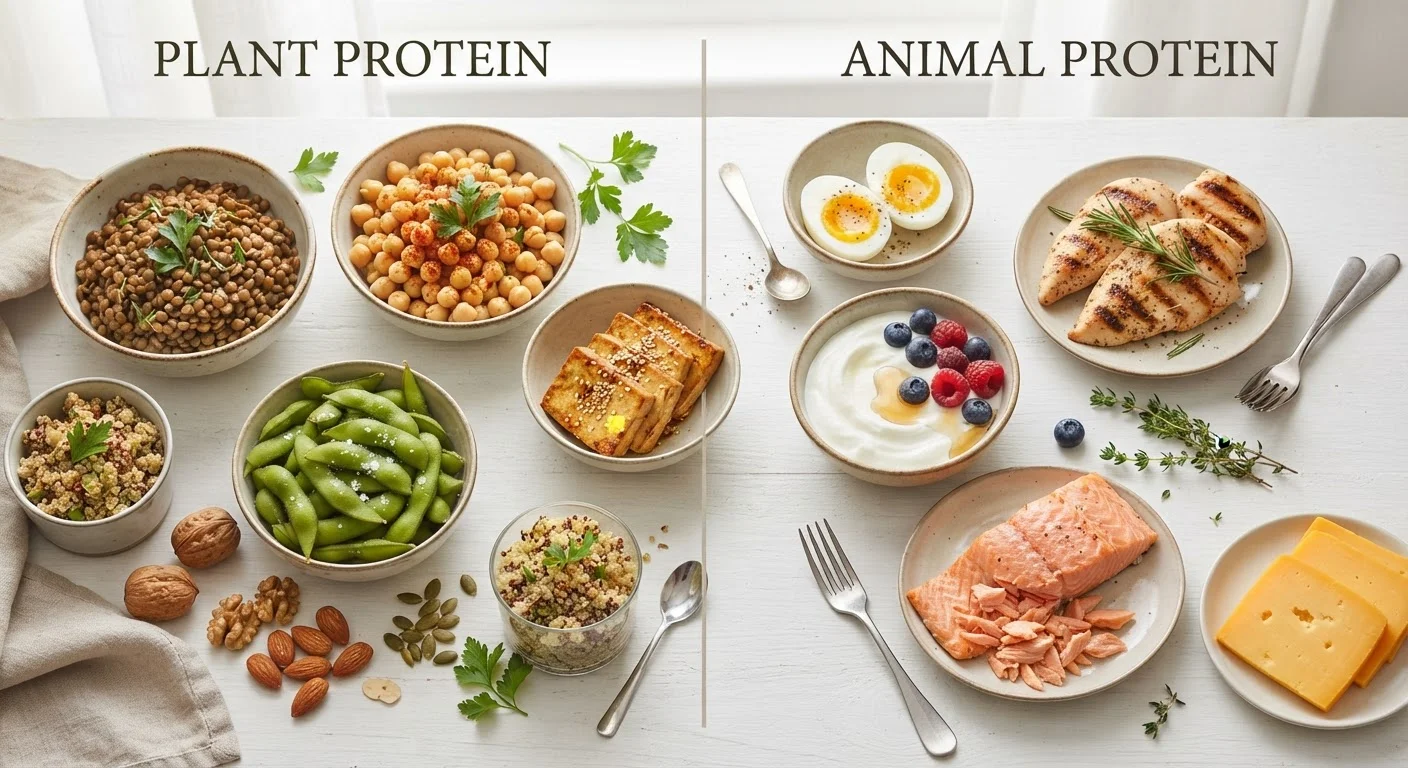
Photo credit: Glowwwatch.com
In this article
Amino acid profiles, digestibility, and dietary patterns — a balanced look at how plant and animal proteins compare in the context of real diets.
Key Takeaways
- Animal proteins are typically 'complete,' containing all nine essential amino acids in adequate amounts.
- Plant proteins can meet all amino acid needs when eaten in varied combinations throughout the day.
- Animal protein is generally more bioavailable, but digestibility varies widely across specific foods.
- Research links higher plant protein intake to reduced risk of certain chronic diseases.
- Most evidence suggests a diet mixing both protein types is practical and nutritionally sound.
- No single food defines a healthy diet — overall eating patterns matter most.
What Makes a Protein 'Complete' or 'Incomplete'?
Protein is made up of building blocks called amino acids. Of the 20 amino acids the body uses, nine are considered essential — meaning the body cannot produce them on its own and must obtain them from food. A protein source containing all nine in sufficient quantities is called a complete protein.
Animal proteins — including eggs, dairy, meat, poultry, and fish — are generally complete. Most plant proteins, with a few exceptions like soy and quinoa, are considered incomplete, meaning they are relatively low in one or more essential amino acids.
However, the incomplete label can be misleading. The body pools amino acids from everything consumed throughout the day, not just from single meals. Eating a varied diet that includes legumes, grains, nuts, seeds, and vegetables provides all essential amino acids without requiring precise meal-by-meal combinations. This is a well-established position among major nutrition organizations.
Protein Needs Vary by Individual
Daily protein requirements differ based on age, body weight, activity level, and health status. General guidelines from organizations like the USDA and the Academy of Nutrition and Dietetics suggest a baseline of 0.8 grams per kilogram of body weight for most healthy adults, with higher amounts often recommended for older adults and physically active individuals. A registered dietitian can help determine what's appropriate for your specific situation.
For a deeper look at how different protein sources fit into a well-rounded eating pattern, see our guide to building a balanced plate.
Digestibility and Bioavailability: How Much Actually Gets Used?
Having protein in a food is one thing; how much the body can actually absorb and use is another. This is measured by a metric called the PDCAAS (Protein Digestibility Corrected Amino Acid Score) or the more recent DIAAS. Animal proteins like eggs, dairy, and meat consistently score near the top of these scales.
Plant proteins are generally digested less completely, partly because plant foods contain antinutrients — compounds like phytates and tannins that can interfere with protein and mineral absorption. Cooking, soaking, fermenting, and sprouting legumes and grains can significantly reduce antinutrients, improving the effective protein yield from these foods.
| Criterion | Plant Protein | Animal Protein |
|---|---|---|
| Amino acid completeness | Often incomplete (soy & quinoa are exceptions) | Complete in most sources |
| Digestibility (DIAAS score) | Moderate — varies by food and preparation | High — especially eggs, dairy, meat |
| Fiber content | High — most plant proteins include fiber | None — animal foods contain no fiber |
| Saturated fat | Generally low | Varies — low in fish, higher in red meat |
| Key micronutrients | Iron (non-heme), magnesium, folate | B12, heme iron, zinc, omega-3s (fish) |
| Chronic disease associations | Lower risk linked to higher intake | Mixed — depends heavily on source type |
| Meal planning complexity | Requires variety for full amino acid coverage | Single sources cover all essential amino acids |
The practical takeaway: someone eating a diverse plant-based diet likely gets adequate protein and amino acids, but may need to consume somewhat larger overall quantities than someone eating animal proteins to achieve comparable amino acid absorption.
What Long-Term Research Suggests About Each Pattern
Large observational studies and some randomized trials have examined dietary protein patterns and health outcomes over time. The picture that emerges is nuanced.
Plant protein intake is consistently associated with lower risks of cardiovascular disease, type 2 diabetes, and all-cause mortality in population studies. Researchers believe this reflects not just the protein itself, but the fiber, unsaturated fats, vitamins, and phytonutrients that come packaged with plant foods. This is one reason the processing context of food matters — whole food sources versus highly processed ones can change these outcomes substantially.
Animal protein research is more mixed. Unprocessed animal sources — fish, poultry, eggs, and dairy — are not consistently linked to increased chronic disease risk in the research literature. Processed red meats (like bacon and deli meats), however, have a stronger association with cardiovascular and colorectal risk. The protein itself may not be the driver; saturated fat content, sodium, and processing methods are thought to play significant roles.
32%
Lower risk of cardiovascular death
A large meta-analysis published in the BMJ found that replacing animal protein with plant protein was associated with a roughly 32% lower risk of cardiovascular disease mortality.
~70%
Digestibility of most plant proteins
The FAO estimates the true digestibility of most plant protein sources ranges from roughly 70–90%, compared to 90–99% for most animal proteins.
9
Essential amino acids humans need from food
The human body cannot synthesize nine essential amino acids on its own; these must come from dietary sources — both plant and animal foods can supply them over the course of a day.
For a detailed comparison of specific amino acid profiles and bioavailability metrics by food type, see our nutritional comparison of plant and animal protein.
This article provides general nutrition information and education. It is not a substitute for advice from a registered dietitian or other qualified healthcare professional. Individual nutritional needs vary.

Author
Food & Drinks Editorial Team
Food & Drinks Editorial Team is the collective byline for our editorial team and contributor network. Articles published under this byline or an editorial pen name are researched, written, and reviewed according to our editorial standards for clarity, consistency, and independence before publication.
View all articles →